


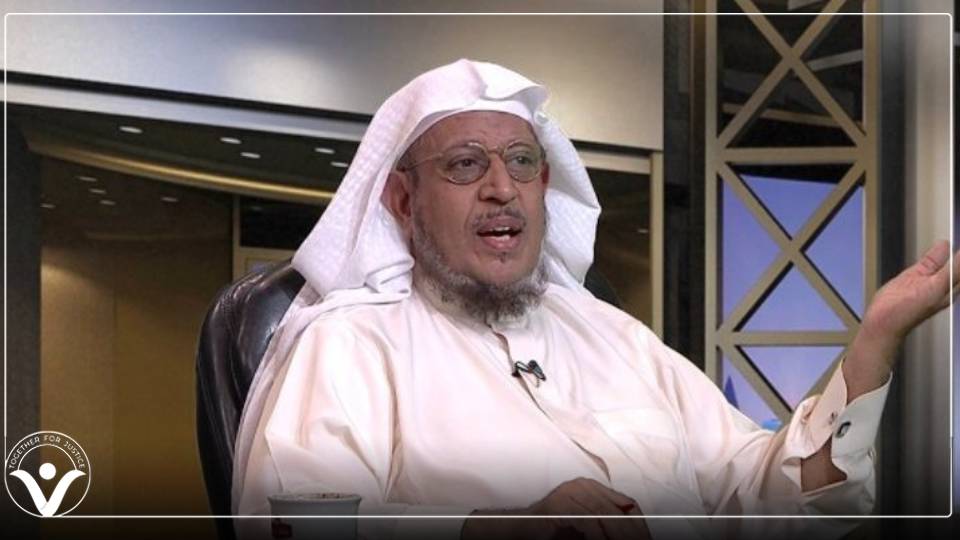
Four years have passed since the second arrest of Saudi academic Dr. Khaled Al-Ojami, a case that reflects an entrenched policy of recycling detention, punishing speech, and masking political imprisonment under judicial claims.
Al-Ojami was first detained in September 2017 during the mass crackdown that targeted scholars, academics, public figures, and intellectuals. After nearly four years in detention, his health deteriorated severely, forcing the authorities to release him in September 2021. His release, however, was not the restoration of freedom—it was conditional and restrictive. He was placed under house arrest, fitted with an electronic monitoring bracelet, and denied any real autonomy.
Only two months later, in November 2021, Saudi authorities re-arrested him, claiming he had left his home without permission—despite the fact that his movements were electronically tracked, documented, and verifiable. The re-arrest made it clear that the intent was not legal accountability, but the continuation of political punishment.
Since his detention, Al-Ojami has faced a judicial process devoid of transparency and basic legal guarantees. He was ultimately sentenced to 23 years in prison, not for a recognizable crime, but for his intellectual positions, public commentary, and refusal to conform. No evidence has ever been presented publicly connecting him to violent conduct, corruption, or any activity that would justify such a sentence under international law.
Al-Ojami’s detention conditions raise additional alarms. Reports indicate:
- Deliberate medical neglect, despite a documented history of serious health complications
- Restricted communication with his family and legal counsel
- Prolonged isolation
- Judicial processes lacking disclosure, defense rights, or public oversight
His case is not an exception—it fits a wider structure of repression in which:
- Temporary releases become tools of controlled punishment rather than steps toward justice
- Electronic monitoring replaces protection of rights with digital surveillance
- The judiciary functions as a legitimizing cover for politically motivated imprisonment
- Health vulnerabilities are ignored or instrumentalized to add pressure
The recycling of detention—arrest, conditional release, re-arrest, and harsher sentencing—has become a method used to ensure that imprisonment is indefinite in practice even when it appears episodic on paper.
The case of Dr. Khaled Al-Ojami illustrates a system where freedom of expression is not merely restricted but criminalized, and where legal procedures serve containment, not justice.