


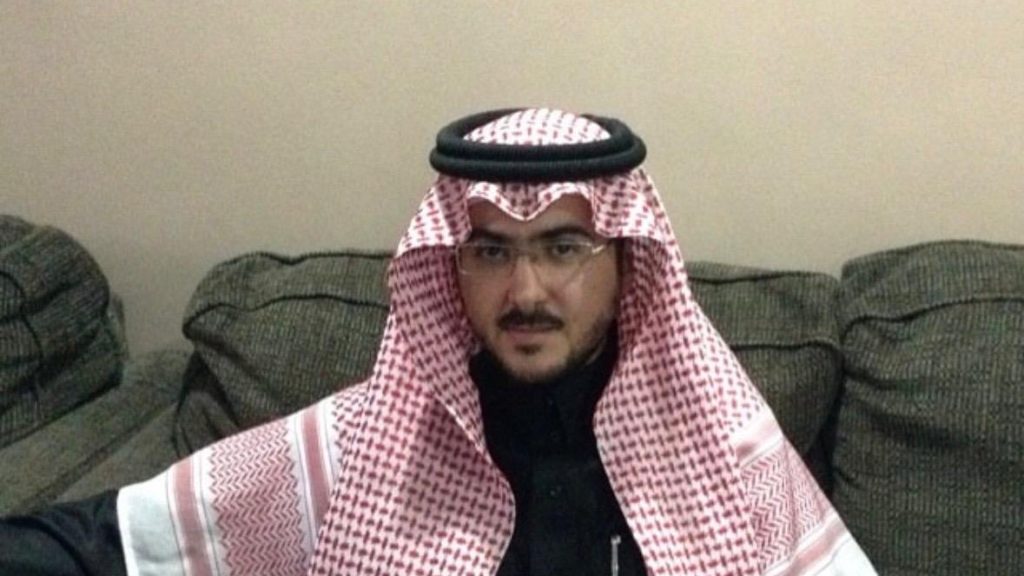
New testimony from the family of Saudi cartoonist Mohammed Hazzah Al-Ghamdi has revealed disturbing details about the circumstances of his arrest and the violations he has endured since, shedding light on the broader pattern of repression targeting artists and voices of expression in Saudi Arabia.
According to his sister, Al-Ghamdi had begun to notice suspicious surveillance prior to his arrest, including the repeated presence of the same individual in different locations. These concerns were confirmed when he was suddenly apprehended in a public setting by a large security force. He was handcuffed, blindfolded, and taken away in front of witnesses in what his family described as a disproportionate and intimidating operation.
Simultaneously, security forces raided his home, where his pregnant wife and children were present. Plainclothes officers entered the residence and conducted an aggressive search. His art studio was reportedly vandalized, with equipment, drawings, and personal belongings confiscated. The incident caused severe psychological distress to his children, particularly one of his sons who witnessed the raid.
Following his arrest, Al-Ghamdi was held incommunicado for an extended period. His family was unable to contact him for approximately 50 days, and when they were finally allowed a visit, he attempted to reassure them that he was well. However, subsequent information and patterns observed in similar cases have raised concerns that he may have been subjected to pressure and coercion during interrogation.
Al-Ghamdi suffers from diabetes, and his family reports that he has been subjected to medical neglect during his detention. His condition reportedly deteriorated over time, with complications affecting his kidneys, nerves, and overall physical health. Requests for basic accommodations related to his illness were allegedly ignored, further worsening his condition.
He was later charged with a series of allegations, including publishing cartoons deemed offensive and “sympathizing with Qatar.” His family maintains that many of the works cited as evidence do not belong to him. Despite the lack of clear and verifiable evidence, he was ultimately sentenced to 23 years in prison, after his case was reopened and his sentence significantly increased without a transparent legal explanation.
The case of Mohammed Al-Ghamdi reflects a broader pattern in which artistic expression and digital content are treated as criminal acts, often in proceedings that lack transparency and due process. It also highlights contradictions, particularly in cases tied to political contexts that have since shifted, while individuals remain imprisoned under previous narratives.
His sister’s testimony also underscores the climate of fear surrounding such cases. The family remained silent for years due to concerns over retaliation, only choosing to speak publicly after the severity of the sentence became clear.
The case raises serious concerns about arbitrary detention, enforced disappearance, medical neglect, and violations of fair trial guarantees, all of which are prohibited under international human rights law.
Together for Justice calls for the immediate and unconditional release of Mohammed Hazzah Al-Ghamdi, access to proper medical care, and accountability for the violations he has endured since his arrest.