


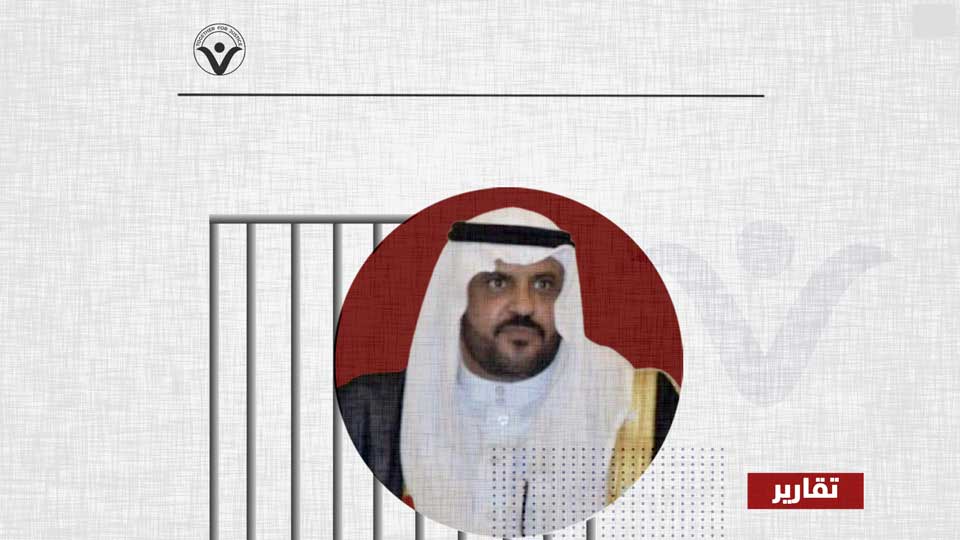
More than eight and a half years have passed since the Saudi authorities arrested human rights defender Mohammed Al-Otaibi, turning peaceful civil activism into a long-term prison sentence. Arrested in May 2017, Al-Otaibi is currently serving a 17-year prison term, a punishment that stands as one of the clearest examples of the systematic repression of independent civil society in Saudi Arabia.
Al-Otaibi’s case was never rooted in criminal conduct. It was a deliberate act of political retaliation. As the founder of the Union for Human Rights, he was targeted for organizing, speaking publicly about rights violations, and attempting to build a civil rights framework independent of state control. His arrest marked a decisive moment in which the Saudi authorities made clear that even peaceful human rights advocacy would be treated as a security threat.
Unlike many political arrests that occur during protests or raids, Al-Otaibi was detained at Riyadh airport while preparing to travel to Norway. At the time, he had already been granted refugee status due to sustained harassment and legal persecution inside Saudi Arabia. His arrest therefore constituted a flagrant violation of international law, including the protection owed to refugees and the prohibition of refoulement. By detaining a recognized refugee, the Saudi authorities demonstrated that their pursuit of dissenters ignores borders, treaties, and legal obligations.
Following his arrest, Al-Otaibi was brought before the Specialized Criminal Court, a tribunal widely known for prosecuting political and expression-related cases rather than genuine criminal offenses. The charges against him revealed the true nature of the case: establishing an unlicensed organization, issuing statements critical of government policies, “damaging the reputation of the state,” and publishing information related to his interrogation. These accusations reflect the criminalization of speech and association, not any legitimate legal wrongdoing.
In January 2018, the court sentenced Al-Otaibi to 14 years in prison after a trial that failed to meet basic standards of due process and fairness. The verdict was widely condemned by international human rights organizations as incompatible with the Saudi leadership’s claims of reform. Amnesty International at the time described the ruling as a clear signal that the authorities were determined to silence human rights defenders and dismantle independent civic space.
Rather than reviewing the violations or responding to international criticism, the Saudi authorities later escalated the sentence to 17 years without presenting any credible legal justification. This increase was directly linked to Al-Otaibi’s repeated hunger strikes, which he undertook in protest against degrading detention conditions and systematic abuse. Instead of addressing his complaints, the authorities chose retaliation, turning peaceful protest inside prison into grounds for harsher punishment.
Reliable sources indicate that Al-Otaibi has endured severe mistreatment in Dammam prison, including direct death threats and deliberate placement alongside inmates who were encouraged to harass and harm him. These practices reportedly occurred with the knowledge and facilitation of prison officials. He has also been denied regular contact with his family and deprived of basic rights guaranteed under international standards, in what appears to be a sustained effort to break him psychologically and physically.
Today, despite years of international appeals and advocacy, Al-Otaibi remains imprisoned, and his conditions continue to deteriorate. The Saudi authorities have ignored repeated calls for his release while simultaneously promoting an image of reform and openness abroad. This contradiction exposes the gap between official rhetoric and the reality faced by prisoners of conscience inside the country’s prisons.
The continued detention of Mohammed Al-Otaibi is not merely an injustice against one individual. It is a stark indictment of a system that treats peaceful dissent as a crime and uses the judiciary as a tool of political repression. A state that claims reform does not imprison human rights defenders, retaliate against hunger strikes, or criminalize civil society. If the Saudi leadership is sincere in its claims of change, the first and most basic step must be the immediate and unconditional release of Mohammed Al-Otaibi, along with all prisoners of conscience whose only act was the peaceful exercise of their fundamental rights.