Serious concerns are mounting over the fate of Saudi activist Abdulrahman Al-Khalidi, as new developments indicate increasing pressure to deport him to Saudi Arabia, despite growing international calls for his protection.
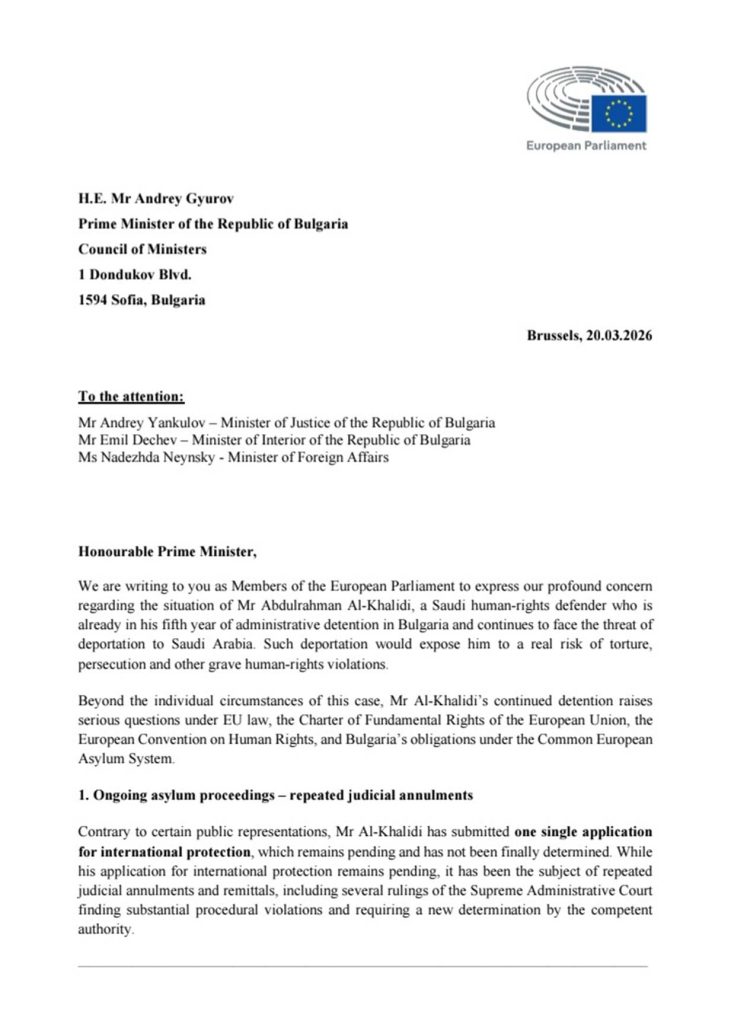
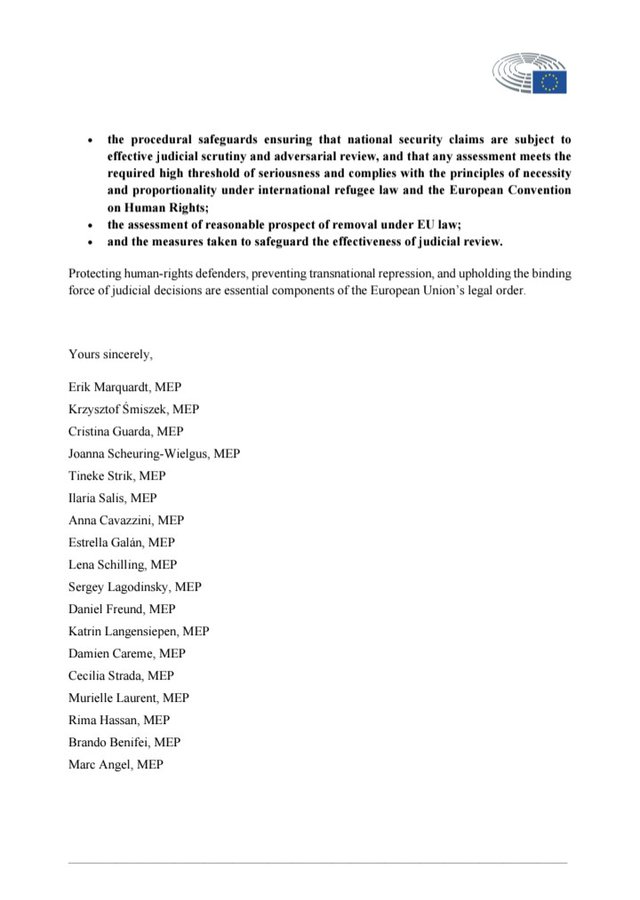
In a recent move, 18 Members of the European Parliament sent a formal letter to the Bulgarian Prime Minister urging the authorities to release Al-Khalidi and grant him international protection. The letter reflects rising concern within European institutions over his case and the potential consequences of returning him to Saudi Arabia.
Al-Khalidi’s case dates back to October 2021, when Bulgarian authorities detained him after he crossed the border from Turkey, despite his intention to seek asylum due to fears of persecution linked to his political and media activities. Since then, his case has evolved into a complex legal and political issue, marked by conflicting court decisions and administrative actions.
Over the past years, Bulgarian courts have issued rulings ordering his release, including a final decision in March 2025. However, these rulings have not been implemented, raising serious questions about the rule of law and the separation of powers. At the same time, earlier judicial decisions had also approved his deportation, creating a contradictory legal landscape that has prolonged his situation.
In September 2025, Bulgarian authorities extended his administrative detention for an additional six months, citing security-related grounds that have not been publicly substantiated. This step was widely criticized as inconsistent with European legal standards, which prohibit arbitrary and prolonged detention without clear justification.
Al-Khalidi has also reported difficult detention conditions, including limited access to medical care and restrictions on communication with his lawyer. His situation worsened to the extent that he carried out a prolonged hunger strike in protest against his detention and treatment.
Human rights organizations warn that deporting Al-Khalidi to Saudi Arabia would expose him to a serious risk of arbitrary detention, torture, or even capital punishment, in light of documented patterns concerning returned dissidents. Such a move would constitute a clear violation of the principle of non-refoulement, a cornerstone of international law that prohibits returning individuals to countries where they face a real risk of persecution or ill-treatment.
Together for Justice stresses that the continued handling of Al-Khalidi’s case places full responsibility on Bulgarian authorities for his safety. The organization calls for his immediate release, the suspension of any deportation procedures, and the granting of international protection in line with Bulgaria’s legal obligations.
The case of Abdulrahman Al-Khalidi has become a critical test of Europe’s commitment to its own human rights standards—particularly its responsibility to protect those at risk of persecution. Any failure to act may have irreversible consequences.