


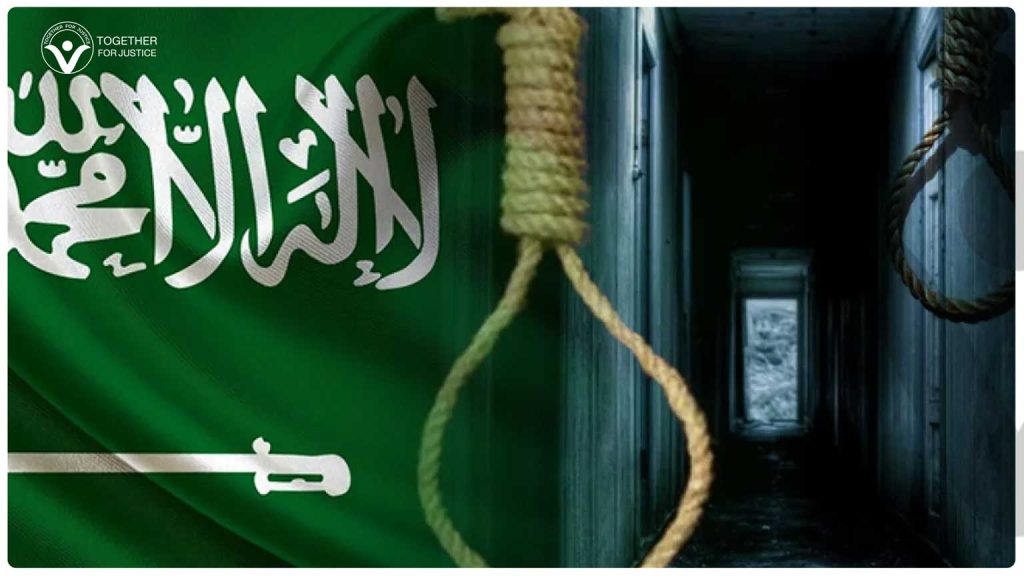
Saudi authorities have carried out the execution of three citizens after issuing death sentences under the classification of ta’zir punishment, according to an official statement by the Ministry of Interior. These executions cannot be regarded as the outcome of a legitimate judicial process. They constitute intentional state killing carried out under the cover of law, within a system that systematically violates basic standards of justice.
In Saudi Arabia, cases labelled as “terrorism” are routinely prosecuted through procedures that are fundamentally incompatible with fair trial guarantees. Detainees are frequently subjected to arbitrary arrest, prolonged incommunicado detention, and coercive interrogation practices. Access to legal counsel is often denied or severely restricted, while trials are conducted in secrecy, preventing independent scrutiny or public accountability. Verdicts issued under such conditions lack legal credibility.
The charges used in these cases—such as “joining a terrorist organisation” or “planting explosive devices”—are framed in broad and opaque terms, with no transparent disclosure of evidence and no meaningful opportunity for defendants to challenge the accusations. In the absence of independent judicial oversight, such allegations cannot justify the irreversible punishment of death. Executing individuals following these proceedings amounts to extrajudicial killing disguised as judicial enforcement.
These executions take place amid a sharp escalation in the use of the death penalty in Saudi Arabia. In recent years, the Kingdom has ranked among the highest executioners worldwide, carrying out hundreds of executions, many linked to political cases or loosely defined security offences. While the global trend continues toward abolishing capital punishment or imposing moratoriums, Saudi Arabia has moved in the opposite direction, expanding its use as a tool of repression.
The systematic reliance on executions reflects a broader climate of political suppression, in which counterterrorism legislation and exceptional courts are used to eliminate dissent, silence opposition, and instil fear within society. In this context, the death penalty is not a mechanism of justice but an instrument of intimidation and control.
The execution of these three individuals represents a continuation of a policy that prioritises punishment over accountability and violence over due process. Without transparent investigations, fair trials, and full respect for legal safeguards, no execution carried out by Saudi authorities can be considered lawful or legitimate.
The international community cannot continue to treat these killings as an internal matter. An immediate halt to executions, independent international scrutiny of Saudi Arabia’s judicial system, and accountability for unlawful killings are urgently required.