


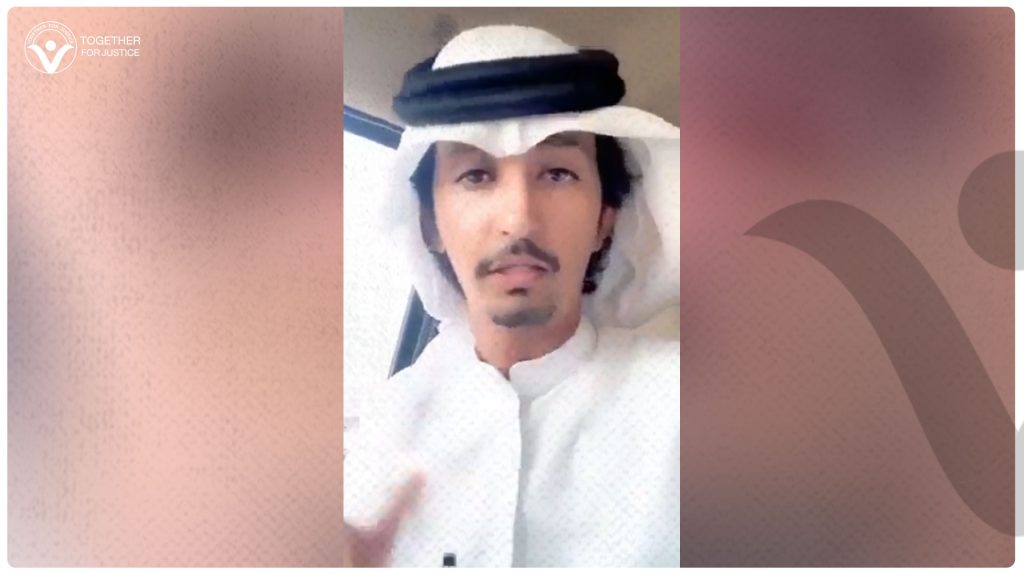
Together for Justice reminds the international community of the case of Saudi citizen Zaid Al-Roqi, who has been detained since November 2019 and is now spending his seventh year behind bars, amid a complete blackout surrounding his fate, place of detention, health condition, legal status, and detention circumstances.
Al-Roqi’s case was not linked to violence, incitement, or any recognizable security threat. It began with a legitimate question raised by a young Saudi man about unemployment, the lack of opportunities for young people, and the waste of an entire generation’s potential. Instead of treating his words as an expression of real social and economic suffering, Saudi authorities treated them as a threat to be silenced.
Al-Roqi reportedly posted a video on social media in which he expressed concern over rising unemployment and called for serious solutions that would give Saudi youth real opportunities in the labor market. His message reflected the frustration of many young people; it was not a crime. Yet the response was his arrest in November 2019, followed by a near-total disappearance from public view.
Arresting a young man for asking about unemployment exposes a deep failure in the Saudi authorities’ approach to public issues. Instead of listening to young people and addressing the causes of unemployment, exclusion, and wasted talent, the state punished the person who dared to ask the question. A discussion about jobs and economic opportunity was transformed into a security matter, and Al-Roqi paid the price with years of his freedom.
Since his arrest, his family and those close to him have reportedly been denied adequate information about his whereabouts, conditions, and legal situation. This prolonged silence raises serious concerns that he may be held incommunicado or subjected to enforced disappearance, particularly in the absence of any transparent trial, clear charges, or regular access to his family and legal counsel.
Together for Justice stresses that Zaid Al-Roqi’s case reflects a recurring pattern in Saudi Arabia, where social and economic questions are criminalized when they expose the failures of official policy. Demanding a job, asking about the future of young people, or criticizing unemployment should never lead to imprisonment. Such concerns should be met with public debate, accountability, and genuine policy reform.
The case is especially revealing in light of Saudi Arabia’s official rhetoric about youth empowerment, opportunity, and building the future. A state that markets itself through major development projects and promises of economic transformation cannot, at the same time, imprison a young man for demanding that youth have a place in that future. Al-Roqi’s imprisonment exposes the contradiction between the image of development and the reality of repression facing those who ask for fairness and opportunity.
From a legal perspective, Al-Roqi’s arrest over peaceful expression on a matter of public concern constitutes a direct violation of freedom of opinion and expression. The continued lack of information about his fate and legal status raises serious concerns of arbitrary detention, enforced disappearance, and denial of fair trial guarantees.
Together for Justice holds the Saudi authorities fully responsible for Zaid Al-Roqi’s physical and psychological safety. The organization calls for the immediate disclosure of his place of detention, health condition, and legal status, and for his family and lawyers to be granted immediate and unrestricted access to him.
Together for Justice further calls for his immediate and unconditional release and an end to the prosecution of young people for speaking about economic hardship, unemployment, dignity, and equal opportunity.
Zaid Al-Roqi did not commit a crime. He asked a simple and legitimate question: why are young people’s abilities being wasted? Seven years later, his case remains a stark reminder of a reality in which asking about unemployment can become a crime, and demanding a future can lead to disappearance.