One Year On: Family of Worker Killed on Saudi World Cup Site Still Awaiting Compensation

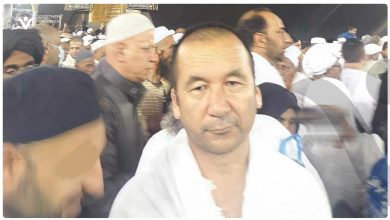
Together for Justice expresses deep concern over the continued failure to provide full legal compensation to the family of Mohammad Arshad, a Pakistani migrant worker who died while constructing infrastructure linked to the FIFA World Cup 2034 in Saudi Arabia. Nearly a year after his death, his family remains without the compensation they are legally entitled to receive.
On 12 March 2025, Mohammad Arshad fell from a high platform while working at Aramco Stadium in Al Khobar, one of the new stadiums being built for the 2034 tournament. Reports indicate that the platform tilted suddenly and that Arshad was not properly secured. He later died in hospital, leaving behind his wife and three young sons in Pakistan. His death marked the first known fatality directly linked to construction for the 2034 World Cup.
Arshad was working under contractors associated with the Belgian multinational construction company Besix, which stated after the incident that it would ensure all end-of-service benefits and insurance payments were handled “in a timely and respectful manner.” However, almost twelve months later, his family reports that they have yet to receive the statutory death compensation, outstanding salary, or full end-of-service benefits required under Saudi law.
Under Saudi regulations, Arshad’s family may be entitled to compensation potentially worth up to £63,250, in addition to unpaid wages and other benefits. To date, the only financial support the family has reportedly received consists of voluntary donations collected by co-workers and matched by the company. The official compensation process remains pending, allegedly due to administrative procedures and documentation requirements.
This prolonged delay illustrates a broader structural problem facing families of migrant workers who die in Saudi Arabia. Navigating the compensation system from abroad is often complex and burdensome. Families must deal with documentation barriers, institutional opacity, and lengthy bureaucratic processes, all while coping with sudden financial hardship. For many communities in Pakistan and other labor-sending countries, remittances from workers in the Gulf represent a primary source of household income. When a worker dies, delays in compensation can push entire families into economic instability.
Together for Justice stresses that the issue extends beyond a single case. Saudi Arabia’s bid for the 2034 World Cup includes plans to construct eleven new stadiums and renovate four others, along with massive related infrastructure projects. Human rights organizations have warned that without meaningful labor reforms, independent oversight, and enforceable accountability mechanisms, the risk of further workplace injuries and fatalities remains high. The responsibility for ensuring workers’ rights does not rest solely with contractors.
The awarding of the tournament by FIFA carries with it an obligation to ensure that World Cup-related projects comply with international labor and human rights standards. A failure to demand transparency and prompt compensation risks enabling a system in which migrant workers bear the human cost of global sporting ambition.
Together for Justice calls for the immediate payment of all legally due compensation to Mohammad Arshad’s family, full transparency regarding the investigation into the circumstances of his death, and the establishment of a clear, accessible, and independently monitored compensation mechanism for all workers involved in World Cup projects. Without concrete safeguards and enforceable protections, the legacy of the 2034 tournament risks being overshadowed by preventable tragedies and delayed justice.
The continued wait for compensation is not merely an administrative lapse—it reflects deeper deficiencies in worker protection and accountability within large-scale development projects. Justice delayed for Mohammad Arshad’s family remains justice denied.