A Yemeni Journalist Sentenced to 15 Years Over Tweets He Denies… The Case of Ali Mohsen Abu Lahoum Exposes Cross-Border Repression
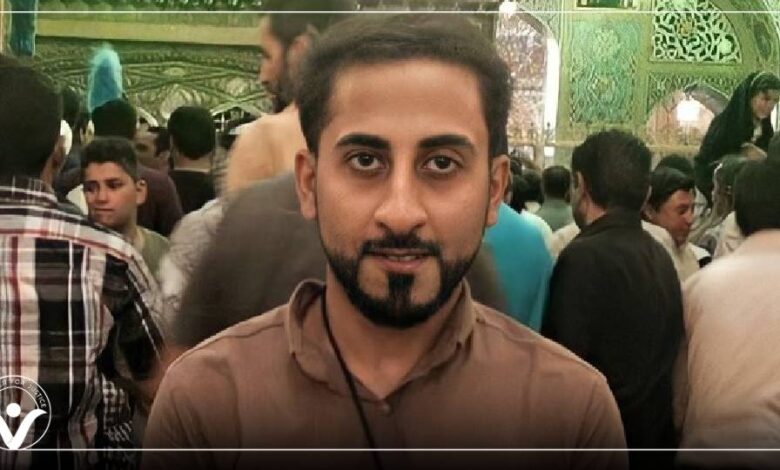
Repression in Saudi Arabia is no longer confined to its own citizens. It has extended beyond its borders, targeting voices perceived to challenge the official narrative. The case of Yemeni journalist Ali Mohsen Abu Lahoum stands as a clear example of this expanding pattern.
In August 2021, Abu Lahoum was arrested in the city of Najran. He was later brought before court and sentenced to 15 years in prison. The charge: publishing tweets from anonymous accounts. The journalist, however, has firmly denied any connection to those accounts, stating that he had no involvement in the content used to convict him.
At its core, the case is not about clear criminal evidence. Rather, it reflects a broader pattern in which digital accusations are used as a ready-made tool to criminalize individuals, without verifiable proof or guarantees of a fair trial. In the absence of transparency, such cases remain opaque, while those accused pay a heavy price with their freedom and future.
The arrest of a Yemeni journalist inside Saudi territory, followed by such a severe sentence, raises deeper questions about the boundaries of judicial authority and the use of legal systems as instruments of security control—not only domestically, but across borders.
This case also fits within a wider context marked by a significant escalation in arrests since the rise of Mohammed bin Salman to power, where journalists, activists, and academics have increasingly been targeted as part of a broader effort to narrow the space for public expression and redefine dissent as a threat.
What happened to Ali Mohsen Abu Lahoum cannot be viewed in isolation. It is part of a larger pattern: a journalist convicted on charges he denies, in proceedings lacking transparency, and sentenced to years behind bars. It illustrates how digital allegations can become tools of punishment—and how denial carries little weight within a system where outcomes appear predetermined.
This case raises a direct and urgent question:
Has freedom of expression—even beyond national borders—become a risk that can lead to imprisonment?