A New Year Behind Bars: Journalist Osama Sahli Punished for Peaceful Expression in Saudi Arabia
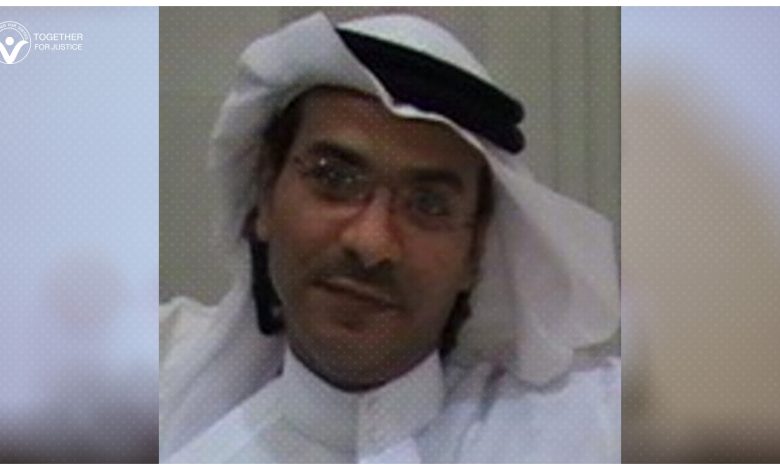
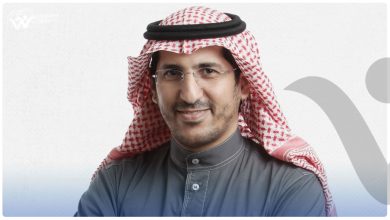
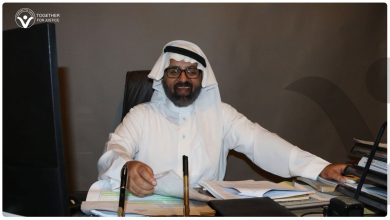
As the new year begins, Together for Justice renews its condemnation of the continued detention of Saudi journalist Osama Sahli, who has now spent more than six years behind bars for nothing more than peacefully expressing his views on reform and human rights. Sahli has been held since his arrest in January 2019, in a case that epitomises the criminalisation of free expression and independent journalism in Saudi Arabia.
Osama Sahli, a former journalist at Al-Bilad newspaper, was known for his measured and responsible writing, advocating transparency, reform, and social development through calm and constructive discourse. His professional and moderate approach, however, did not shield him from repression. Saudi authorities arrested him solely because of tweets in which he expressed opinions on public affairs—speech that falls squarely within the scope of rights protected under both domestic and international law.
Sahli’s arrest was carried out in a manner that reflected the arbitrary nature of the case. Security forces raided his home and detained him without a valid arrest warrant or a clear legal basis. From the outset, he was subjected to a series of violations, including periods of enforced disappearance, ill-treatment, and prolonged denial of contact with his family and legal counsel. These abuses continued until he was brought before the Specialised Criminal Court, which sentenced him to eight years in prison on vague and overused charges such as “supporting terrorism” and “undermining security”—accusations routinely deployed to silence peaceful critics and journalists.
Together for Justice affirms that Osama Sahli’s arrest and conviction constitute a dual violation of Saudi law and international human rights standards. Saudi Arabia’s own Law of Criminal Procedure explicitly prohibits arrest or detention without legal grounds and bans abuse or ill-treatment of detainees. Yet Sahli’s case demonstrates systematic disregard for these safeguards, revealing a broader pattern of legal manipulation aimed at suppressing dissent.
At the international level, Sahli’s continued imprisonment is a clear violation of Article 19 of the Universal Declaration of Human Rights and the International Covenant on Civil and Political Rights, both of which guarantee the right to freedom of opinion and expression. As a member of the United Nations, Saudi Arabia is bound by these principles, yet its ongoing persecution of journalists and writers exposes a severe and persistent erosion of its human rights record.
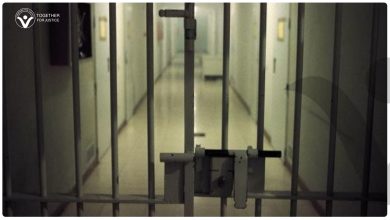
Throughout his years of detention, Osama Sahli has endured harsh prison conditions, psychological abuse, and prolonged denial of family visits, all seemingly intended to punish him for his words and to break his resolve. His transformation from a journalist serving the public interest into a so-called “security threat” underscores how the Saudi authorities redefine peaceful expression as a criminal act.
Together for Justice stresses that Osama Sahli’s case is not an isolated incident, but rather a stark reflection of the broader state of press freedom in Saudi Arabia, where dozens of journalists, writers, and human rights defenders remain imprisoned for exercising their fundamental rights.
Together for Justice calls for the immediate and unconditional release of Osama Sahli, the annulment of the unjust sentence imposed against him, and the provision of fair compensation for the years of arbitrary detention and abuse he has suffered. It also urges the international community—including the United Nations, the European Union, and global human rights organisations—to take urgent action and exert meaningful pressure on Saudi authorities to uphold their international obligations and end the systematic suppression of free journalism.
Osama Sahli’s continued imprisonment, more than six years after his arrest, exposes the emptiness of official narratives about reform and openness. It is a stark reminder that, in Saudi Arabia, independent journalism and free expression remain crimes punished with long prison sentences.