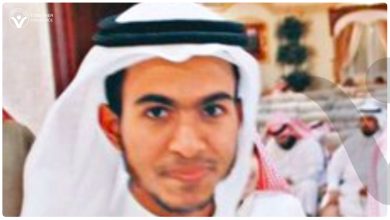
Mohammad Alem Yaseen: A Political Prisoner and Defender of the Rohingya Cause
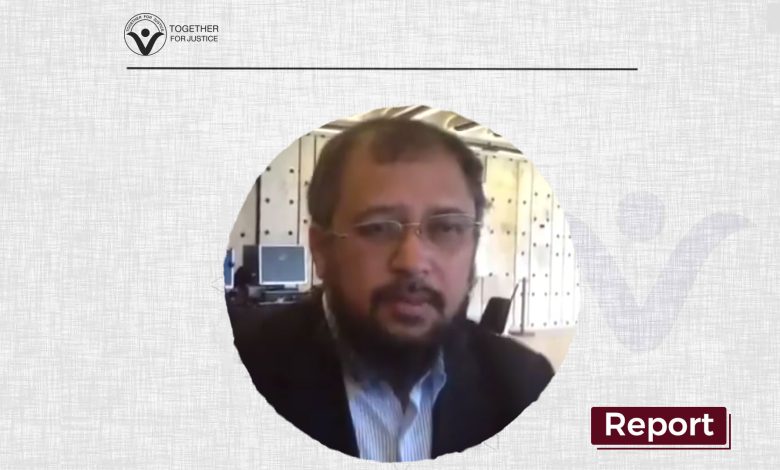
Mohammad Alem Yaseen, Vice President of the Rohingya Global Center, has been serving an unjust 20-year prison sentence, a verdict delivered by Saudi authorities in retaliation for his political and humanitarian activism. Arrested in Mecca in October 2021, Yaseen’s case has drawn international attention as part of a wider crackdown on Rohingya activists residing in Saudi Arabia. Yaseen, along with other activists of Rohingya origin, was apprehended by Saudi authorities for his outspoken defense of the Rohingya people, a minority that has suffered unspeakable oppression and violence at the hands of the Myanmar government for decades.
Background of Mohammad Alem Yaseen
Yaseen is a third-generation Rohingya in Saudi Arabia, born into a family that migrated from the Arakan (Rakhine) State in Myanmar to Saudi Arabia nearly seven decades ago. The Rohingya have historically fled Myanmar due to systematic persecution, with successive generations seeking refuge in countries like Saudi Arabia, hoping for better lives. Mohammad Alem Yaseen, like many in his community, grew up understanding the struggles of his people and developed a deep commitment to advocating for their rights.
Yaseen’s work has extended beyond national borders, as he has been a key figure in global initiatives to raise awareness about the Rohingya crisis. His activism included organizing events, lobbying governments and international organizations, and engaging with media outlets to shine a light on the plight of Rohingya Muslims. His tireless efforts have earned him both admiration from human rights advocates and, unfortunately, the ire of governments resistant to political dissent.
The Arrest and Sentencing
In October 2021, Saudi authorities arrested Yaseen in Mecca, alongside several other Rohingya activists. This arrest marked the beginning of a troubling trend in which the Saudi government, often regarded as a key player in the Muslim world, took repressive measures against those advocating for human rights within its borders. The authorities accused Yaseen and his peers of engaging in political activities that they deemed disruptive to Saudi Arabia’s public order. However, human rights organizations contend that Yaseen’s arrest is part of a broader strategy to suppress political dissidents, particularly those advocating for the Rohingya cause, which could potentially strain Saudi Arabia’s diplomatic relations with Myanmar.
The court handed Yaseen a 20-year prison sentence, a punishment widely condemned by human rights defenders as excessive and unjust. Critics argue that this sentence is not only a violation of Yaseen’s rights to free speech and political participation but also a stark betrayal of the principles of justice and human rights that Saudi Arabia claims to uphold. For Yaseen, the sentence represents a crushing blow to his decades-long fight for his people’s basic rights.
Rohingya Struggle and International Context
The Rohingya, a predominantly Muslim ethnic group, have faced relentless persecution in their home country of Myanmar for generations. They have been subjected to mass killings, forced displacement, and ethnic cleansing, leading to a large-scale exodus of Rohingya refugees to neighboring countries. For decades, activists like Yaseen have raised their voices to highlight the human rights abuses faced by the Rohingya, hoping to garner international support and pressure Myanmar into ending the violence.
Yaseen’s imprisonment represents a critical moment in the global struggle for Rohingya rights. With over one million Rohingya refugees languishing in camps in Bangladesh, and thousands more in precarious situations around the world, the detention of key advocates like Yaseen sets a dangerous precedent. It signals that even in countries where refugees seek asylum, they may not be safe from the repression of their political voices.
Saudi Arabia’s Role and the Silencing of Rohingya Activists
Saudi Arabia, home to a significant Rohingya diaspora, has long been seen as a beacon of hope for many fleeing persecution. However, the arrest and imprisonment of activists like Yaseen suggest a shift in Saudi Arabia’s treatment of political dissidents. The kingdom’s crackdown on activism within its borders has extended to include those advocating for causes beyond Saudi soil, a troubling development for the global human rights community.
The arrest of Mohammad Alem Yaseen raises serious questions about Saudi Arabia’s commitment to protecting human rights, particularly those of oppressed Muslim minorities like the Rohingya. Despite the kingdom’s role as a leader in the Islamic world, it has shown a willingness to suppress political dissent even when it involves the defense of marginalized Muslim communities. This move aligns with Saudi Arabia’s broader efforts to maintain control over political narratives within its borders and curtail any activities it perceives as potentially disruptive to its authority.
The world must not forget the contributions and sacrifices of activists like Mohammad Alem Yaseen. His story stands as both a testament to the courage of human rights defenders and a call to action for those committed to justice and equality.