Saudi Arabia’s Reputation in Crisis: Rights Abuses Persist Behind Sports, Investment, and Global Image Campaigns

Despite massive spending on public relations, entertainment, and global sports, Saudi Arabia’s international reputation remains fundamentally damaged by persistent and systematic human rights violations. The 2025 assessment by Human Rights Watch confirms that repression, abuse of power, and the erosion of the rule of law continue to define the reality inside the country, exposing the gap between the Saudi authorities’ global marketing narrative and the facts on the ground.
Since consolidating power after 2015, Crown Prince Mohammed bin Salman has centralized political, security, and economic authority to an unprecedented degree. This consolidation has not produced meaningful accountability or institutional reform. Instead, it has entrenched a governance model in which economic tools, security agencies, and the judiciary are deployed to suppress dissent, silence communities, and neutralize any form of peaceful opposition.
At the center of this system stands the Public Investment Fund (PIF). Far from being a neutral development vehicle, the fund has played a direct role in facilitating and benefiting from serious human rights abuses. Human Rights Watch documents how PIF-linked projects and policies are inseparable from patterns of arbitrary detention, forced displacement, intimidation of local communities, and exploitation of migrant labor.
PIF-funded megaprojects have been central to large-scale forced evictions and community destruction. In the case of NEOM, members of the Huwaitat tribe were forcibly displaced from land they had inhabited for generations. Those who resisted eviction were arrested, one protester was killed, and others were subjected to extreme sentences, including decades-long prison terms and death sentences. Similar practices were documented in Jeddah, where entire working-class neighborhoods were cleared by a PIF-owned development company to make way for luxury commercial and tourism projects, displacing Saudi citizens, migrants, and low-income residents without due process or adequate remedy.
Internationally, PIF investments have been used as instruments of political influence and reputational laundering. High-profile sports and entertainment deals in the United States, the United Kingdom, and elsewhere have functioned as shields against scrutiny, in some cases including contractual clauses that restrict criticism of Saudi Arabia’s human rights record. These arrangements demonstrate how economic power is leveraged to mute accountability rather than promote reform.
The report further documents the Saudi authorities’ ongoing campaign against freedom of expression, particularly online. Peaceful speech on social media continues to be criminalized, with individuals receiving lengthy prison sentences or facing capital punishment after fundamentally unfair trials. Specialized courts and counterterrorism legislation are routinely used to prosecute teachers, academics, and ordinary citizens solely for expressing opinions, transforming peaceful expression into a security offense.
Migrant workers—who make up approximately 42 percent of Saudi Arabia’s population—remain among the most severely affected groups. The kafala sponsorship system continues to enable widespread labor abuse by granting employers excessive control over workers’ legal status, movement, and livelihoods. Despite limited labor reforms, the legal and regulatory framework still fails to prevent exploitation or provide effective remedies. Workers are barred from forming unions or engaging in collective bargaining, leaving them defenseless in the face of abuse. These conditions are particularly alarming given Saudi Arabia’s award of the 2034 FIFA World Cup, which has already prompted formal complaints to the International Labour Organization over exploitative working and living conditions.
The situation for migrants and asylum seekers at Saudi Arabia’s southern border is even more alarming. Human Rights Watch documents the killing of hundreds of Ethiopian migrants and asylum seekers attempting to cross from Yemen, acts that may amount to crimes against humanity if shown to be part of a state policy. These findings alone fundamentally contradict Saudi Arabia’s claims of adherence to international law and humanitarian standards.
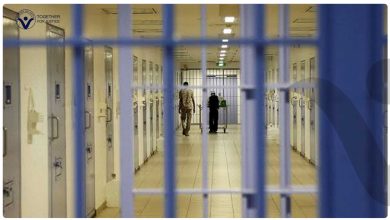
Saudi Arabia’s criminal justice system, as documented in the report, remains deeply compromised. Counterterrorism laws contain vague and overbroad provisions that permit arrest and detention without meaningful judicial oversight, undermining due process and fair trial guarantees. These laws are systematically used to silence dissent and punish peaceful expression, reinforcing a climate of fear and impunity.
The continued use of the death penalty further underscores the depth of the crisis. Courts have upheld death sentences against individuals for acts related to protest, including cases involving defendants who were minors at the time of arrest. These practices directly contradict official assurances and violate fundamental international legal standards.
Even in the digital sphere, Saudi Arabia’s conduct exposes a stark contradiction between rhetoric and reality. The Kingdom’s hosting of global internet governance events contrasts sharply with its routine imprisonment of individuals for online expression, hollowing out any claim to leadership on digital rights or inclusion.
Together for Justice stresses that Saudi Arabia’s problem is not a failure of communication or branding, but a structural crisis rooted in authoritarian governance, repression, and systemic impunity. As long as forced displacement, mass repression, labor exploitation, and politicized justice remain state policy, no amount of investment, sports diplomacy, or global partnerships will rehabilitate the Kingdom’s international standing. Real accountability and respect for fundamental rights—not public relations—are the only path out of this deepening legitimacy crisis.