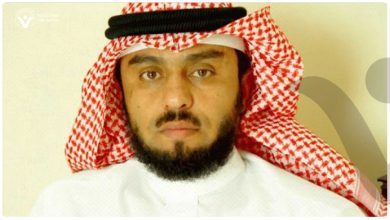
Nearly a Decade in Detention Without Trial: The Case of Sheikh Abdulaziz Al-Tarifi in Saudi Arabia

As the tenth anniversary of his arrest approaches, prominent Saudi preacher and scholar Sheikh Abdulaziz bin Marzouk Al-Tarifi remains arbitrarily detained in Saudi prisons, in one of the longest known cases of detention without trial in the country. For nearly a full decade, his deprivation of liberty has persisted without any legal basis, formal charges, or judicial proceedings, transforming what should have been an exceptional measure into a permanent and unlawful reality—one that constitutes a flagrant violation of fundamental human rights.
Since his arrest on 23 April 2016, Sheikh Al-Tarifi has never been brought before a court, nor have Saudi authorities disclosed the nature of any charges against him. He has been denied the right to defend himself, to challenge the legality of his detention, or to access any form of judicial review. Over time, this case has ceased to represent a delayed legal process and has instead become a clear example of detention entirely outside the rule of law, exercised without oversight or accountability.
Sheikh Al-Tarifi is widely regarded as one of the most influential religious figures in Saudi Arabia and the wider Arab world. Known for his moderate discourse and calm, accessible language, he earned broad respect and a substantial following—particularly among younger audiences. He studied at Imam Muhammad ibn Saud Islamic University and later worked as a religious researcher at the Ministry of Islamic Affairs, Da‘wah and Guidance. His books and lectures were widely circulated before being banned without any judicial justification.
His arrest was preceded by a period of house arrest, followed by a raid and detention linked to his peaceful public positions opposing arbitrary detention and violations of basic freedoms, as well as his criticism of certain public policies, including aspects of “Vision 2030.” Sheikh Al-Tarifi did not advocate violence, nor did he incite hatred or rebellion. Rather, he expressed intellectual and rights-based views, including his assertion that detention without trial represents one of the gravest forms of injustice—an opinion fully consistent with fundamental legal and ethical principles.
Throughout his years of detention, reports have emerged regarding harsh conditions of confinement, severe restrictions on contact with his family, and prolonged isolation from the outside world. Serious concerns have also been raised about his health, particularly in the absence of transparency and adequate medical care. Despite repeated calls from rights organizations, the Saudi regime has maintained complete silence, keeping his case sealed and inaccessible.
The continued detention of Sheikh Abdulaziz Al-Tarifi—now entering its tenth year without trial—constitutes a grave violation of the rights to liberty, fair trial, and freedom of expression, as guaranteed under the Universal Declaration of Human Rights and the International Covenant on Civil and Political Rights. His case reflects a broader, systematic policy targeting independent religious and intellectual voices and removing them from public life through prolonged detention without judgment.
Together for Justice affirms that Sheikh Al-Tarifi’s case is neither isolated nor legally exceptional, but part of a recurring pattern in which arbitrary detention is used as a tool of governance. As a full decade of unlawful detention approaches, international silence is no longer acceptable. Continued inaction only reinforces a culture of impunity.
Accordingly, the organization calls for the immediate and unconditional release of Sheikh Abdulaziz Al-Tarifi, full disclosure of his legal and health status, and an independent international investigation into the circumstances of his detention. Together for Justice further urges the international community—particularly UN mechanisms concerned with arbitrary detention and freedom of expression—to intervene without delay to end this ongoing injustice and to ensure protection for all prisoners of conscience in Saudi Arabia.