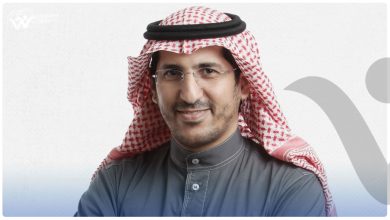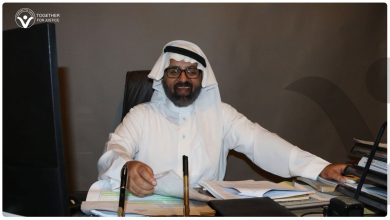
Saudi Academic Detained for Opposing Normalization With Israel: The Case of Abdullah Al-Yahya

Saudi academic Dr. Abdullah Al-Yahya has now spent more than 1,460 days behind bars, solely for exercising his legitimate right to express opposition to normalization with the Israeli occupation and for publicly criticizing normalization agreements signed by several Arab states. Since his arrest in December 2021, Saudi authorities have continued to detain him arbitrarily, without a fair trial or a clear legal basis, in a flagrant violation of freedom of opinion and expression and the most basic standards of justice.
Dr. Al-Yahya’s ordeal began when he was forcibly disappeared in December 2021, after abruptly ceasing all activity on his social media accounts. It was only later revealed that he was being held by State Security (Mabahith). For many months, Saudi authorities refused to disclose his place of detention or the reasons for his arrest, while also denying him contact with his family and preventing him from appointing a lawyer—an intentional breach of fundamental legal safeguards and detainees’ rights.
The direct reason for his arrest was a tweet he posted on 19 December 2021, in which he criticized normalization discourse with the Israeli occupation. He wrote:
“To advocates of normalization and ‘peace’: the last thing the Zionist entity is thinking about—as it moves toward a rabbinical state—is your applause for ‘peace.’”
These words were enough to turn an academic and researcher into a prisoner of conscience, at a time when Saudi authorities were intensifying media and religious campaigns to normalize public discourse around normalization policies and criminalize any voice that rejected or criticized them.
Dr. Abdullah Al-Yahya is not a marginal public figure. He is an academic and researcher specializing in Islamic studies, holding a PhD from the University of the Punjab in Lahore, Pakistan, with a dissertation focused on contemporary Islamic trends in the Gulf Cooperation Council states. Over the years, he has produced research and delivered lectures that promoted critical thinking and political and religious awareness—work that made him a direct target of authorities intolerant of any independent opinion outside the official line.
The continued detention of Dr. Al-Yahya, particularly given his age, constitutes a compounded violation of his fundamental rights. Beyond the inherently arbitrary nature of his arrest from the outset, his prolonged imprisonment without clear charges or a fair trial reflects a blatant disregard for domestic laws and international conventions. Article 19 of the Universal Declaration of Human Rights guarantees everyone the right to freedom of opinion and expression, while Article 9 prohibits arbitrary arrest and detention—principles that Saudi authorities continue to violate systematically.
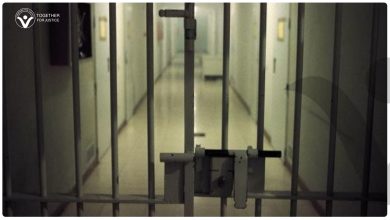
Together for Justice affirms that the detention of Dr. Abdullah Al-Yahya exemplifies how moral and humanitarian positions are criminalized, and how rejecting occupation and defending justice are treated as crimes punishable by imprisonment. The organization calls for his immediate and unconditional release, and for an independent and transparent investigation into all violations he has suffered, including enforced disappearance, denial of contact with his family and lawyer, and inhumane detention conditions.
Together for Justice further stresses the need to hold those responsible accountable and to ensure an end to repressive policies aimed at silencing free voices within the kingdom. The continued imprisonment of Dr. Al-Yahya and other prisoners of conscience confirms that freedom of expression is still treated as a crime in Saudi Arabia, and that peaceful dissent can lead to years of imprisonment without trial.
This reality demands urgent international action. Silence is no longer neutrality; it is tacit complicity. The release of Dr. Abdullah Al-Yahya is no longer merely a human rights demand—it is a humanitarian and moral imperative, and a message that must be clearly affirmed: defending the oppressed and rejecting occupation is a legitimate right, not a crime.