
Syrian Engineer Detained in Saudi Arabia for Sending Humanitarian Support to His Family
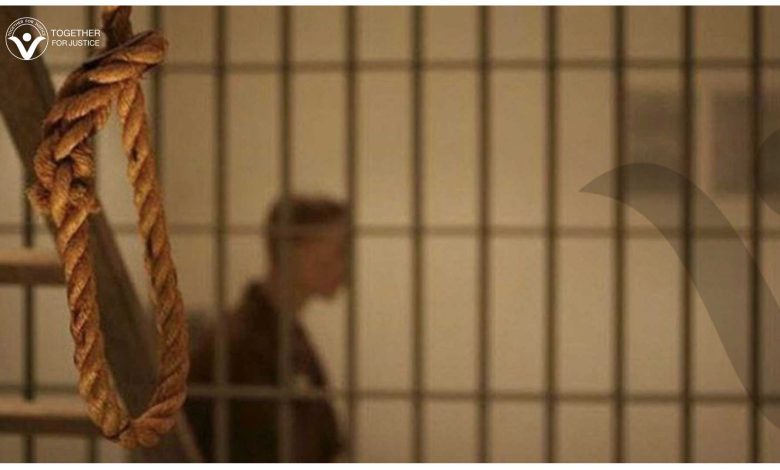
Syrian engineer Abdul Kafi Ahmed Naseef, a long-term resident of Saudi Arabia, remains in arbitrary detention while serving a 15-year prison sentence solely for sending financial and humanitarian assistance to his parents and family members inside Syria. His case stands as one of the clearest examples of the criminalization of humanitarian aid and family solidarity in the Kingdom.
Abdul Kafi lived and worked in Saudi Arabia for years without any criminal record or legal violations. He was neither a political activist nor involved in any prohibited activities. He was an engineer of good standing who chose to support his family as the war in Syria intensified—at a time marked by widespread destruction, mass displacement, and the collapse of basic living conditions. These acts of purely humanitarian assistance were nevertheless treated by the Saudi regime as criminal offenses, resulting in a harsh and disproportionate prison sentence.
The ruling against Abdul Kafi was issued without the guarantees of a fair trial. He was denied effective legal defense and was not afforded meaningful access to legal counsel in a manner consistent with minimum standards of due process. His case reflects a broader pattern in which the judicial system is used to punish individuals for actions that do not constitute crimes under international law, but rather fall within basic humanitarian and familial obligations.
The consequences of Abdul Kafi’s detention extend far beyond his own deprivation of liberty. His immediate family in Saudi Arabia lost their primary provider, while his elderly parents inside Syria—both facing serious health and living hardships—were left without consistent support. In March 2024, his family issued a public appeal calling for his release. In a recorded message, his parents pleaded for his freedom, offering a stark illustration of the human cost of this prolonged detention.
The continued imprisonment of Abdul Kafi Ahmed Naseef for providing humanitarian assistance to his family constitutes a clear violation of international human rights standards, including the right to a fair trial, the prohibition of arbitrary punishment, and the principle that humanitarian aid and family support must not be criminalized. It also raises serious concerns about the use of vague and overly broad legal provisions to punish individuals who pose no security threat and whose actions were driven solely by humanitarian necessity.
Together for Justice affirms that Abdul Kafi’s case is not an isolated incident, but part of a broader policy in which ambiguous charges are used to criminalize humanitarian acts. The organization calls for his immediate and unconditional release, and for a comprehensive review of similar cases in which Syrians and others have been convicted for providing assistance to family members or civilians in conflict zones.
The organization further stresses that any claim to justice or rule of law loses credibility when prisons are used to punish compassion and humanitarian solidarity. The international community and human rights mechanisms bear a clear responsibility to act decisively to end this detention and to ensure that individuals are no longer punished for standing by their families in times of crisis.
The continued imprisonment of Abdul Kafi Ahmed Naseef does not represent merely an individual injustice; it establishes a dangerous precedent that criminalizes humanitarian action itself and calls into question the very meaning of justice when supporting elderly parents is treated as a serious crime.