When Will the World Act? The Ongoing Persecution of Thinkers in Saudi Arabia – The Case of Hassan Farhan Al-Maliki

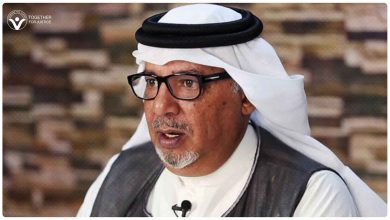
While Saudi authorities continue to promote a carefully crafted image of “reform” and “modernisation” on the international stage, the reality inside the Kingdom tells a starkly different story—one defined by systematic repression of independent thought. At the centre of this contradiction stands Hassan Farhan Al‑Maliki, who has been imprisoned since September 2017 without a final judicial ruling against him.
For nearly eight years, Al-Maliki has remained behind bars in what amounts to prolonged arbitrary detention. He has been denied a fair and timely trial, deprived of basic legal safeguards, and left in a state of perpetual uncertainty. His case represents one of the most extreme examples of how intellectual inquiry has been criminalised in Saudi Arabia.
Al-Maliki is not a political activist nor an advocate of violence. He is an Islamic thinker known for his critical reviews of religious discourse and his willingness to challenge dominant narratives through scholarly debate. His arrest in September 2017 came as part of a sweeping crackdown on scholars, thinkers, and reform-minded figures who sought to open space for dialogue on religion, politics, and society. In this environment, questioning became an offence, and independent thought was treated as a threat.
Throughout his detention, Al-Maliki has been denied effective access to legal counsel. Court proceedings related to his case have been repeatedly postponed, stripping the process of any substance or credibility. The charges brought against him reveal the political nature of the case: possessing books, engaging in intellectual discussions, and calling for a reassessment of religious discourse. These are not crimes under any legal system that respects freedom of thought and expression.
Most alarmingly, Saudi prosecutors have sought the death penalty against Al-Maliki over these charges—a move that marks a dangerous escalation and sends a clear message that intellectual dissent may be met with the harshest possible punishment. This threat alone places his life at constant risk and underscores the punitive intent behind his prosecution.
The continued imprisonment of Hassan Al-Maliki is not merely about silencing one voice. It reflects a broader strategy aimed at deterring any attempt to think, write, or question outside state-approved boundaries. In this system, courts function less as instruments of justice and more as tools of intimidation, while laws are applied selectively to suppress independent minds.
In July 2025, Al-Maliki’s son, Abu Bakr Hassan Al-Maliki, launched a humanitarian campaign to bring renewed attention to his father’s case after years of deliberate silence. The campaign was supported by scholars, researchers, journalists, and religious figures from diverse backgrounds, highlighting that this is not a matter of ideological disagreement but a fundamental human rights issue.
The ongoing detention of Al-Maliki, coupled with the threat of execution, is not a domestic legal matter. It is a direct challenge to the international community’s commitment to defending freedom of thought, belief, and expression. It tests whether global institutions are willing to confront regimes that weaponise the judiciary to discipline ideas rather than uphold justice.
Today, Hassan Farhan Al-Maliki remains confined—separated from his family, his books, and his intellectual life—solely because he dared to think critically and ask difficult questions. His case stands as a powerful reminder that, in Saudi Arabia, reform rhetoric has not translated into protection for fundamental freedoms.
Together for Justice calls on the United Nations, the European Union, and international human rights bodies to take urgent and concrete action to secure Al-Maliki’s immediate release, end his prosecution, and ensure that the judiciary is not used as a weapon against thinkers and scholars.
Continued international silence can no longer be framed as neutrality. It has become a form of complicity. The question remains unavoidable: when will the world take real action against the systematic repression of thought in Saudi Arabia?