Saudi Arabia Sentences Mohammed Fadail to 25 Years After a Trial Marred by Torture Allegations
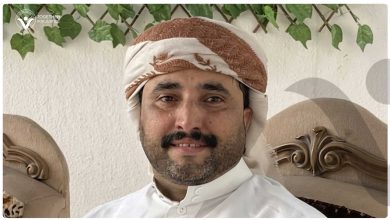
Together for Justice condemns the continued detention of Yemeni businessman and tribal sheikh Mohammed Mutahar Mohammed Fadail, who has been held in Saudi Arabia since 28 June 2020 and is serving a 25-year prison sentence.
According to the available human rights documentation, the case against him relied on social-media material, photographs and videos found on his phone, membership in WhatsApp news groups, and commercial or personal relationships that prosecutors attempted to portray as evidence of political and security affiliations.
Fadail’s case reveals a deeply disturbing trajectory: arrest and disappearance, isolation from his family, alleged torture to force him to sign statements, and finally a quarter-century sentence based on contradictory accusations that both he and his family categorically deny.
Arrested at home and deprived of contact
Mohammed Fadail is a Yemeni national, businessman, and tribal sheikh who had lived in Saudi Arabia since 2014. He maintained commercial investments in Saudi Arabia and Türkiye and reportedly participated in efforts to mediate and resolve tribal disputes in Yemen. Available accounts also describe him as a strong opponent of Yemen’s Ansar Allah, or Houthi, movement.
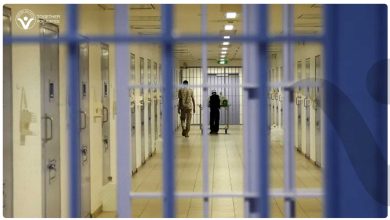
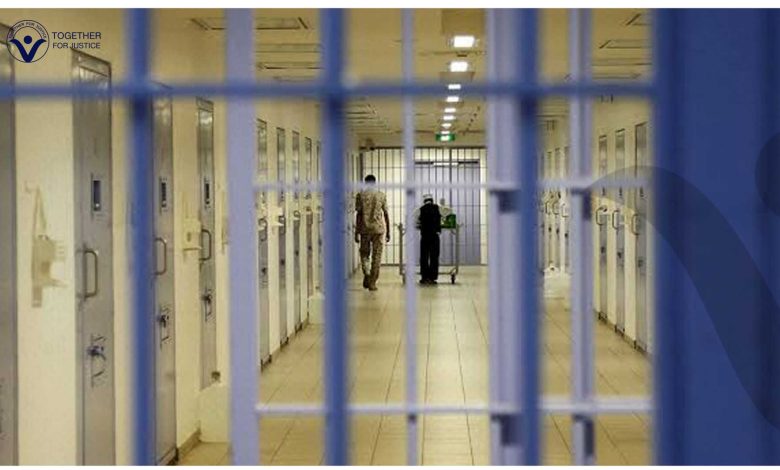
Saudi authorities arrested him at his home on 28 June 2020 and confiscated his phones and other personal devices. His arrest took place during a wider campaign affecting other Yemeni residents, amid reports that detainees were initially held without publicly disclosed reasons and prevented from contacting their families or revealing their whereabouts.
SANAD Human Rights Organization reports that Fadail was beaten on the head and abdomen and kicked in the foot in an attempt to extract statements from him. He was allegedly forced to sign two documents under coercion, held in solitary confinement for four months and 20 days, and denied contact with his family and children living in Türkiye.
If confirmed, the extraction of statements through torture would not only violate his physical and psychological integrity; it would undermine the legal foundation of the entire case. No court meeting minimum standards of justice should admit a confession or signed statement obtained through beatings, threats, or coercive isolation.
Contradictory allegations and criminalised relationships
The nature of the accusations against Fadail raises serious questions about the credibility of the prosecution.
Prosecutors reportedly cited his personal connection to Yasin Aktay, an adviser to the Turkish president, his attendance at an investors’ conference in Türkiye, and a photograph taken with Aktay as elements of the case against him.
The evidence also reportedly included photographs and videos stored on his phone, including material featuring Turkish President Recep Tayyip Erdoğan and a photograph of the late Egyptian president Mohamed Morsi. Other stored images were similarly interpreted by the authorities as indications of political sympathies or prohibited affiliations.
Fadail was accused of supporting or maintaining links with an extraordinary collection of ideologically and militarily opposed groups, including the Muslim Brotherhood, Lebanese Hezbollah, the Houthis, and al-Qaeda. Possessing a photograph or video, however, does not establish membership in an organisation or prove that material or operational support was provided to it.
Fadail denied owning a Facebook account attributed to him that allegedly published pro-Houthi material and asked the authorities to examine his electronic devices. According to published rights documentation, prosecutors failed to establish that the account belonged to him, yet alleged support for the Houthis remained part of the case.
He also stated that an accusation of supporting Hezbollah was added by the court even though it had not previously been presented during his interrogation or included among the charges against which he had prepared his defence.
Regarding WhatsApp groups found on his phone, Fadail explained that they were open news groups with hundreds of members following developments in Yemen. Membership in such a group cannot reasonably establish affiliation with every organisation discussed in its messages.
Combining multiple mutually hostile organisations within a single prosecution does not make the case stronger. Instead, it reinforces concerns that alarming labels were assembled to create the appearance of a security threat without presenting specific criminal acts supported by independently testable evidence.
Seven years increased to a quarter century
On 14 February 2022, Saudi Arabia’s Specialized Criminal Court initially sentenced Fadail to seven years in prison in a case linked to social-media publication and expression. An appeals court subsequently increased the sentence to 25 years.
The dramatic escalation exposes the extreme disproportionality of the punishment. Publicly available information about the case contains no disclosed evidence that Fadail committed, planned, or financed an act of violence. Rather than providing an opportunity to review disputed evidence and allegations of abuse, the appeal process more than tripled his punishment.
Rights sources also report that a Saudi court rejected Fadail’s request to authorise his brother to represent him in legal proceedings involving his investments in Türkiye. This reportedly caused significant financial losses, effectively adding an indirect economic penalty to his lengthy imprisonment.
Separated from his family amid continuing secrecy
Independent information concerning Fadail’s current location, detention conditions, and health remains extremely limited. Rights sources have documented his separation from his family and children, while Saudi authorities have not provided sufficient public information about the safeguards afforded to him during interrogation and trial or any independent investigation into his torture allegations.
The scarcity of information about a detainee must never be normalised. Saudi authorities are responsible for the safety of every individual in their custody. They must disclose where Fadail is being held, provide reliable information about his health, and allow him regular access to his family and legal counsel.
Prolonged incommunicado detention heightens the danger of torture and other ill-treatment while depriving the detainee of one of the most important safeguards against abuse.
A wider pattern affecting Yemeni residents
Fadail’s case cannot be separated from reports of broader arrests of Yemeni nationals residing in Saudi Arabia during the same period. Human rights organisations documented cases in which Yemenis were detained, disappeared for periods of time, denied contact with their families, or prevented from obtaining effective legal assistance.
This pattern is particularly serious because of the vulnerable circumstances facing many Yemeni residents. The continuing conflict in Yemen and their dependence on residency and employment in Saudi Arabia can make them more susceptible to pressure and less able to challenge state authorities or seek protection.
Their immigration status and need for safety must never be exploited to silence them or deprive them of equal protection under the law.
Together for Justice believes that Mohammed Fadail’s 25-year sentence—and the violations reported before and during his trial—raise grave concerns about arbitrary detention, the fairness of the proceedings, and the reliability of the evidence used against him.
We call on the Saudi authorities to:
- Immediately and unconditionally release Mohammed Fadail and quash the unjust sentence imposed upon him.
- Disclose his current location and medical condition and allow regular communication with his family and lawyers.
- Open an independent and impartial investigation into allegations that he was beaten, tortured, held in prolonged solitary confinement, and forced to sign statements under coercion.
- Exclude every statement or confession suspected of having been obtained through torture.
- Stop treating stored digital content or membership in news groups as proof of political or organisational affiliation.
- Provide him with necessary medical care and permit an independent body to visit him and assess his detention conditions.
- Compensate him for the physical, psychological, and financial harm inflicted on him and his family, and hold those responsible for violations accountable.
- End the targeting of Yemeni residents over peaceful expression, personal relationships, or lawful activities, and guarantee their full legal protection.
We further call on the Yemeni government, relevant United Nations mechanisms addressing arbitrary detention and torture, and international human rights organisations to follow the case and press Saudi Arabia to end Fadail’s detention and guarantee his safety.
Holding a man for more than six years, allegedly torturing him, and sentencing him to 25 years over photographs, online material, and relationships that do not prove a recognisable crime is not justice. It is an exceptionally severe political punishment—and a warning to every resident who believes that their private life, personal phone, and social connections remain beyond the reach of state repression.