Mohammed Kadwan Al-Almaei: Retired Saudi Teacher Sentenced to 20 Years in Prison for Attending a Licensed Public Seminar

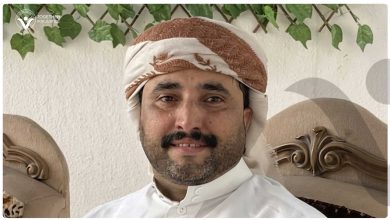
Together for Justice condemns the continued detention of retired Saudi educator and social activist Mohammed Kadwan Al-Almaei, who has been imprisoned since 7 July 2021 and sentenced to 20 years in prison, followed by a travel ban of the same duration.
His case stems primarily from attending a licensed public seminar several years before his arrest and delivering a speech at a mosque in Abha.
The organization stresses that his continued imprisonment, more than five years after his arrest, represents a serious violation of fundamental rights and raises grave concerns about the use of counterterrorism legislation to criminalize peaceful intellectual, religious, and community activities.
From Education and Community Service to Imprisonment
Mohammed Kadwan Al-Almaei spent many years working in the education sector in Rijal Alma’a, Saudi Arabia, before retiring and becoming involved in charitable and community work. He later served as a director of a local charitable organization, contributing to social and humanitarian activities in his community.
However, his professional and community work came to an abrupt end in July 2021, when Saudi authorities arrested him during a security campaign in the Abha region targeting several educators and academics.
The case was linked to Al-Almaei’s attendance at a seminar titled Freedom: Between Slogan and Reality, hosted at the home of Dr. Awad Al-Qarni and delivered by Dr. Saud Al-Funaisan, who was then serving as Dean of the College of Sharia at Imam Muhammad ibn Saud Islamic University.
The seminar had been publicly announced, officially authorized, and attended by members of the public and media representatives. Its content was also shared through media outlets.
Despite these circumstances, attending the seminar years earlier became a central element of the prosecution’s case against Al-Almaei.
Serious Charges Based on Questionable Evidence
According to case documents published by SANAD Human Rights Organization, Saudi prosecutors accused Al-Almaei of supporting terrorist ideology, concealing individuals allegedly associated with such ideas, attempting to undermine state security, and insulting religious scholars.
The prosecution relied in part on what it described as a certified confession.
However, the document reportedly contained only personal information, biographical details, and family history. It did not include an admission of criminal activity or evidence establishing the allegations.
The use of such a document as supporting evidence for serious security charges raises fundamental questions about the reliability of the prosecution’s case and the fairness of the proceedings.
During his defence, Al-Almaei denied involvement in extremist activities or any unlawful organization.
He emphasized that the seminar was a public, authorized event and that he had never participated in any secret or prohibited activity.
Regarding a speech he had previously delivered at a mosque in Abha, he explained that the authorities had already questioned him about it and that he had complied with their instructions, including restrictions on future preaching.
Nevertheless, the Specialized Criminal Court sentenced him to 20 years in prison and imposed a travel ban of the same length under Saudi counterterrorism legislation.
The Punishment Extends Beyond the Prison Walls
Al-Almaei’s imprisonment has also had serious consequences for his family.
Following his arrest, he was dismissed from his position at a charitable organization in Rijal Alma’a, and his salary was discontinued.
According to published human rights reports, he had been the primary provider for a household that included two wives and several children, leaving his dependants without an alternative source of income.
In October 2021, human rights organizations also reported the arrest of one of his wives, raising additional concerns about the treatment of detainees’ relatives. No sufficiently verified recent information about her current status was identified.
Together for Justice stresses that the effects of arbitrary detention frequently extend beyond the individual prisoner, affecting the economic security, emotional well-being, and stability of entire families.
No family should be subjected to hardship or intimidation because of a relative’s peaceful exercise of fundamental rights.
When Peaceful Intellectual Activity Becomes a Security Offence
Al-Almaei’s case illustrates the dangers of applying counterterrorism legislation to peaceful activities that do not involve violence or incitement.
Attending a public seminar, participating in intellectual discussions, and delivering speeches are forms of expression that fall within the protection of fundamental human rights.
The criminalization of such activities raises serious concerns about freedom of opinion, expression, and peaceful assembly.
The case also raises important questions about the principle of legality and the prohibition against retroactive criminal punishment, particularly when authorities use activities that were publicly authorized at the time as grounds for criminal prosecution years later.
Together for Justice considers a 20-year prison sentence arising from such circumstances grossly disproportionate and inconsistent with fundamental principles of justice and human rights protection.
The organization warns that using broad security charges against educators, academics, and community figures creates a chilling effect on public discussion and civic participation.
A society cannot promote education, intellectual development, and meaningful reform while treating participation in peaceful discussions as grounds for decades of imprisonment.
Calls for Immediate Release and Accountability
Together for Justice calls on the Saudi authorities to immediately and unconditionally release Mohammed Kadwan Al-Almaei, overturn his 20-year prison sentence, and lift the travel ban imposed against him.
The organization also demands an independent and transparent review of his prosecution, including the evidence presented against him and the legal grounds for his conviction.
Pending his release, Al-Almaei must be guaranteed regular access to his family and legal counsel, as well as appropriate medical care and protection from ill-treatment.
Together for Justice further calls for effective remedies for the material and social harm suffered by his family, including the economic consequences of his dismissal and loss of income.
The organization urges relevant United Nations human rights mechanisms, particularly those addressing arbitrary detention and freedom of expression, to examine his case and press for an end to the criminalization of peaceful activities.
More than five years after his arrest, Mohammed Kadwan Al-Almaei remains behind bars under a sentence that would deprive him of two decades of freedom.
His case raises a fundamental question: how can a retired educator be sentenced to 20 years in prison over participation in a publicly authorized seminar held years before his arrest?
Attending seminars and expressing peaceful opinions are not crimes. No individual should lose 20 years of freedom for exercising fundamental human rights.