Seven Years of Arbitrary Detention: Freedom for Nayef Al-Handas and All Prisoners of Conscience in Saudi Arabia

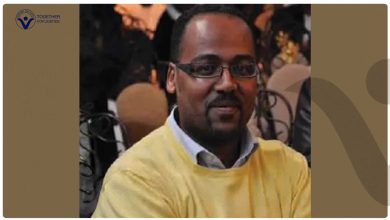
Nearly seven years have passed since the arrest of Saudi political and human rights activist Nayef Al-Handas, who remains detained to this day without a fair trial or a clear determination of his legal status—constituting a flagrant violation of the most basic human rights and legal safeguards. Since his arrest in April 2019 from his home in the city of Al-Khobar, as part of a broad crackdown targeting activists, thinkers, and critics, Al-Handas has been held at the General Intelligence (Mabahith) Prison in Dammam under harsh detention conditions, amid a continuous pattern of abuse.
Born on 29 June 1991, Nayef Al-Handas is a human rights activist, writer, and translator known for his peaceful advocacy on key issues, including women’s rights, freedom of expression, and political reform. He relied on writing, translation, and human rights work as legitimate means to express his views, without incitement to violence or calls for harm. Despite this, he was charged with vague, politically motivated accusations, including incitement against the ruling system, links to hostile states, and affiliation with organizations deemed enemies by the authorities—without the presentation of any concrete evidence or legal documentation to substantiate these claims.
These charges reflect a recurring pattern in the Saudi authorities’ pursuit of activists, whereby the judiciary is used as a tool to silence dissent rather than to administer justice. Like many prisoners of conscience, Al-Handas has been held for prolonged periods without trial, in clear violation of Saudi criminal procedure law, which guarantees detainees the right to know the charges against them, to defend themselves, and to be brought before an independent court within a reasonable time.
Throughout his years of detention, Nayef Al-Handas has been subjected to ill-treatment, including medical neglect, harassment, denial of regular contact with his family, and denial of access to legal counsel. These practices not only violate Saudi law, but also contravene fundamental international human rights standards. His continued detention without a fair trial or clear legal basis constitutes arbitrary detention in its full legal sense.
Al-Handas’s case further represents a clear breach of international obligations, foremost among them the Universal Declaration of Human Rights, particularly Article 9, which prohibits arbitrary arrest and detention, and Article 19, which guarantees freedom of opinion and expression. Detaining an individual for years solely because of peaceful views is further evidence of a systematic policy aimed at silencing voices and deterring independent human rights and intellectual activity.
In this context, official claims of reform and respect for human rights appear fundamentally at odds with reality. Systematic repression against activists and opinion-holders continues, with security and judicial tools deployed to entrench fear rather than protect rights. This approach has led to a serious deterioration in the country’s human rights record and undermines any assertions of reform or openness.
The continued detention of Nayef Al-Handas for nearly seven years without a fair trial constitutes a grave violation that demands urgent action. Human rights actors call for his immediate and unconditional release, along with the release of all political detainees and prisoners of conscience; an end to the use of the judiciary as a means of political retaliation; guarantees of fair and independent trials in line with international standards; and accountability for those responsible for abuses against detainees in Saudi prisons.
The case of Nayef Al-Handas is not an isolated incident. It reflects the reality faced by hundreds of activists, journalists, and intellectuals who pay a heavy price for the peaceful exercise of their fundamental rights. His release, and the release of all prisoners of conscience, is a necessary step toward a path grounded in justice, respect for human dignity, and the rule of law.