The Case of Saadallah Al-Hawali as a Model of Collective Punishment Against Prisoners of Conscience in Saudi Arabia

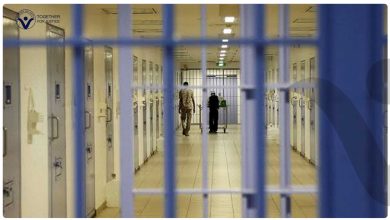
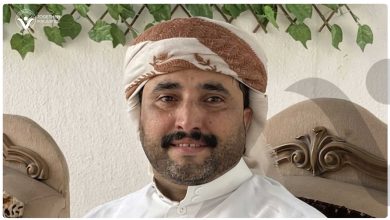
The case of Saadallah Al-Hawali, the younger brother of detained cleric Sheikh Safar Al-Hawali, represents a clear example of collective punishment exercised by Saudi authorities against prisoners of conscience and their families. Saadallah Al-Hawali has been subjected to harsh and degrading detention conditions, not for any proven criminal act, but solely because of his familial relationship to a figure perceived by the authorities as a political adversary.
Saadallah Al-Hawali was expected to be released in 2022 after completing a four-year prison sentence. However, in January 2023, Saudi authorities arbitrarily increased his sentence from four years to fourteen years, despite the original sentence having already expired. This decision was taken without any legal justification and constitutes a blatant violation of basic legal principles, including the prohibition of retroactive punishment and double jeopardy.
His ordeal began in July 2018, when Saudi security forces raided his home and arrested him, transferring him to an undisclosed location where he remained for years. He was later sentenced in a secret trial to four years in prison based on fabricated charges. The accusations reportedly related to alleged involvement in circulating an electronic copy of the book “Muslims and Western Civilization,” authored by his brother Sheikh Safar Al-Hawali, a work that criticizes corruption and excessive state spending on projects that do not serve the public interest.
The arbitrary escalation of Saadallah Al-Hawali’s sentence cannot be viewed in isolation. It forms part of a broader policy of collective punishment systematically employed by Saudi authorities against dissidents and their families. The real motive behind Saadallah’s persecution lies in his relationship to Sheikh Safar Al-Hawali, whom the authorities continue to treat as an enemy despite his advanced age and severely deteriorating health.
According to informed sources, Sheikh Safar Al-Hawali suffers from pelvic fractures, has experienced previous strokes, and endures serious kidney problems. Despite these critical medical conditions, he has been detained under harsh circumstances, reflecting the authorities’ determination to silence dissent regardless of the human cost.
The repression has extended beyond Saadallah and Sheikh Safar to other family members. Abdullah Al-Hawali, Sheikh Safar’s son, donated one of his kidneys to his father before being arrested himself. Living with a single kidney requires specialized medical care, a strict diet, and a clean, stable environment to prevent life-threatening complications. Yet the dire conditions inside Saudi prisons—particularly for political detainees—pose a serious risk to his health and survival.
Saadallah Al-Hawali has also been systematically denied basic medical care since his arrest, a practice widely documented in Saudi prisons against political detainees. Despite repeated appeals by human rights organizations and international observers, Saudi authorities continue to impose a strict information blackout on the conditions of prisoners of conscience, exacerbating the suffering of detainees and leaving their families in a permanent state of fear and uncertainty.
The collective punishment inflicted on the Al-Hawali family illustrates the Saudi authorities’ broader approach toward perceived dissent: arbitrary arrests, enforced disappearance, secret trials, denial of legal representation, and complete isolation from the outside world. Their case exemplifies a deliberate policy aimed at intimidation, coercion, and the eradication of peaceful opposition.
Together for Justice calls for the immediate release of Sheikh Safar Al-Hawali and his family members, given the grave threat that continued detention poses to their lives and health. The organization further demands the unconditional release of all prisoners of conscience who have been detained solely for peacefully expressing their views.
The Al-Hawali family’s case stands as a stark reminder of the depth of repression in Saudi Arabia and underscores the urgent responsibility of the international community to hold Saudi authorities accountable for systematic human rights violations and to seek justice for those arbitrarily detained without legal basis.