Salem Al-Dini Enters His Tenth Year in Saudi Detention, Serving a 15-Year Sentence While His Entire Family Faces a Travel Ban
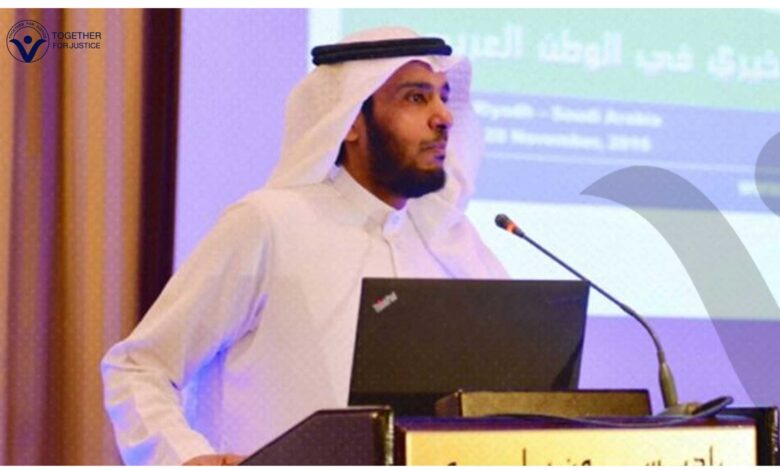
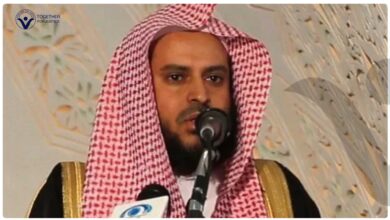
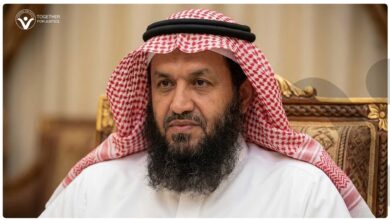
Together for Justice renews its call for the immediate and unconditional release of Saudi academic Dr. Salem bin Ahmed Al-Dini, former Deputy Minister of Labour and Social Development, who has entered his tenth year behind bars since his arrest on 12 September 2017.
Al-Dini is serving a 15-year prison sentence following years of detention marked by serious human rights concerns, including prolonged solitary confinement, restrictions on legal representation, and a travel ban reportedly imposed on every member of his family.
More than nine years after his arrest, his continued imprisonment raises serious questions about the fairness of the proceedings against him, the conditions of his detention, and the use of punitive measures against relatives who have not been accused of any offence.
Together for Justice stresses that Al-Dini’s case represents more than the prolonged imprisonment of a former government official. It also highlights how restrictions associated with political detention can extend beyond the individual and affect an entire family.
From Public Service and Community Development to Prison
Before his arrest, Salem Al-Dini had established a distinguished career in education, public administration, and community development.
He earned a doctorate in mechanical engineering from Texas A&M University in the United States and served as a professor in the Mechanical Engineering Department at King Fahd University of Petroleum and Minerals.
He later held senior positions in Saudi Arabia’s social development sector, including the post of Deputy Minister of Labour and Social Development.
Alongside his academic and government responsibilities, Al-Dini contributed to charitable and voluntary initiatives. Over more than two decades, he participated in developing civil society organizations, supporting charitable associations, and promoting youth development and community engagement.
However, his professional career was abruptly interrupted when he was removed from his government position shortly before his arrest.
In September 2017, Saudi security forces reportedly raided his home at night and detained him during a wider crackdown targeting academics, religious scholars, writers, and other public figures.
His arrest raised concerns about the targeting of individuals associated with peaceful reform, independent thought, and community initiatives.
A 15-Year Sentence Following Years of Detention
Human rights reports indicate that Al-Dini faced serious restrictions on his legal rights following his arrest, including prolonged detention without adequate judicial oversight, denial of effective access to legal representation, and restrictions on family communication.
In November 2018, information emerged concerning accusations related to the financing of organizations outside Saudi Arabia and criticism of the country’s leadership.
The nature of these allegations raises significant concerns, particularly given the absence of publicly accessible judicial evidence establishing the precise legal basis for his conviction.
In October 2022, human rights sources reported that Al-Dini had been sentenced to 15 years in prison, more than five years after his arrest.
The full judgment and detailed reasoning supporting the conviction have not been made sufficiently available to the public, limiting independent scrutiny of the proceedings.
Together for Justice emphasizes that the imposition of a lengthy prison sentence does not relieve the authorities of their obligation to guarantee a fair trial, including access to effective legal counsel, the right to examine and challenge evidence, and the opportunity to appeal before an independent and impartial court.
The organization also stresses that peaceful expression, lawful charitable activities, and independent civic engagement must never be criminalized through broadly framed national security allegations.
Prolonged Solitary Confinement and Concerns Over Detention Conditions
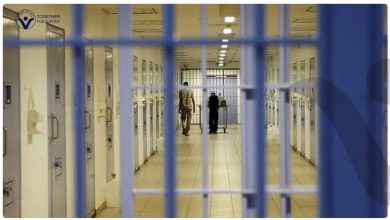
One of the most troubling aspects of Al-Dini’s case is his reported placement in solitary confinement for prolonged periods, accompanied by restrictions on contact with his family and the outside world.
Extended solitary confinement can have severe psychological and physical consequences, particularly when combined with uncertainty over legal proceedings and limited access to family members and lawyers.
Under the United Nations Standard Minimum Rules for the Treatment of Prisoners, known as the Nelson Mandela Rules, prolonged solitary confinement exceeding 15 consecutive days is prohibited, as is indefinite solitary confinement.
Together for Justice warns that isolation used as punishment or psychological pressure may amount to cruel, inhuman, or degrading treatment, depending on its duration and circumstances.
While reports document prolonged periods of solitary confinement, independently verified information about Al-Dini’s current detention conditions and health remains limited.
The organization therefore demands full disclosure of his present circumstances, guarantees of appropriate medical care, and regular communication with his family and legal representatives.
An Entire Family Subjected to Travel Restrictions
The consequences of Al-Dini’s detention have reportedly extended far beyond the prison walls.
According to published human rights information, Saudi authorities imposed travel bans on all members of his family, restricting their ability to leave the country despite their not being defendants in his criminal case.
Together for Justice considers such measures particularly alarming because they raise serious concerns about collective punishment.
Restrictions imposed on relatives solely because of their family relationship with a detainee undermine the principle of individual responsibility and interfere with fundamental rights, including freedom of movement.
These measures can also affect access to education, employment, family life, and opportunities abroad, imposing additional hardship on individuals who have not been accused of wrongdoing.
The organization stresses that family relationships must never become grounds for punitive restrictions.
Any limitation on an individual’s freedom of movement must have a clear, lawful, individualized justification and be subject to effective judicial review.
If the restrictions imposed on Al-Dini’s relatives are based solely on their relationship with him, they should be lifted immediately.
Nine Years of Imprisonment and Continuing Human Rights Concerns
As Salem Al-Dini enters his tenth year of detention, serious questions remain about his legal situation, health, detention conditions, and the continuing restrictions affecting his family.
His case reflects broader concerns about lengthy prison sentences imposed following proceedings lacking sufficient transparency, particularly when accompanied by allegations of prolonged isolation and denial of fundamental procedural safeguards.
Together for Justice stresses that genuine judicial reform must be reflected in the effective protection of human rights, not merely in official announcements.
This requires independent courts, transparent proceedings, protection against arbitrary detention, and an end to punitive practices affecting detainees’ families.
The continued imprisonment of a former government official and academic, together with the reported restrictions imposed on his relatives, demands independent scrutiny and effective remedies.
Calls for Immediate Release and an End to Family Restrictions
Together for Justice calls on the Saudi authorities to immediately and unconditionally release Dr. Salem Al-Dini and overturn his conviction where it rests on peaceful activities or proceedings that failed to meet international fair trial standards.
The organization also demands an immediate end to any ongoing solitary confinement, full disclosure of his health and legal status, and guarantees of appropriate medical treatment and regular access to his family and lawyer.
Together for Justice further calls for the immediate lifting of arbitrary travel bans imposed on his family members and an end to all restrictions targeting relatives because of their association with a detained individual.
An independent investigation must also be conducted into the circumstances of his arrest, prolonged solitary confinement, restrictions on legal representation, and other reported violations.
Those responsible for any established abuses must be held accountable, and effective remedies must be provided to Al-Dini and his family.
The organization urges relevant United Nations human rights mechanisms, particularly those concerned with arbitrary detention and freedom of expression, to examine his case and seek concrete guarantees for his rights and safety.
A Decade of Lost Freedom, With the Punishment Extending to His Family
Salem Al-Dini devoted much of his professional life to education, public service, and community development. Today, he has entered his tenth year in Saudi detention under a 15-year prison sentence, while his family continues to face restrictions on its freedom of movement.
More than nine years of imprisonment, prolonged periods of solitary confinement, a 15-year sentence, and travel restrictions imposed on an entire family constitute a deeply troubling human rights situation that demands urgent action.
Together for Justice reiterates that no individual should be deprived of liberty for peaceful expression or legitimate civic activity, and no family should suffer punitive restrictions merely because a relative has been imprisoned.
Salem Al-Dini must be released, the restrictions on his family must be lifted, and the violations associated with his detention must be independently investigated. Justice cannot be achieved while prolonged imprisonment and punishment extending to family members remain unaddressed.