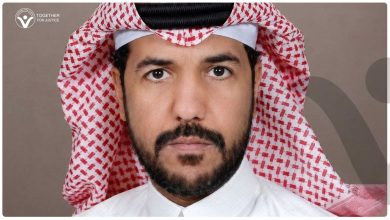
Four Years of Arbitrary Detention: The Case of Musaa’ed Abdulrabbu Al-Dousi Al-Zahrani in Saudi Arabia
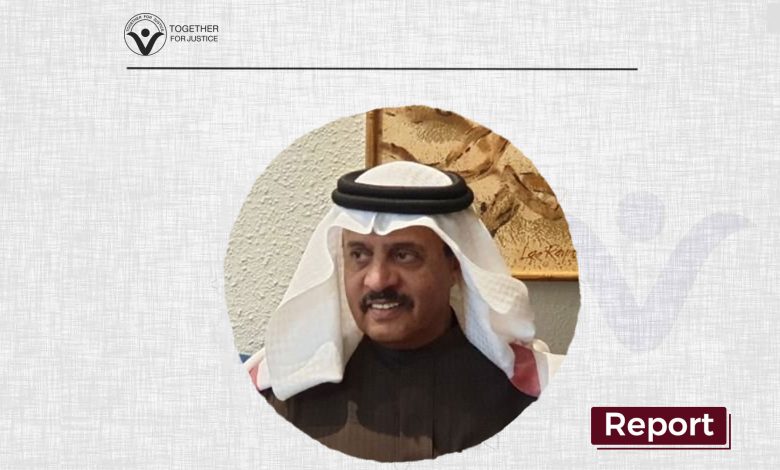
As Saudi Arabia continues its push for modernization and economic diversification under its Vision 2030 program, the grim reality of human rights abuses remains a significant issue. One such case is that of Musaa'ed Abdulrabbu Al-Dousi Al-Zahrani, who has entered his fifth year of arbitrary detention without trial. His story is a stark reminder of the harsh consequences individuals face for speaking out against the government, even in a peaceful manner.
Arrested for Speaking Truth
In July 2020, Al-Zahrani was detained by Saudi authorities after sending a letter to the Royal Court. The content of this letter was a piece of advice concerning what he described as “moral corruption” being promoted by the Kingdom’s General Entertainment Authority. The institution, which is tasked with leading Saudi Arabia’s cultural reform by introducing concerts, cinema, and other entertainment events, has been at the center of debates about the shifting cultural landscape in the traditionally conservative country.
While Al-Zahrani’s actions were neither criminal nor violent, his criticism of the government’s policies apparently crossed a line. His arrest, like many others in Saudi Arabia, was made without formal charges or a clear legal process. Now, four years later, he remains in detention without ever having faced trial.
The Silence of the Courts
What is particularly concerning about Al-Zahrani’s case is the complete absence of legal proceedings. For four years, the Saudi judiciary has not provided any justification for his continued detention. No charges have been formally filed, and no trial has been held, leaving Al-Zahrani in a legal limbo. This arbitrary imprisonment is a direct violation of international human rights standards, including the right to a fair trial and protection from arbitrary detention, as outlined in the Universal Declaration of Human Rights and the International Covenant on Civil and Political Rights, both of which Saudi Arabia has signed.
A Grim Pattern of Repression
The case of Musaa'ed Al-Zahrani is emblematic of a broader trend of human rights abuses in Saudi Arabia. Over the past decade, the Saudi government has intensified its crackdown on dissent, targeting activists, journalists, intellectuals, and even ordinary citizens who dare to express criticism. Freedom of expression is severely curtailed, and those who speak out, even in private communications such as letters or social media posts, often face dire consequences.
The arrest and ongoing detention of individuals like Al-Zahrani reflect the government's efforts to stifle any criticism of its policies, particularly when it comes to the controversial activities of the General Entertainment Authority. These activities, which include events that were previously considered taboo in Saudi Arabia, have been met with mixed reactions from the public. However, the government appears determined to suppress any form of dissent, using detention, torture, and other repressive tactics.
Calls for International Accountability
As Al-Zahrani begins his fifth year in detention, the international community must renew its focus on the dire state of human rights in Saudi Arabia. Despite the Kingdom’s attempts to present itself as a progressive nation, the reality is one of authoritarianism and repression. Arbitrary arrests, lack of due process, and secretive trials are all part of a system that prioritizes the preservation of power over basic human rights.
The international community, including human rights organizations, governments, and UN bodies, must hold Saudi Arabia accountable for these abuses. The case of Musaa'ed Abdulrabbu Al-Dousi Al-Zahrani is not an isolated incident, but part of a larger pattern that demands urgent intervention. The arbitrary detention of citizens for merely expressing their views cannot be allowed to continue unchecked.
Musaa'ed Abdulrabbu Al-Dousi Al-Zahrani’s ongoing detention highlights the grim state of human rights in Saudi Arabia. His four-year imprisonment without trial, simply for offering criticism in a private letter, underscores the lengths to which the Saudi government will go to silence dissent. As calls for reform grow louder, the international community must act to pressure Saudi authorities to release Al-Zahrani and others like him, and to end the practice of arbitrary detention. Without such intervention, the future of human rights in Saudi Arabia remains bleak.