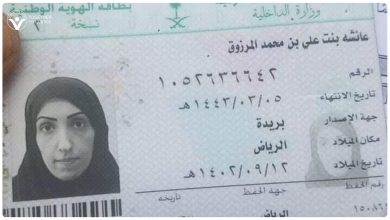
From an Invalid Hajj Permit to Terrorism Charges: The Case of French-Egyptian Detainee Amr Abdel Fattah Exposes Saudi Arabia’s Abuse of Security Laws
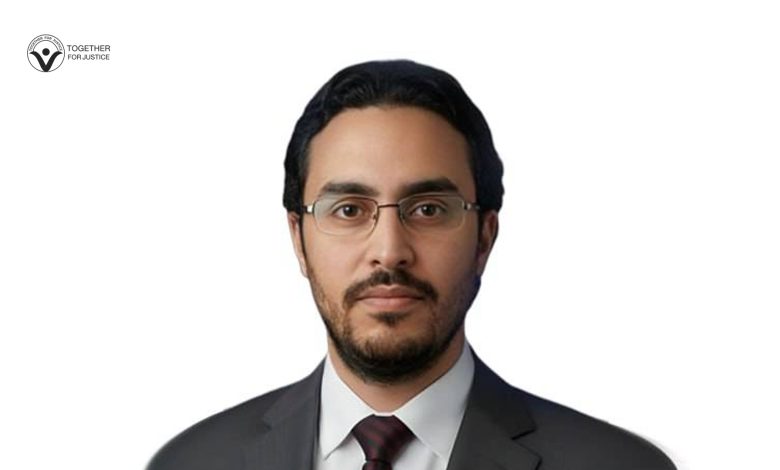
Together for Justice condemns the violent assault against French-Egyptian detainee Amr Abdel Fattah inside Dhahban Prison in Jeddah, after he filed a complaint refusing to share a cell with an inmate reportedly suffering from mental health disorders and attacking other prisoners. According to available information, Abdel Fattah was severely beaten by prison guards, leaving him with serious injuries that prevented him from attending his latest court hearing.
This latest incident cannot be treated as an isolated prison abuse. It is part of a wider pattern of violations that Abdel Fattah has reportedly faced since his arrest in Saudi Arabia, raising serious concerns over his physical and psychological safety, as well as the use of violence, isolation, and denial of basic rights as tools of pressure and retaliation inside detention facilities.
The case dates back to 16 June 2024, while Abdel Fattah was performing Hajj. Saudi authorities initially detained him over allegations related to an invalid Hajj permit, after he had reportedly fallen victim to a fraud scheme involving Hajj visas and permits. What should have been handled, at most, as an administrative or immigration-related matter was later escalated into a security case.
Amr Abdel Fattah is an engineer residing in France with his wife and three children. Following a verbal altercation with a security officer, he was taken to the Haram Police Station and later transferred to Dhahban Prison in Jeddah. Since then, he has reportedly been subjected to torture, ill-treatment, death threats, and deprivation of food.
His family appointed a lawyer to represent him, but the lawyer was reportedly prevented from visiting him or accessing the case file. In December 2024, Abdel Fattah remained detained despite the expiry of the maximum period legally permitted for administrative detention for investigative purposes.
In May 2025, he appeared for the first time before the Specialized Criminal Court, a court normally used for terrorism and state security cases. During the session, he was reportedly surprised by the charges brought against him, which included illegal entry, concealing those who assisted him, insulting the Saudi government, insulting pilgrims, insulting the head of a foreign state, violating regulations, and praising a detainee in a case classified as “terrorism-related”.
The central question is clear: how can a case that began with an allegedly invalid Hajj permit — a matter that would normally result in a fine, deportation, or administrative penalty — turn into terrorism-related proceedings before the Specialized Criminal Court? How can prosecutors seek a severe discretionary punishment and the maximum penalties under counterterrorism legislation against a man whose case originated from a Hajj permit dispute?
This escalation from a possible administrative violation to a terrorism case reveals a serious abuse of security laws and reflects a broader pattern in Saudi Arabia, where the concept of “terrorism” is expanded to include speech, disputes, criticism, or conduct that does not constitute any genuine security threat. The use of the Specialized Criminal Court in Abdel Fattah’s case appears grossly disproportionate to the original facts and raises fears that the charges were constructed to justify prolonged detention and harsher punishment.
The violations are further aggravated by the fact that, since November 2025, Abdel Fattah has reportedly been denied any contact with his family. This measure appears punitive and compounds the severity of his detention, especially in light of the latest assault inside Dhahban Prison and the previous allegations of torture and ill-treatment.
From a legal perspective, Abdel Fattah’s case involves multiple violations, including arbitrary detention, ill-treatment, denial of access to legal counsel, denial of family contact, and the use of an exceptional security court in a case that does not appear to be based on any recognizable act of terrorism. The assault against him after he filed a complaint for his own safety also represents a direct violation of the state’s duty to protect detainees in its custody.
Together for Justice holds the Saudi authorities fully responsible for Amr Abdel Fattah’s safety and well-being. The organization calls for an immediate, independent, and transparent investigation into the assault against him in Dhahban Prison, and for accountability for all those involved in beating, threatening, torturing, or denying him his basic rights.
Together for Justice further calls for his immediate release, the dropping of all terrorism-related charges that are disproportionate to the original incident, urgent access to independent medical care, and immediate communication with his family and lawyer. The organization also urges the French and Egyptian authorities to intervene seriously and ensure consular access, legal protection, and full monitoring of his detention conditions and trial.
The case of Amr Abdel Fattah exposes how, in Saudi Arabia, an administrative issue linked to Hajj can be transformed into a state security case, and how a man who reportedly fell victim to a permit fraud scheme can end up facing terrorism charges. This is not justice. It is arbitrary escalation that empties the law of its meaning and turns the judiciary into a tool of punishment rather than protection.