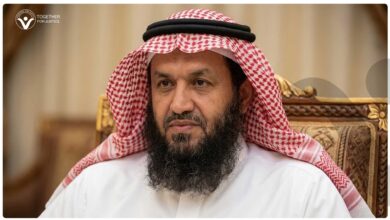
Sami Al-Thubaiti: Saudi Journalist Imprisoned for Calling for Reconciliation with Qatar and Rejecting UAE Interference Before Riyadh Adopted the Same Position

Together for Justice renews its call for the immediate and unconditional release of Saudi journalist Sami Al-Thubaiti, head of the monitoring department at the online newspaper Tawasul, who has been detained since September 2017 over tweets in which he called for reconciliation with Qatar, Gulf unity, and rejected UAE interference in Saudi affairs.
Al-Thubaiti was arrested only days after publishing posts expressing hope that the Gulf crisis would end and that unity would be restored. His words contained no incitement to violence, no threat to public order, and no support for any unlawful activity. They were a peaceful expression of opinion at a time of political tension.
Yet Saudi authorities treated those words as grounds for arrest. Al-Thubaiti was reportedly referred to the Specialized Criminal Court, which handles terrorism-related cases, despite the fact that his case was based on peaceful tweets. His legal status has not been disclosed clearly, and serious concerns remain regarding the fairness and transparency of the proceedings against him.
The central contradiction in his case is impossible to ignore. Saudi Arabia later officially reconciled with Qatar and adopted the same path of de-escalation that Al-Thubaiti had called for before his arrest. If reconciliation with Qatar later became official Saudi policy, why is a journalist still imprisoned for calling for it earlier?
This exposes the real nature of his detention. Al-Thubaiti was not punished because his views endangered the country. He was punished because he expressed an independent opinion before the state allowed such a position to be publicly accepted. In Saudi Arabia, an idea can be treated as a crime when voiced by a citizen, then later become state policy when announced by the authorities.
Al-Thubaiti’s rejection of UAE interference in Saudi affairs is also not a crime. Calling for respect for national sovereignty and opposing foreign interference in a country’s political or media decisions is a legitimate position protected under freedom of expression. It cannot be transformed into a security offence simply because it contradicts the official mood of the moment.
His case therefore represents a serious violation of press freedom and the right to peaceful expression. A journalist was imprisoned for advocating reconciliation and defending the principle of national sovereignty — two positions that should fall within normal public debate in any country that respects law, media freedom, and civic discussion.
Together for Justice stresses that Al-Thubaiti’s continued detention, years after the Gulf crisis ended, is an additional indictment of the Saudi authorities. Keeping him in prison today cannot be justified politically, legally, or morally. It confirms that the purpose of the case was not to protect stability, but to punish independent speech.
The case also forms part of the wider crackdown launched in September 2017 against scholars, preachers, journalists, writers, and independent public figures. That campaign turned peaceful expression into a security matter and helped entrench the use of courts and vague charges to silence public voices.
From a human rights perspective, Sami Al-Thubaiti’s detention violates his right to freedom of opinion and expression, his right to liberty and security, and his right to a fair and transparent trial. Referring journalists and opinion-holders to terrorism-related courts over peaceful tweets reflects the politicization of the judiciary and the criminalization of public debate.
Together for Justice calls on the Saudi authorities to immediately and unconditionally release Sami Al-Thubaiti, disclose his current legal and health status, and allow him to return to his family and professional life without restrictions, travel bans, or further intimidation.
The organization also calls for all charges against him to be dropped, his reputation to be restored, and fair compensation to be provided for the years he spent in arbitrary detention, as well as for the harm inflicted on his family and career.
Sami Al-Thubaiti committed no crime. He called for reconciliation with Qatar and rejected foreign interference in Saudi affairs. Years later, the Saudi authorities themselves embraced reconciliation with Qatar. His continued imprisonment raises one unavoidable question: why is a journalist still behind bars for a position the state later adopted?