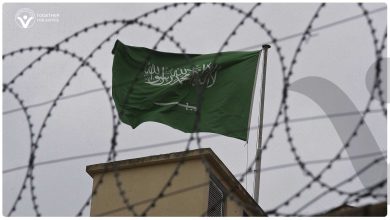
An Egyptian Citizen Sentenced to 19 Years in Saudi Arabia Over a Tweet Criticizing Turki Al-Sheikh
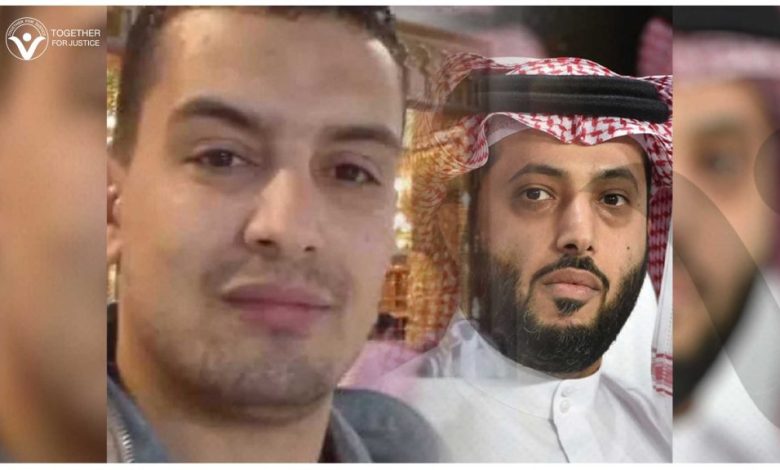
Together for Justice reminds the international community of the case of Egyptian citizen Ahmed Mohamed Omar, who has been detained in Saudi Arabia since 2021 and sentenced to 19 years in prison over a single tweet criticizing Turki Al-Sheikh, the powerful chairman of Saudi Arabia’s General Entertainment Authority.
Omar’s case is not an isolated abuse. It is a stark example of how Saudi Arabia’s machinery of repression extends beyond its own citizens, reaching foreign workers, residents, and visitors who enter the kingdom after having expressed views online that displease those close to power.
Ahmed Mohamed Omar travelled to Saudi Arabia in 2021 for work. Nine months after his arrival, he was arrested over a tweet he had posted years earlier criticizing Turki Al-Sheikh in connection with his public dispute with fans of Egypt’s Al Ahly football club. What began as a social media comment in a sports-related public debate was turned into a criminal case, followed by an extraordinary 19-year prison sentence.
The central question is clear: how can one tweet, written years before Omar entered Saudi Arabia and containing no incitement to violence, justify nearly two decades in prison? The answer lies not in law, but in power. His case reflects a system in which criticism of influential officials and royal court insiders can be treated as a punishable offense, even when expressed by a foreign national outside the kingdom.
According to available information, Omar was denied basic fair trial guarantees. He was reportedly unable to properly defend himself, access the case file, or appoint a lawyer able to represent him effectively. These violations make the verdict against him not only grossly disproportionate, but fundamentally arbitrary.
The case also illustrates the reach of Turki Al-Sheikh’s influence within Saudi Arabia’s entertainment, media, and public sphere. Instead of tolerating criticism as part of normal public discourse, Saudi authorities have treated a comment about a powerful official as grounds for prosecution and long-term imprisonment.
Since Mohammed bin Salman became Crown Prince in 2017, Saudi Arabia has dramatically expanded its crackdown on peaceful expression. Journalists, writers, academics, religious figures, activists, and ordinary social media users have faced arrest, prosecution, and severe sentences for comments, tweets, or public positions. Omar’s case adds another alarming dimension: the kingdom’s repression can also target non-Saudis who believed their online speech outside Saudi Arabia would not place them at risk.
From a legal perspective, sentencing a foreign national to 19 years in prison over a peaceful tweet is a direct violation of the right to freedom of expression and the right to a fair trial. It also sends a chilling message to migrant workers and foreign residents in Saudi Arabia: past online speech can be weaponized against them once they enter the country.
Together for Justice holds the Saudi authorities fully responsible for Ahmed Mohamed Omar’s continued arbitrary detention and calls for his immediate and unconditional release, the annulment of the unjust sentence against him, access to his family and legal counsel, and reparations for the harm caused by his imprisonment.
Together for Justice also calls on the Egyptian government to fulfill its responsibility toward one of its citizens and to take serious diplomatic and legal action to secure his release. Silence or symbolic follow-up is not enough when an Egyptian citizen is serving a 19-year sentence abroad over a tweet.
Together for Justice further urges the international community, United Nations mechanisms, and human rights organizations to include Ahmed Mohamed Omar’s case in the broader file of prisoners of conscience in Saudi Arabia and to press for an end to the criminalization of peaceful online expression.
Ahmed Mohamed Omar did not commit a crime. He wrote an opinion about a public figure before travelling to Saudi Arabia. For that, he was arrested, prosecuted, and sentenced to 19 years in prison. This is not justice. It is retaliation against speech, and a warning that in Saudi Arabia, even a foreign worker can lose decades of his life for a tweet.