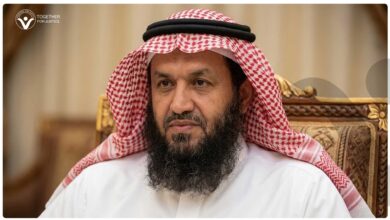
Osama Sahli: A Saudi Journalist Serving an Eight-Year Sentence Over Tweets on Public Issues

Recent figures by Reporters Without Borders confirm that Saudi Arabia remains among the world’s worst countries for press freedom, ranking 176th out of 180 countries — the fifth lowest globally. This ranking does not point to a temporary crisis, but to an entrenched reality of censorship, repression, and the prosecution of journalists, writers, and opinion-holders. In this context, Together for Justice recalls the cases of journalists detained for their views in Saudi Arabia, foremost among them writer and journalist Osama Sahli, who is serving an eight-year prison sentence over tweets addressing public issues.
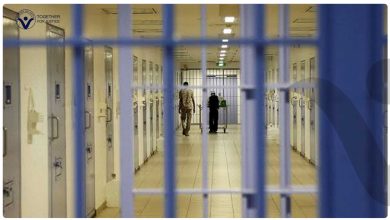
Together for Justice renews its call for the immediate and unconditional release of Saudi journalist and writer Osama Sahli, who has been detained since January 2019 and sentenced to eight years in prison over tweets in which he expressed his views on public issues. His case reflects the continued criminalisation of freedom of expression in Saudi Arabia and the transformation of peaceful opinion and journalistic activity into security-related offences.
According to available information, Saudi security forces arrested Sahli in January 2019 over social media posts addressing public matters. He was later referred to the Specialized Criminal Court, which sentenced him to eight years in prison on vague charges, including “supporting terrorism”. Such charges have repeatedly been used by Saudi authorities against writers, journalists, and activists whose only act was the peaceful exercise of their right to expression.
Osama Sahli, who worked for the Saudi newspaper Al-Bilad, was known as a journalist engaged in public debate without advocating violence or incitement. Yet the authorities treated his tweets as a security threat, within a broader pattern that has intensified since 2017, targeting anyone who writes, comments, or participates in public discussion outside the official line.
The circumstances surrounding his arrest and trial raise serious legal and human rights concerns, including the lack of adequate fair trial guarantees, the use of overly broad security charges to criminalise peaceful expression, and restrictions on his communication with his family and legal counsel during periods of detention.
From a legal perspective, detaining a journalist over tweets concerning public issues constitutes a direct violation of the right to freedom of opinion and expression. Trying him before the Specialized Criminal Court on vague terrorism-related charges further raises serious concerns about the use of counterterrorism frameworks to silence journalists, writers, and independent voices.
Together for Justice stresses that criticism of public policies or peaceful expression must never be treated as a crime. Labelling peaceful opinions as “support for terrorism” strips justice of its meaning and turns the judiciary into a tool of intimidation against public debate and independent journalism.
Sahli’s case falls within a wider crackdown on journalists, writers, and activists in Saudi Arabia since Mohammed bin Salman became Crown Prince. Social media has increasingly become a space of surveillance and prosecution rather than a platform for discussion and expression.
Accordingly, Together for Justice calls for the immediate and unconditional release of Osama Sahli, the annulment of the unjust sentence against him, and reparations for the harm caused by years of arbitrary detention. The organization also calls for an end to the use of the Specialized Criminal Court and counterterrorism laws against journalists and prisoners of conscience, and for the release of all individuals detained solely for peacefully exercising their fundamental rights.
The continued imprisonment of Osama Sahli over tweets reveals the reality of the human rights situation in Saudi Arabia, where a word can become a charge, a journalist can become a prisoner, and public debate can be turned into a security file.