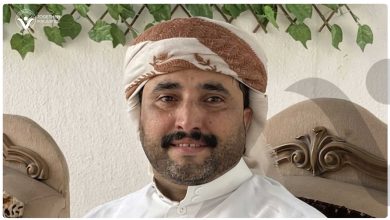
Maryam Al-Qaisum: Saudi Activist Detained Since 2019 Over Peaceful Advocacy, in a Case Exposing the Repression of Women Human Rights Defenders

Together for Justice condemns the continued detention of Saudi activist Maryam Al-Qaisum, who has been held since February 2019 over her human rights work and participation in political and social activities calling for public freedoms and broader civic participation.
More than seven years after her arrest, Al-Qaisum’s case remains one of the clearest examples of how Saudi authorities treat human rights defenders, particularly women activists. Peaceful activities and reformist demands are transformed into grounds for arrest, prosecution, and harsh sentences that extend for decades.
Al-Qaisum was arrested over activities that did not involve violence, incitement, or any recognizable criminal act. Her work was linked to peaceful public engagement, rights, freedoms, and civic participation. Yet the authorities treated this activity as a security threat, continuing a broader pattern in Saudi Arabia in which peaceful expression and human rights work are criminalized.
During the first years of her detention, Maryam Al-Qaisum remained arbitrarily held without a final judgment, amid a lack of transparency over the charges brought against her and without sufficient guarantees of a fair and public trial. Available information also indicates that she was disappeared for a period following her arrest before later being brought before the judiciary.
She was later handed a severe prison sentence of 25 years, followed by a travel ban of the same length — one of the harshest sentences imposed on a Saudi woman activist over peaceful activity. This punishment does not reflect the seriousness of any criminal act; rather, it reflects a political will to punish independent voices and deter women from engaging in public life.
The legal proceedings in Al-Qaisum’s case raise serious concerns about judicial independence in Saudi Arabia. According to available information, she was not given an adequate opportunity to defend herself, her arguments were not seriously examined, and no independent investigation was opened into the violations she reportedly suffered during detention. This reflects a familiar pattern in prisoners of conscience cases, where trials become formal procedures used to provide legal cover for decisions already shaped by political considerations.
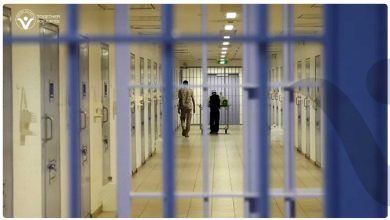
Al-Qaisum is held in the Dammam Mabahith Prison, a facility known for holding prisoners of conscience. Detention conditions in such facilities have repeatedly raised concerns over ill-treatment, medical neglect, and deprivation of basic rights. These concerns make her continued imprisonment even more alarming, particularly in light of the severe sentence issued against her.
Her case cannot be separated from the broader context of targeting women activists in Saudi Arabia. In recent years, long prison sentences have been issued against several women human rights defenders and activists, showing the sharp limits of the official narrative of “women’s empowerment” when women speak independently or demand rights.
Maryam Al-Qaisum’s case exposes a clear contradiction between Saudi Arabia’s external messaging about reform and openness, and the reality faced by activists inside the country. A state that promotes women’s empowerment cannot justify imprisoning a woman activist for years because she called for freedoms and civic participation.
Together for Justice stresses that Al-Qaisum’s continued detention violates her right to liberty and security of person, her right to freedom of opinion and expression, her right to a fair trial, and her right not to be subjected to disappearance, ill-treatment, or deprivation of basic care.
The organization holds the Saudi authorities fully responsible for Maryam Al-Qaisum’s physical and psychological safety. It calls for full disclosure of her detention conditions, regular access to her family and legal counsel, and guaranteed access to medical care and basic rights in detention.
Together for Justice calls for the immediate and unconditional release of Maryam Al-Qaisum, the annulment of the unjust sentence issued against her, the lifting of the travel ban, and an independent investigation into the violations she has suffered since her arrest, with accountability for those responsible.
The organization also calls on the international community, including the United Nations and its special mechanisms, to follow her case seriously and pressure Saudi authorities to end arbitrary detention, stop targeting human rights defenders, and respect peaceful expression and human rights work. Maryam Al-Qaisum’s case is not only the case of one activist behind bars. It is a testimony to a reality in which reformist demands are criminalized, women are punished for participating in public life, and the judiciary is used to silence independent voices instead of protecting them.