Dalal Al-Khalil: Arrested for Humanitarian Work, Then Sentenced to 18 Years in Prison
Together for Justice condemns the continued detention of Saudi social and humanitarian activist Dalal Al-Khalil, who has been imprisoned since 28 September 2017 as part of a wider crackdown targeting opinion-holders, activists, preachers, and independent voices in Saudi Arabia. In September 2021, after nearly four years of arbitrary detention without clear charges or a fair trial, the Specialized Criminal Court in Riyadh sentenced her to 18 years in prison.
Dalal Al-Khalil’s case is one of the clearest examples of the politicization of Saudi Arabia’s judiciary. Peaceful humanitarian work, including the distribution of food aid and Ramadan baskets to poor and vulnerable families, was turned into a security case before a court repeatedly used to prosecute prisoners of conscience rather than deliver justice.
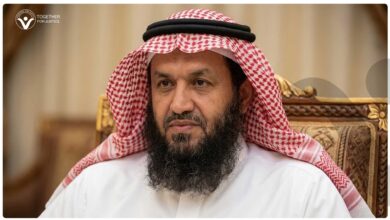
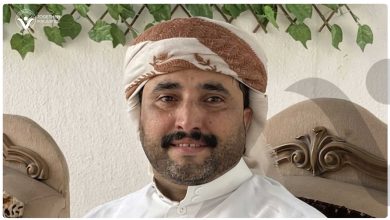
Al-Khalil was arrested with her husband, Ibrahim Aba Al-Khalil, after Saudi security forces raided their home in Al-Qassim without transparent legal procedures. Since then, their case has stood as a stark example of how Saudi authorities criminalize independent charitable and social work, punishing those who assist the poor instead of protecting their right to engage in peaceful humanitarian activity.
Dalal Al-Khalil’s work did not involve violence, incitement, or any recognizable criminal act. It consisted of social and relief initiatives aimed at helping people in need. Yet the authorities treated such activity as a threat, revealing how broadly the Saudi state defines “security” when independent civic action falls outside official control.
The case is even more alarming because it appears within a wider context of collective punishment. Al-Khalil had publicly defended her sister, preacher Diaa Al-Khalil, who has been detained since 2014 after holding a sign calling for the release of her detained sons. In this sense, Dalal’s case cannot be separated from a broader pattern in which women are punished not only for their own voices, but also for their family ties and their defence of detained relatives.
Sentencing a humanitarian activist to 18 years in prison for relief work is a legal scandal by any measure. A judiciary that turns food distribution into a crime and treats charity as a security threat is not administering justice; it is serving a political function aimed at crushing any form of independent social action, even when that action is purely humanitarian.
Available information indicates that Dalal Al-Khalil has faced harsh detention conditions in Tarfiya Prison, including medical neglect, starvation, psychological abuse, and deprivation of basic rights, amid serious concerns over her deteriorating health. Together for Justice holds the Saudi authorities fully responsible for her physical and psychological safety and for any harm resulting from the denial of adequate medical care and humane detention conditions.
The continued detention of her husband, Ibrahim Aba Al-Khalil, in the same context further demonstrates the retaliatory nature of the case. The authorities did not only target one individual; they targeted a family and a humanitarian initiative. Arresting both spouses over peaceful social work reflects a pattern of family and social punishment that extends beyond individual liability.
Together for Justice stresses that the Specialized Criminal Court, which issued the sentence against Dalal Al-Khalil, has become one of the most prominent instruments of judicial politicization in Saudi Arabia. Instead of being used to try genuine crimes, it has become a platform for issuing harsh sentences against activists, women human rights defenders, academics, preachers, and opinion-holders, often based on vague accusations and proceedings lacking transparency and fair trial guarantees.
From a human rights perspective, Dalal Al-Khalil’s continued imprisonment violates her right to liberty and security of person, her right to a fair trial, and her right not to be subjected to torture or cruel, inhuman, or degrading treatment. The denial of medical care and adequate food, if confirmed, would amount to serious mistreatment requiring investigation and accountability.
Together for Justice calls for the immediate and unconditional release of Dalal Al-Khalil and her husband Ibrahim Aba Al-Khalil, the annulment of the unjust sentence against her, public rehabilitation, and fair compensation for the years of arbitrary detention and the health, psychological, and social harm she has suffered.
The organization also calls for an independent investigation into the circumstances of her arrest, trial, and detention, immediate access to adequate medical care, and accountability for all those involved in denying her basic rights or subjecting her to neglect, starvation, or ill-treatment.
Dalal Al-Khalil’s case is not only the tragedy of a humanitarian activist behind bars. It exposes a deeper crisis in Saudi Arabia’s justice system, where humanitarian work becomes a charge, courts become tools of retaliation, and compassion itself is treated as an offence. Nearly nine years after her arrest, Dalal Al-Khalil remains a witness to a system that fears independent initiative, even when it takes the form of a food basket delivered to a poor family.