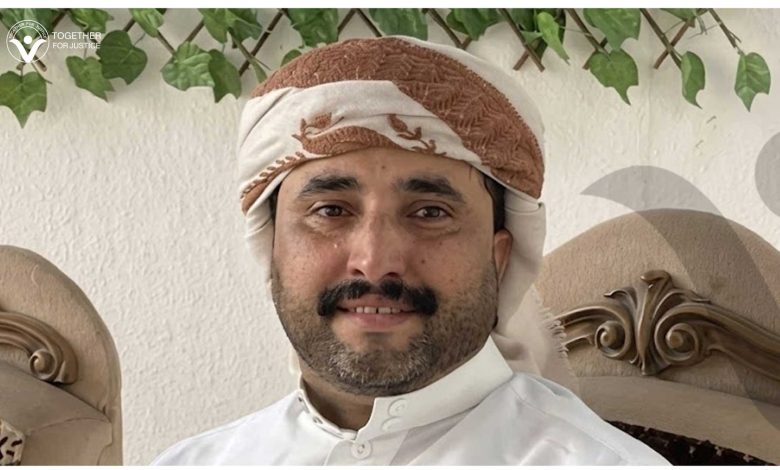
More than five years after his arrest, Yemeni journalist Ali Mohsen Abu Luhom remains imprisoned in Saudi Arabia, serving a 15-year sentence over social media posts attributed to anonymous Twitter accounts that he has repeatedly denied owning or operating.
Together for Justice renews its call for the immediate and unconditional release of Abu Luhom and the overturning of his conviction, warning that his prolonged imprisonment raises serious concerns about freedom of expression, the credibility of digital evidence, and fundamental fair trial guarantees.
Abu Luhom was arrested on 23 August 2021 in Najran after being called to a meeting by his employer. Having moved from Yemen to Saudi Arabia in 2015, he had worked in the media industry, including with Yemen Times Radio and Al-Wadi television. His professional life was interrupted by an arrest that led to a lengthy prison sentence over allegations connected to online content.
Anonymous Accounts and a 15-Year Sentence
According to Human Rights Watch, Saudi prosecutors based their case on tweets published through two anonymous Twitter accounts, alleging that the accounts were registered using telephone numbers linked to Abu Luhom.
The charges included allegations of apostasy, blasphemy, promoting atheism, and publishing material considered harmful to religious values and public order.
Abu Luhom denied any connection to the accounts or responsibility for the disputed content, raising fundamental questions about how the authorities established ownership of the accounts and attributed the posts to him.
In October 2021, a Najran court sentenced him to 15 years in prison: ten years under discretionary sentencing provisions and an additional five years under Saudi Arabia’s Anti-Cybercrime Law.
The sentence was upheld on appeal in December 2021. Human rights organizations continued to report his imprisonment throughout 2026, with no indication that he had been released.
Serious Violations of Fair Trial Guarantees
The case is particularly concerning because of the reported procedural violations surrounding Abu Luhom’s arrest, interrogation, and trial.
Human Rights Watch documented that he was denied access to a lawyer during the initial period of detention and questioning. His family was only permitted to arrange legal representation approximately one month after his arrest.
More seriously, an informed source told Human Rights Watch that prosecutors had threatened to implicate Abu Luhom’s wife unless he signed a confession. He subsequently withdrew that confession before the court.
His defence lawyer also sought permission to examine the disputed tweets and present witnesses. Nevertheless, the court delivered its judgment without hearing the defence witnesses.
These circumstances raise serious concerns about the reliability of the evidence, the alleged use of coercion, and the denial of adequate opportunities to challenge the prosecution’s claims.
Together for Justice stresses that no person should be convicted on the basis of an allegedly coerced confession or denied a meaningful opportunity to challenge evidence presented against them.
A Case Extending Beyond Saudi Nationals
Abu Luhom’s imprisonment also highlights the vulnerability of foreign journalists and residents facing prosecution over their online activities in Saudi Arabia.
Restrictions on freedom of expression do not stop at nationality. Foreign media professionals and residents may also face severe consequences when authorities interpret online content as a criminal or security-related offence.
The organization emphasizes that peaceful expression of religious or philosophical beliefs, regardless of whether those views are popular or controversial, must remain protected under international human rights standards.
Even where authorities dispute the nature of an individual’s expression, criminal responsibility must be established through credible evidence and proceedings that fully respect the right to a fair trial.
In Abu Luhom’s case, the disputed attribution of the accounts, alleged coercion, and procedural irregularities make an independent review especially urgent.
Renewed Calls for Justice
Together for Justice calls on the Saudi authorities to overturn the 15-year prison sentence imposed on Ali Mohsen Abu Luhom and release him immediately and unconditionally.
The organization also demands an independent and transparent review of his case, an investigation into allegations of threats and coercion during interrogation, and full respect for his rights, including regular communication with his family and legal counsel.
Together for Justice further urges international journalist associations, Yemeni press organizations, and human rights bodies to renew their efforts to bring attention to his case and press for his release.
Five years have already been taken from Ali Abu Luhom’s life. A journalist should not spend 15 years in prison over anonymous social media posts he denies writing, particularly amid serious questions about the evidence and the fairness of the proceedings.
His continued imprisonment must not become normal simply because the years keep passing.