Mariam al-Qisoom: Fifty Years of Punishment for Human Rights Advocacy in Saudi Arabia

Saudi activist Mariam al-Qisoom is serving a 25-year prison sentence followed by a travel ban of the same duration over her human rights advocacy and defence of the rights of Saudi Arabia’s Shi’a community.
The punishment amounts to half a century of imprisonment and restricted liberty for peaceful activity that has not been publicly shown to involve violence or incitement.
Al-Qisoom was arrested in February 2019 and remains detained at Dammam Mabahith Prison. More than seven and a half years after her arrest, Saudi authorities continue to surround her case with exceptional secrecy. No public charge sheet has been made available, and there is no transparent account of her trial or the evidence used to justify this extraordinary sentence.
Arrested in al-Awamiyah
Mariam al-Qisoom is from al-Awamiyah in Qatif Governorate, located in Saudi Arabia’s Eastern Province. Contemporary reporting indicates that security forces arrested her on 7 February 2019 during a raid on the house where she was staying and took her to Dammam Mabahith Prison.
Her arrest occurred amid a wider campaign targeting activists in Qatif and an expanding security crackdown on people demanding civil rights, equality, freedom of expression and freedom of religion or belief.
Available records indicate that al-Qisoom advocated for human rights and the rights of Saudi Arabia’s Shi’a community. The United States Commission on International Religious Freedom has included her in its database of victims of freedom of religion or belief violations, stating that she was arrested over her advocacy on behalf of the country’s Shi’a minority.
Saudi authorities have not publicly identified any violent conduct attributed to her or disclosed evidence showing that she committed an internationally recognisable criminal offence. The known facts point to peaceful human rights and civic activity that the security authorities turned into a criminal case carrying consequences lasting 50 years.
Four years without a sentence
Al-Qisoom remained detained for more than four years before she was sentenced in March 2023. Such a prolonged period before judgment violates her right to be tried within a reasonable time and raises serious questions about the legal basis on which she was held throughout those years.
There is insufficient public information about when her trial began, how many hearings were conducted, which court heard the case or what arguments were presented in her defence. Nor is there a published indictment through which independent observers could assess whether the alleged conduct constituted a genuine crime or merely the exercise of freedom of expression and peaceful human rights advocacy.
USCIRF records the nature of the charges against al-Qisoom as unknown, despite the fact that she received a 25-year prison sentence. This secrecy is not a minor procedural concern. It is a serious warning sign that prevents the public from examining the fairness and legality of the proceedings.
A trial cannot credibly be described as fair when the state conceals the charges, evidence and details of the proceedings while issuing a judgment that takes decades of a person’s life.
Twenty-five years in prison and another 25 under restriction
In March 2023, al-Qisoom was sentenced to 25 years in prison, followed by a 25-year travel ban. She remains imprisoned at Dammam Mabahith Prison.
Under this judgment, her punishment will not end when she leaves prison. The travel ban represents another quarter-century of state control, preventing her from leaving Saudi Arabia, choosing where to live, visiting relatives, or seeking education, employment or medical treatment abroad.
The sentence therefore does more than imprison her. It seeks to seize most of her adult life and maintain control over her movement long after her term of imprisonment ends.
The punishment is manifestly disproportionate to the peaceful activity publicly attributed to her. If Saudi authorities possess evidence that she committed a violent crime, they must publish it and provide a public trial meeting international standards of justice. Imprisoning an activist for 25 years while keeping the accusations and proceedings secret cannot be separated from the authorities’ broader policy of intimidating and silencing human rights defenders.
Imprisoned for defending a religious minority
Al-Qisoom’s case carries an additional dimension of sectarian discrimination. According to the available human rights information, her advocacy concerned the rights of Shi’a Muslims in Saudi Arabia, whose communities have faced restrictions and discrimination in religious, civic and political life.
Advocating for the rights of a religious community or demanding equality between citizens is not a crime. Peacefully criticising discrimination and calling for political and social reform are protected exercises of freedom of opinion, expression, religion or belief, and participation in public affairs.
Saudi authorities have nevertheless frequently treated rights-based demands originating in the Eastern Province as national security threats. Broadly worded counterterrorism, cybercrime and state security provisions have been used to punish activists instead of addressing their demands as legitimate human rights concerns.
In al-Qisoom’s case, the absence of publicly disclosed charges makes it impossible to examine the legal basis of her conviction. It also reinforces concerns that her religious identity and advocacy for her community were central factors in her prosecution.
What does women’s empowerment mean when women activists are imprisoned?
Mariam al-Qisoom’s case directly contradicts Saudi Arabia’s official narrative of women’s empowerment and increased participation in public life.
Empowerment cannot mean allowing women to participate only in spaces approved by the authorities while imprisoning them for expressing independent opinions or demanding civil, political and religious rights.
The condition of women cannot be measured solely through employment figures or officially promoted social changes while women activists serve decades-long sentences for their views. The genuine test of reform is whether women can speak, demand rights and criticise public policy without facing security raids, secretive trials and imprisonment.
The punishment imposed on al-Qisoom sends an intimidating message to Saudi women generally, and to women in the Eastern Province in particular: independent participation in public affairs may cost them decades of their freedom.
Dammam Mabahith Prison and the absence of information
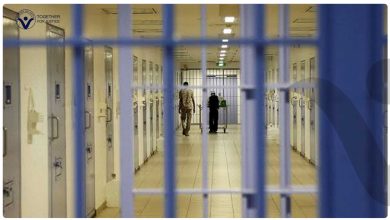
Available information confirms that al-Qisoom is being held at Dammam Mabahith Prison, a security facility used to detain individuals in political and state security cases.
The lack of independent information about her detention conditions raises concerns about her physical and psychological safety, access to healthcare, and ability to communicate regularly and confidentially with her family and legal counsel.
Saudi authorities bear full responsibility for her safety and wellbeing. They must disclose her conditions of detention and health status and ensure that she is not subjected to solitary confinement, ill-treatment, medical neglect or restrictions on contact with the outside world.
A series of violations, not a single unjust sentence
The violations in Mariam al-Qisoom’s case extend beyond the severity of her sentence. They include her arrest for peaceful advocacy, prolonged pre-trial detention, judicial secrecy, the failure to disclose the charges, concerns about access to an effective defence, and the imposition of an additional 25-year travel ban.
These measures violate her rights to liberty and personal security, freedom of opinion and expression, freedom of religion or belief, a fair and public hearing, and freedom of movement.
A travel ban is not a minor administrative restriction. It is a punishment affecting family, private and professional life and must not be used to maintain control over human rights defenders after their prison terms have ended.
Urgent demands
Together for Justice condemns the continued imprisonment of Mariam al-Qisoom and calls on the Saudi authorities to release her immediately and unconditionally, overturn both her prison sentence and travel ban, and drop all charges arising from her peaceful human rights advocacy.
We further call on the authorities to:
- Publish the indictment, judgment and complete information concerning her trial.
- Provide her with immediate, regular and confidential access to her family and a lawyer of her choosing.
- Guarantee adequate healthcare and permit an independent visit to assess her detention conditions.
- Open an independent investigation into the legality of her arrest, prolonged detention and any violations committed against her since February 2019.
- End the use of travel bans as an additional punishment against activists and human rights defenders.
- End prosecutions based on religious identity or advocacy for minority rights and guarantee full equality for all citizens.
- Release all women detained for peaceful expression and human rights work.
Together for Justice also urges the United Nations and its special procedures, the European Union and governments maintaining political and economic relations with Saudi Arabia to raise al-Qisoom’s case directly and demand the disclosure of her trial records and an end to her imprisonment.
Sentencing Mariam al-Qisoom to 25 years in prison and then restricting her movement for another 25 years is not justice. It is an attempt to confiscate an entire life because she defended human rights.
Saudi authorities cannot credibly speak of reform and women’s empowerment while a woman activist remains in a security prison, following secretive proceedings, under a punishment that subjects her to 50 consecutive years of imprisonment and restricted liberty.
Mariam al-Qisoom must be released immediately, and every penalty imposed because of her peaceful advocacy must be overturned.