Maha Al-Rafidi: Saudi Journalist Imprisoned Over Human Rights Tweets and Still Detained After Her Sentence Expired
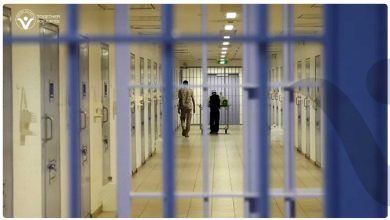
Together for Justice condemns the continued detention of Saudi journalist and writer Maha Al-Rafidi, who has been imprisoned since 28 September 2019 over her peaceful activity on Twitter, including posts supporting human rights and the release of prisoners of conscience in Saudi Arabia. According to ALQST, Al-Rafidi, a trainee journalist at the Saudi daily newspaper Al Watan, remains detained in Sha’ar Prison in Asir, despite the expiry of her six-year sentence in mid-2025.
Her case began with a night-time raid. Around 30 Saudi officials, including armed and hooded men and others in military or civilian clothing, raided the place where she was staying, arrested her, and seized her electronic devices, books, and personal belongings. This was not a response to a genuine criminal act; it was a response to a woman’s independent voice and her peaceful human rights expression online.
Following her arrest, Al-Rafidi was held in solitary confinement before being transferred to a general prison cell, amid concerns over ill-treatment and torture. ALQST reported in early 2020 that she had a bruise on her face and that her arrest appeared to be linked to her Twitter activity in support of human rights, including calls for the release of prisoners of conscience.
In late 2021, the Supreme Court sentenced Maha Al-Rafidi to six years in prison, followed by a travel ban of the same length. This followed an earlier sentence by the Specialized Criminal Court of five years in prison, half of which had been suspended. According to ALQST, the sentence was linked to her peaceful Twitter activity in support of human rights.
The essence of the case is clear: a Saudi journalist was punished for tweets. She was not accused of violence, nor of any genuine criminal act. She was prosecuted for peaceful expression and human rights views. Turning tweets into grounds for arrest, trial, imprisonment, and a travel ban exposes the severe restrictions placed on freedom of expression in Saudi Arabia, particularly when the speaker is an independent woman.
The case is even more alarming today because Al-Rafidi remains detained despite the expiry of her sentence. Keeping a detainee behind bars after the completion of a prison term cannot be treated as law enforcement; it is a new act of arbitrary detention without clear legal basis. If the authorities issued a sentence against her, then continuing to detain her beyond that sentence shows that punishment in opinion-related cases does not end with the court term, but remains subject to open-ended security control.
The continued withholding of clear information about her detention conditions, health, and legal status is itself an additional violation. The right to know where a person is held, their condition, their legal situation, and whether they can communicate with their family and lawyer is not a privilege granted at the discretion of the authorities. It is a basic right of detainees and their families.
Maha Al-Rafidi’s case reflects a broader pattern of repression in Saudi Arabia: journalists, writers, and women activists are targeted for using digital platforms to express their views. Instead of being a space for public debate, Twitter and other platforms have repeatedly been treated as evidence files used to punish those who defend rights or call for the release of detainees.
Together for Justice stresses that Al-Rafidi’s continued detention violates her right to liberty and security of person, her right to freedom of opinion and expression, her right to a fair trial, and her right to protection from torture, ill-treatment, and denial of healthcare.
The organization holds the Saudi authorities fully responsible for Maha Al-Rafidi’s physical and psychological safety. It calls for the immediate disclosure of her health and legal status, her detention conditions, and for her family and lawyer to be allowed to communicate with her without restriction.
Together for Justice calls for her immediate and unconditional release, the cancellation of all punitive restrictions imposed on her, including the travel ban, and an independent investigation into her solitary confinement, alleged ill-treatment, and continued detention after the expiry of her sentence.
Maha Al-Rafidi was not imprisoned for committing a crime. She was imprisoned because she wrote, tweeted, and defended human rights. After years of detention, and with her imprisonment continuing despite the expiry of her sentence, her case remains a stark example of a reality in which speech becomes a charge, solidarity becomes a crime, and journalism becomes grounds for imprisonment.