Eight Years in Prison: The Saudi Scholar, His Sons, and the Office Director Punished for One Man’s Ideas

Eight years after the arrest of Sheikh Dr Safar bin Abdulrahman Al-Hawali, his case remains one of the starkest examples of collective punishment in Saudi Arabia. What began as the detention of a prominent scholar and public intellectual has expanded into a wider campaign against his family and professional circle, exposing how far the Saudi authorities are prepared to go to silence independent voices.
Al-Hawali, a well-known academic and religious thinker, was arrested in July 2018 after the publication of his book Muslims and Western Civilisation, in which he criticised the policies of Crown Prince Mohammed bin Salman and the role of governments aligned with the Israeli occupation in the region. He was already in a fragile medical condition at the time of his arrest, suffering from serious health problems, including a previous stroke, a fractured pelvis, and kidney failure that required long-term medical care.
Yet instead of receiving urgent treatment, Al-Hawali was taken into detention. Since then, his health has reportedly continued to deteriorate inside prison, while Saudi authorities have ignored repeated calls for his release or transfer to specialised medical care. For an elderly and severely ill detainee, prolonged imprisonment without adequate treatment is not merely neglect; it is a form of punishment that places his life at direct risk.
But the case did not stop with Al-Hawali himself. His sons were also arrested, alongside his brother and members of his close circle, turning the case into a textbook example of punishment by association. The message was clear: in Saudi Arabia, the state may punish not only the person who speaks, writes, or dissents, but also those closest to him.
According to available information, Abdulrahman Al-Hawali’s sentence was increased from seven years to 17 years. Abdullah Al-Hawali’s sentence was raised to 16 years, Abdulrahim Al-Hawali was sentenced to 15 years, and Al-Hawali’s brother, Saadallah, received a 14-year sentence. These harsh rulings were issued in proceedings that lacked transparency and basic fair trial guarantees, with serious concerns over access to lawyers and the ability of the defendants to defend themselves.
The health situation of Al-Hawali’s sons is also deeply alarming. Abdulrahman Al-Hawali reportedly suffers from serious medical vulnerability after donating one of his kidneys to his father, leaving him in need of a special diet and regular medical supervision. Instead, reports indicate that he has been subjected to medical neglect inside prison, adding another layer of cruelty to a case already marked by political retaliation.
This is the essence of collective punishment: a father is imprisoned for his ideas, his sons are punished because they are his sons, his brother is drawn into the same circle of repression, and the family’s suffering becomes part of the state’s strategy to break one independent voice.
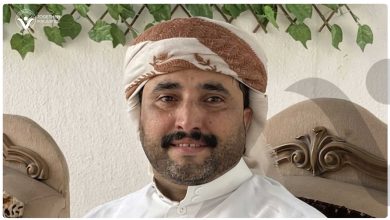
The case of Dr Ismail Al-Hassan, Al-Hawali’s office director, reveals another side of the same policy. Al-Hassan was arrested in 2018 during the same campaign that targeted Al-Hawali and those around him. The available information indicates that his arrest was linked not to any clearly announced criminal act, but to his professional relationship with Al-Hawali and his work as director of his office.
He was later sentenced to 10 years in prison, in a case that raises serious questions about the legal basis for his detention and prosecution. No transparent public explanation has been provided showing what specific criminal act he allegedly committed. Instead, his case appears to reflect a broader Saudi practice: turning professional association into a basis for punishment.
The imprisonment of an office director because of his connection to a targeted scholar sends a chilling message to anyone who works with, assists, represents, or maintains contact with independent figures. It is designed to isolate dissidents completely — socially, professionally, and intellectually — by making proximity itself dangerous.
Together for Justice stresses that the continued detention of Sheikh Safar Al-Hawali, his sons, his brother, and Dr Ismail Al-Hassan cannot be understood as ordinary legal proceedings. It is a prolonged campaign of retaliation against a family and a professional circle because of one man’s ideas.
The violations in this case are multiple and grave: arbitrary detention, enforced disappearance, denial of fair trial guarantees, medical neglect, alleged torture and ill-treatment, and the expansion of punishment to relatives and professional associates. Such practices directly contradict the principle of individual criminal responsibility, which requires that people be punished only for acts they personally committed, not for their family ties, professional role, or association with a person targeted by the state.
After eight years, the case of Al-Hawali and those detained around him exposes the brutality of a system that treats thought as a threat and family as leverage. A scholar is jailed for a book. His sons are punished for blood ties. His office director is imprisoned for a working relationship. The law becomes a weapon, and prison becomes a tool not only to silence individuals, but to dismantle the human networks around them.
Together for Justice calls for the immediate and unconditional release of Sheikh Dr Safar Al-Hawali, his sons, his brother, Dr Ismail Al-Hassan, and all those detained in connection with this case.
The organisation also calls for Al-Hawali to be transferred immediately to a specialised hospital, for his sons to receive urgent and independent medical care, for all unjust sentences in this case to be annulled, and for an independent investigation into the violations they have suffered since their arrest.
The Saudi authorities must end the use of collective punishment against prisoners of conscience and their families. No state that claims to uphold justice can imprison a sick elderly scholar, sentence his sons to decades behind bars, and jail his office director simply because one man’s words disturbed those in power.