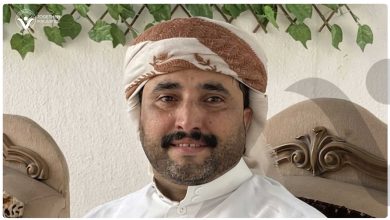
Zaki Al-Ashtaf: More Than Eleven Years of Enforced Disappearance for Supporting Prisoners of Conscience in Saudi Arabia

Together for Justice reminds the international community of the case of Saudi human rights activist Zaki Al-Ashtaf, whose news has been completely cut off since his arrest in 2015. More than eleven years later, he remains forcibly disappeared, with no clear information about his place of detention, health condition, legal status, or whether he has ever been brought before a court.
Al-Ashtaf was arrested because of his support for prisoners of conscience and his solidarity with activists and individuals detained for peacefully expressing their views in Saudi Arabia. He was also among the signatories of the 2013 “Statement of Detainees’ Families,” which called for the disclosure of detainees’ fate, their release, and the protection of their basic rights. Instead of treating these demands as a legitimate exercise of freedom of expression and human rights advocacy, Saudi authorities turned them into grounds for arrest and disappearance.
Since the moment of his arrest, Saudi authorities have failed to disclose where Zaki Al-Ashtaf is being held, what charges — if any — have been brought against him, or what legal proceedings have taken place. His family has been denied meaningful information about his fate and has not been able to obtain clarity regarding his conditions or health. This prolonged blackout cannot be treated as ordinary detention; it raises grave concerns that he has been held incommunicado and subjected to enforced disappearance.
The concern is even more serious given reports that Al-Ashtaf suffers from several medical conditions that may place his life at risk. Keeping a detainee with health concerns hidden from his family and the outside world for years constitutes a compounded violation. Saudi authorities bear full responsibility for ensuring his access to adequate medical care and for protecting him from medical neglect, ill-treatment, or torture.
At the core of Zaki Al-Ashtaf’s case is not a recognizable crime, but solidarity. He was targeted for standing with prisoners of conscience and demanding that their fate be revealed. Punishing a person for supporting victims of arbitrary detention exposes the depth of repression in Saudi Arabia, where not only prisoners of conscience are targeted, but also those who speak in their defense.
Together for Justice stresses that the continued disappearance of Zaki Al-Ashtaf for more than eleven years constitutes a grave violation of the right to liberty and security, the right to know one’s fate, the right to family and legal contact, and the right to fair trial guarantees. Holding him without disclosed charges, without transparent legal proceedings, and without access to his family or lawyers falls within the framework of arbitrary detention and enforced disappearance prohibited under international law.
His case also reveals a repeated pattern in Saudi Arabia, where secrecy and enforced disappearance are used as additional forms of punishment against prisoners of conscience. Disappearance does not only harm the detainee; it also inflicts prolonged suffering on families left for years without answers to the most basic questions: where is he, is he alive, and what is his health condition?
Together for Justice holds the Saudi authorities fully responsible for Zaki Al-Ashtaf’s life, physical safety, and psychological well-being. The organization calls for the immediate disclosure of his place of detention, health condition, and legal status, and for his family and lawyers to be granted immediate and unrestricted access to him.
Together for Justice further calls for his immediate and unconditional release, an independent investigation into the circumstances of his arrest and enforced disappearance, and accountability for those responsible for denying him his basic rights for more than eleven years.
Zaki Al-Ashtaf was not disappeared because he committed a crime. He was disappeared because he stood with prisoners of conscience and demanded their rights. More than eleven years after his arrest, his case remains a stark reminder of a reality in which even solidarity is criminalized, and those who demand freedom may themselves be stripped of it and pushed into the unknown.