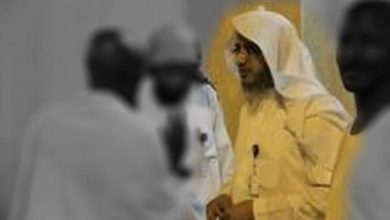
Abdulaziz Al-Buraidi: Saudi Ministry of Justice Archive Employee Faces Death After Allegedly Attempting to Expose Royal Court Interference in the Judiciary

Together for Justice reminds the international community of the case of Saudi citizen Abdulaziz Al-Buraidi, a former employee in the archives department of the Saudi Ministry of Justice, who has been detained since late October 2019 after reportedly attempting to disclose documents revealing interference by the Royal Court and Crown Prince Mohammed bin Salman in the work of the Ministry of Justice and the judiciary.
Since his arrest, Al-Buraidi’s news has been almost entirely cut off, raising serious concerns about his fate, safety, health, and legal status. These concerns are particularly grave given reports that he was sentenced to death in May 2022 on charges of “high treason” — an extremely serious accusation used against a man who was not accused of committing any violent act, but of attempting to expose information related to judicial independence and political interference in the justice system.
Al-Buraidi’s case is not simply the case of a government employee. It concerns a person who worked inside an institution that is supposed to be part of the justice system, and who reportedly had access to documents showing political interference in the judiciary. If these reports are accurate, his arrest, prosecution, and death sentence do not represent the protection of state security; they represent retaliation against a potential witness to serious violations of judicial independence.
The case raises a fundamental question about the nature of justice in Saudi Arabia: how can the alleged disclosure of documents concerning political interference in the judiciary be turned into “high treason”? And how can the punishment for attempting to expose interference in the justice system be enforced disappearance, total silence, and the threat of execution?
The use of “high treason” in this case reveals the dangerous way in which Saudi authorities deploy security charges to silence anyone who approaches sensitive files inside state institutions, especially when those files involve the authority of the Crown Prince, the Royal Court, and the independence of the Ministry of Justice. Instead of opening a transparent investigation into the content of the documents Al-Buraidi reportedly attempted to reveal, the authorities punished the person who allegedly tried to bring them to light.
Since Mohammed bin Salman became Crown Prince in 2017, Saudi Arabia has witnessed an unprecedented expansion of arrests, harsh sentences, and politically motivated prosecutions targeting religious figures, activists, human rights defenders, journalists, public employees, and peaceful critics. In this climate, any act of criticism, disclosure, whistleblowing, or independent expression can be transformed into a security case.
Al-Buraidi’s case exposes a deeper crisis: the judiciary in Saudi Arabia is not functioning as an independent institution capable of protecting rights or investigating abuses of power. Instead, in politically sensitive cases, it appears to operate as an instrument used to punish those who reveal the truth, challenge authority, or refuse to remain silent.
Together for Justice stresses that the continued concealment of Abdulaziz Al-Buraidi’s fate, the absence of reliable information about his health and legal status, and reports that he faces the death penalty all indicate serious violations, including arbitrary detention, enforced disappearance, denial of fair trial guarantees, and the threat of judicial killing in a case with clear political dimensions.
From a legal perspective, sentencing a person to death for allegedly attempting to expose documents related to political interference in the judiciary would constitute a grave violation of the right to life, freedom of expression, and the public’s right to know about matters affecting the independence of justice. Any trial conducted in secrecy, without effective access to legal counsel or the ability to challenge evidence, cannot be considered fair — especially when it results in an irreversible punishment such as the death penalty.
Together for Justice holds the Saudi authorities fully responsible for Abdulaziz Al-Buraidi’s life, safety, physical integrity, and psychological well-being. The organization calls for the immediate disclosure of his fate, place of detention, health condition, and legal status, and for his family and lawyers to be allowed immediate and unrestricted access to him.
The organization further calls for an immediate halt to any death sentence issued against him, the annulment of the unjust ruling, and an independent investigation into the circumstances of his arrest, detention, trial, and the reported documents concerning Royal Court interference in the work of the Ministry of Justice.
Together for Justice also urges the United Nations, including the Special Rapporteur on extrajudicial, summary or arbitrary executions, the Working Group on Arbitrary Detention, the Special Rapporteur on the independence of judges and lawyers, and the Special Rapporteur on freedom of opinion and expression, to urgently intervene in Al-Buraidi’s case and press the Saudi authorities to disclose his fate and prevent his execution.
Abdulaziz Al-Buraidi was not a threat to society. He was, according to available information, a potential witness to political interference in the justice system. Punishing someone with death for attempting to expose the truth does not protect the state; it exposes the state’s fear of documents, accountability, and any voice that reveals what happens behind the closed doors of the judiciary.