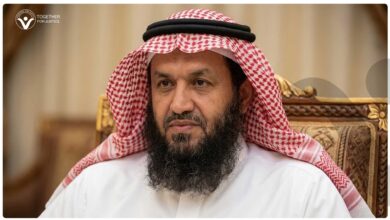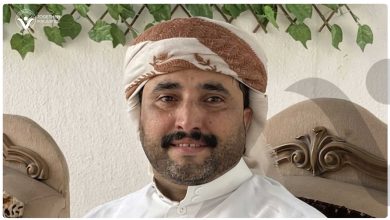
Musa Al-Ghannami: Saudi Religious Researcher Held in Solitary Confinement Since 2017 for Supporting People’s Struggles for Freedom

Together for Justice recalls the case of Saudi religious researcher Musa Al-Ghannami, who has been detained since September 2017 as part of the wide crackdown launched by Saudi authorities against preachers, academics, researchers, human rights advocates, and independent voices. That campaign became one of the clearest examples of systematic repression in the kingdom in recent years.
Al-Ghannami is now approaching nine years behind bars. Since his arrest, he has reportedly spent years in solitary confinement and was only taken out to appear before a court in Riyadh on vague and serious charges, including “threatening state security” and “communicating with foreign entities”. These charges are linked to his intellectual and humanitarian activism in support of people’s causes, foremost among them Syria.
His case exposes how solidarity with oppressed peoples and support for their right to freedom and justice have been transformed into security offences in Saudi Arabia. Al-Ghannami was not known for supporting or inciting violence. On the contrary, he was known for strongly opposing extremist groups and rejecting extremist ideology. Yet the authorities arrested and prosecuted him under broad security accusations that are routinely used to criminalize peaceful opinion and justify prolonged detention.
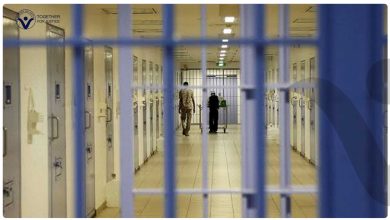
Since the first day of his arrest, Al-Ghannami has been subjected to serious violations, including arbitrary detention, prolonged solitary confinement, denial of regular contact with his family, restrictions on his right to legal defence, and long periods during which information about him was cut off. These violations are not minor procedural abuses; they form a deliberate pattern aimed at isolating the detainee, breaking his will, and keeping him beyond any independent scrutiny.
Together for Justice stresses that the use of solitary confinement for years against Musa Al-Ghannami constitutes a grave violation of international standards on the treatment of prisoners. Prolonged solitary confinement may amount to cruel, inhuman, or degrading treatment, and in some circumstances to psychological torture, particularly when used against prisoners of conscience as a tool of punishment and pressure.
The nature of the charges against him also raises serious concerns about the politicization of judicial proceedings. Accusations such as “threatening state security” and “communicating with foreign entities” are frequently used in Saudi Arabia against opinion-holders, preachers, and activists, often without sufficient transparency regarding the evidence or the specific acts allegedly committed. In Al-Ghannami’s case, the core of the matter appears to be his intellectual and humanitarian positions on people’s causes, rather than any genuine criminal activity.
Saudi authorities punished Musa Al-Ghannami because he stood with causes of freedom and justice in the region, rejected authoritarianism and repression, and expressed positions that did not align with the official political line. In this sense, his imprisonment is not punishment for a crime; it is punishment for a position.
His case forms part of a broader pattern that has targeted many figures since the September 2017 crackdown, during which the judiciary has been used as a tool to punish independent voices and bring the religious, intellectual, and human rights spheres under full state control. In this context, expressing an opinion, showing solidarity with people’s struggles, or criticizing repression is no longer treated as a protected right, but as grounds for imprisonment, isolation, and abuse.
From a legal perspective, the continued detention of Musa Al-Ghannami over his peaceful activity and intellectual views violates his right to liberty and security of person, freedom of opinion and expression, and the right to a fair and public trial before an independent court. His prolonged isolation and denial of basic rights further increase the Saudi authorities’ responsibility for his physical and psychological safety.
Together for Justice holds the Saudi authorities fully responsible for Musa Al-Ghannami’s life and well-being. The organization calls for the immediate disclosure of his current health and legal status, an immediate end to his solitary confinement, and regular access to his family and legal counsel.
Together for Justice further calls for his immediate and unconditional release, the dropping of all charges linked to his opinions and peaceful activity, and an independent investigation into the circumstances of his arrest, detention, and the violations he has suffered since September 2017.
Musa Al-Ghannami was not imprisoned because he posed a threat to society. He was imprisoned because he defended people’s causes and rejected injustice and authoritarianism. After long years of isolation and imprisonment, his case remains a stark reminder of a reality in which free speech is criminalized and humanitarian solidarity is treated as a threat to state security.