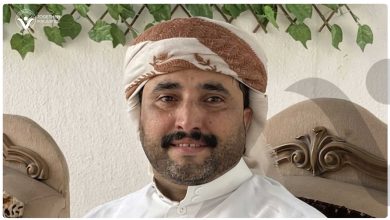
Ahmed Al-Ghanim Al-Hawali: Saudi Young Man Enters His Ninth Year in Detention Over His Family Connection to Sheikh Safar Al-Hawali

Together for Justice condemns the continued disappearance and detention of Saudi citizen Ahmed Al-Ghanim Al-Hawali, who has entered his ninth year behind bars since his arrest in July 2018, with no clear information available about his place of detention, health condition, legal status, or detention conditions.
Ahmed Al-Hawali’s case represents one of the clearest examples of collective punishment in Saudi Arabia. There is no known criminal act attributed to him, and Saudi authorities have not publicly announced clear charges against him. Instead, his arrest came within the wider campaign that targeted Sheikh Dr. Safar Al-Hawali, his sons, his office director, and several relatives and people close to him after the publication of his book Muslims and Western Civilization.
According to information circulated in August 2018, Ahmed Al-Hawali was arrested merely because of his closeness to the sons of Sheikh Safar Al-Hawali or to their social circle. At the time, the authorities were expanding the scope of repression beyond the opinion-holder himself to include his family, relatives, and associates. This turns the case from an individual arrest into a broader policy of intimidation aimed at punishing families and social networks.
Ahmed Al-Hawali’s arrest cannot be separated from the July 2018 crackdown on Sheikh Safar Al-Hawali, which followed the publication of a book in which he offered criticism and advice regarding Saudi political and religious affairs, including the authorities’ policies and relations with the United States. Rather than treating the book as an expression of opinion or intellectual work, the authorities responded with a wave of arrests targeting the author, his sons, relatives, assistants, and people around him.
The gravity of Ahmed Al-Hawali’s case lies in the fact that he appears to have been punished not for a declared position or known activity, but for a family and social connection. This type of detention shows that Saudi authorities do not only silence opinion-holders; they also use relatives as tools of pressure and retaliation, amounting to collective punishment in violation of the most basic principles of justice.
Since his arrest, information about Ahmed Al-Hawali has been almost entirely cut off. Saudi authorities have not disclosed whether he has been tried, what charges he faces, where he is being held, or what conditions he is detained in. This prolonged lack of transparency raises serious concerns that he may be subjected to enforced disappearance or detention outside basic legal safeguards, especially after more than eight full years in custody and his entry into a ninth year of detention.
Together for Justice stresses that denying a family the right to know the fate, whereabouts, health condition, and legal status of their loved one is itself a continuing violation. Disappearance and official silence do not only punish the detainee; they also punish his family, leaving them for years in uncertainty, fear, and anxiety.
Detaining a person because of his family connection to a prisoner of conscience, or because of his closeness to that prisoner’s family, is a clear violation of the right to liberty and security of person and has no legitimate legal basis. In any real justice system, criminal responsibility must be individual and based on a specific and proven act, not on family ties, kinship, or social association.
Together for Justice believes that Ahmed Al-Ghanim Al-Hawali’s case exposes a particularly harsh side of Saudi Arabia’s repression: a book leads to the imprisonment of its author, and the punishment then expands to sons, relatives, office staff, and those around him. This is not justice. It is a retaliatory policy that uses security and judicial tools to punish the family and close community of an independent voice.
The organization holds the Saudi authorities fully responsible for Ahmed Al-Ghanim Al-Hawali’s physical and psychological safety. It calls for the immediate disclosure of his place of detention, health condition, and legal status, and for his family and lawyer to be allowed to contact him without restriction.
Together for Justice also calls for his immediate and unconditional release unless clear, lawful, and internationally recognized charges are publicly presented before an independent and public court with full fair trial guarantees.
Ahmed Al-Ghanim Al-Hawali has entered his ninth year behind bars not because of any known crime, but because he is connected to Sheikh Safar Al-Hawali in a country where family ties to an opinion-holder can become grounds for detention. After all these years of silence, the urgent question remains: where is Ahmed Al-Hawali, and why is a young man still imprisoned over a family connection?