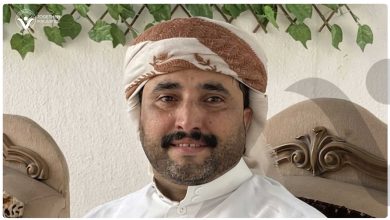
Amr Abdel Fattah: French-Egyptian Detainee Turned from Hajj Permit Fraud Victim into a Security Defendant Under an Undisclosed Prison Sentence
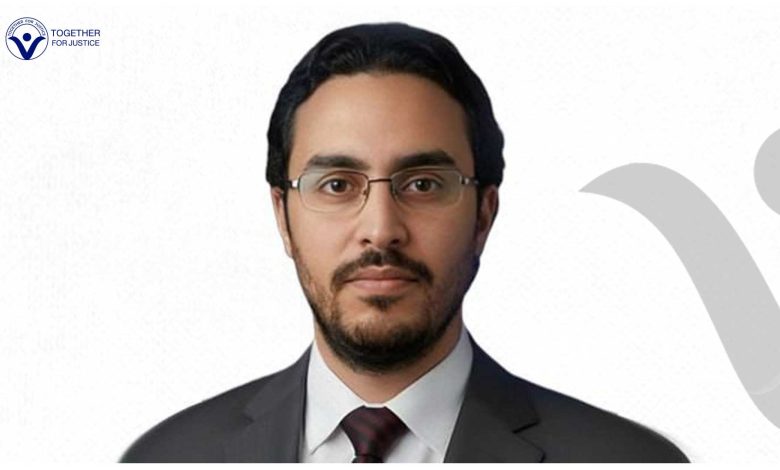
Together for Justice condemns the latest alarming development in the case of French-Egyptian detainee Dr. Amr Abdel Fattah, after his lawyer in France learned that a prison sentence of “years” had been issued against him, without being informed of the length of the sentence, the reasons behind it, or the legal basis relied upon by the court.
This development confirms the concerns that have surrounded the case from the beginning: Saudi authorities did not treat Abdel Fattah as someone who had reportedly fallen victim to a Hajj visa or permit fraud scheme. Instead, they gradually pushed his case into an exceptional security track, transforming what should have been an administrative matter into proceedings before the Specialized Criminal Court, with serious charges that appear wholly disproportionate to the original incident.
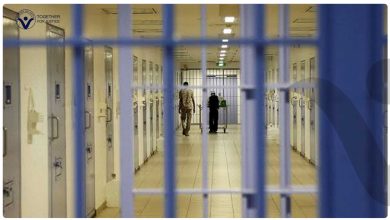
The case dates back to 16 June 2024, while Abdel Fattah was performing Hajj. Saudi authorities stopped him over an issue related to the validity of his Hajj permit, after he had reportedly been deceived in connection with Hajj permits or visa arrangements. Rather than handling the matter as a regulatory or administrative issue, the case escalated after a verbal dispute with a security officer. He was then detained, taken to the Haram police station, and later transferred to Dhahban Prison in Jeddah.
Amr Abdel Fattah is a French-Egyptian engineer living in France with his wife and three children. Since his arrest, he has reportedly faced a series of violations, including ill-treatment, threats, restrictions on communication with his family, and obstacles preventing his lawyer from accessing the case file. Previous information also indicated that he was violently assaulted inside Dhahban Prison after complaining about being forced to share a cell with a prisoner suffering from mental health problems who attacked others. The assault reportedly caused injuries that prevented him from attending a court hearing.
The issuance of a prison sentence of “years” without informing his lawyer of its length or reasons is a grave violation of the most basic guarantees of justice. A criminal judgment cannot remain vague. A defendant and his defence team must know the sentence, the grounds on which it was issued, the charges on which it was based, and the available routes for appeal. In this case, the lack of clarity is not a procedural detail; it is part of the violation itself.
The case is even more troubling because the charges brought against Abdel Fattah moved far beyond the original issue of a Hajj permit. According to available information, he faced accusations including illegal entry, concealing the identity of those who assisted him, insulting the Saudi government, insulting visitors to the Grand Mosque, insulting the head of a foreign state, violating regulations, and praising a person detained in cases classified as terrorism-related. The latest information also indicates that the sentence involved charges connected to freedom of expression.
This raises a fundamental question: how can an issue related to a Hajj permit — normally dealt with through a fine, deportation, or administrative action — become a security case before an exceptional court? How can someone who reportedly fell victim to permit fraud become a defendant in proceedings framed through the language of terrorism and state security?
Together for Justice stresses that using the Specialized Criminal Court in such a case represents a dangerous expansion of security justice against individuals whose cases do not originate from any genuine terrorist act. When a court associated with terrorism and state security cases is used against a person over a Hajj permit dispute, a verbal altercation, and alleged expressions, the result is a serious distortion of legal proportionality.
From a human rights perspective, Abdel Fattah’s case involves multiple violations: arbitrary detention, ill-treatment, denial of family contact, obstruction of the right to defence, judicial secrecy, and the use of security-related charges in a case that did not originally involve any real security threat. Issuing a sentence without allowing the defence to know its details also undermines his right to appeal and to effective judicial review.
Together for Justice holds the Saudi authorities fully responsible for Amr Abdel Fattah’s physical and psychological safety. The organization calls for the immediate disclosure of the full judgment, the length of the sentence, the legal reasoning behind it, and all charges on which he was convicted.
The organization also calls for him to be granted immediate contact with his family and lawyer, for his lawyer to receive full access to the case file, for him to obtain independent medical care, and for a transparent investigation into allegations of assault and ill-treatment inside Dhahban Prison.
Together for Justice urges the French and Egyptian authorities to act urgently and publicly on his case, ensure consular access, and press for his release or, at minimum, the dropping of security-related charges that are grossly disproportionate to the original incident, while guaranteeing a fair and public trial with full defence rights. Amr Abdel Fattah’s case exposes a deeply troubling trajectory: a man went to perform Hajj, reportedly fell victim to permit fraud, and ended up facing security charges and an undisclosed prison sentence. This is not justice. It is arbitrary escalation that empties the law of meaning, turns the victim into the accused, and transforms an administrative issue into a state security case.