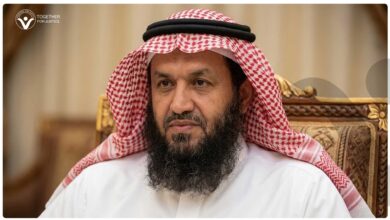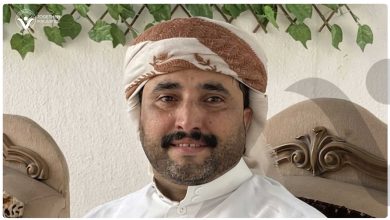
Nine Years in Prison and Facing Death for His Ideas: Hassan Farhan al-Maliki’s Case Exposes Saudi Arabia’s False Reform Narrative
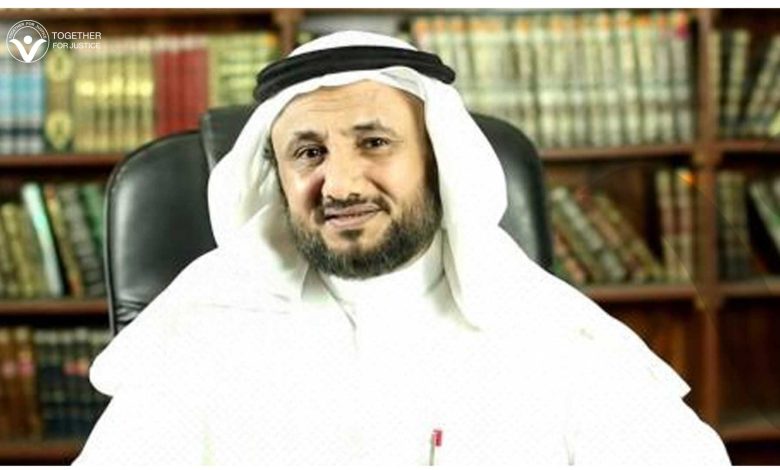
Saudi religious thinker and researcher Dr Hassan Farhan al-Maliki has completed nine years behind bars since his arrest on 11 September 2017 over his religious opinions, writings and peaceful intellectual activity.
Nearly a decade later, no final judgment has been publicly issued in his case, yet the Saudi Public Prosecution continues to seek the death penalty against him.
Al-Maliki’s case does not concern an act of violence or incitement to commit one. It concerns a thinker who challenged prevailing interpretations, criticised extremism, sectarianism and excommunication, and defended freedom of belief and intellectual debate.
Saudi authorities nevertheless treated his ideas as a security threat and brought him before the Specialised Criminal Court, which was established to hear terrorism cases.
His books, tweets, television interviews and participation in intellectual discussions were transformed into evidence against him. Religious disagreement became grounds for seeking his execution.
His case is therefore not merely an assault on the freedom of one scholar. It demonstrates how Saudi Arabia uses its courts and counterterrorism framework to suppress independent thought.
A thinker known for challenging extremism and sectarianism
Hassan Farhan al-Maliki became known as a reformist scholar who offered critical readings of Islamic history and religious heritage. He questioned certain religious narratives and historical figures while criticising sectarian intolerance, excommunication and interpretations that contribute to hatred and violence.
His views were controversial and attracted strong disagreement within religious and intellectual circles. Freedom of thought, however, is not tested by the protection of conventional or widely accepted opinions. It is tested by whether people expressing controversial and dissenting views are protected from imprisonment and execution.
Al-Maliki’s ideas should have been answered with other ideas and debated in universities, seminars, books and the media. Saudi authorities instead responded by raiding his home, arresting him and prosecuting him before a terrorism court.
Arrested without a warrant and denied a proper defence
Saudi authorities arrested al-Maliki at his home on 11 September 2017 as part of a sweeping crackdown against religious scholars, academics, writers, economists and other independent voices.
He was arrested without being shown a warrant and was not initially informed adequately of the charges against him. He was also denied legal advice and the right to appoint a lawyer during crucial stages of the case.
According to human rights reports, security forces raided his home and terrified his family during the arrest. He was subsequently held in harsh conditions, including prolonged periods of isolation and months without contact with his family.
Independent observers were prevented from attending his hearings, depriving the proceedings of basic transparency and public scrutiny.
The persecution did not stop with al-Maliki. His son al-Abbas was reportedly detained after posting messages about his father’s arrest and stating that he had been wronged. Extending the repression to his son appears intended to silence the family and prevent it from bringing his treatment to public attention.
During al-Maliki’s imprisonment, another of his sons, Farhan, died. The authorities denied him the opportunity to say goodbye or attend the funeral. This cruel deprivation added another form of punishment to his years of imprisonment and extended the suffering to his entire family.
Fourteen charges rooted in thought and expression
In October 2018, more than a year after his arrest, prosecutors brought 14 charges against al-Maliki.
Human Rights Watch reviewed the charge sheet and concluded that almost all the accusations bore little resemblance to recognisable crimes. Instead, they concerned his peaceful expression of religious and intellectual views.
The charges included questioning the authenticity of certain prophetic traditions, criticising several historical Islamic figures, describing some religious officials and their positions as extremist, and accusing Gulf states of supporting the armed group Islamic State.
He was also accused of praising Hezbollah leader Hassan Nasrallah, sympathising with the Houthi group in Yemen, expressing his religious opinions in television interviews, attending discussion groups in Saudi Arabia, writing and publishing books and studies abroad, possessing banned books, posting messages on social media, violating the Cybercrime Law, and failing to demonstrate what the authorities described as “good citizenship”.
The prosecution relied on al-Maliki’s tweets, materials seized from his home and electronic devices, and alleged confessions.
Among the opinions used against him were his defence of freedom of belief, his assertion that people should not be forced to adopt specific convictions, his rejection of the religious punishment for apostasy, and his criticism of scholars who impose an absolute prohibition on music and singing.
The charge sheet leaves little doubt that al-Maliki is not being prosecuted for a violent crime. He is being prosecuted for his religious interpretations and intellectual positions.
His defence of freedom of belief, examination of religious heritage, authorship of books and even possession of certain publications have been assembled into a case through which prosecutors seek his execution.
The death penalty for peaceful opinions
Despite the peaceful and intellectual nature of the allegations, the Saudi Public Prosecution has sought the death penalty.
This demand flagrantly violates international standards, which require countries that retain capital punishment to restrict it to the “most serious crimes”, understood as crimes involving intentional killing.
Saudi authorities have not accused al-Maliki of killing anyone, planning an attack or calling for violence. Yet he continues to face the possibility of losing his life because of his religious views, political positions, tweets and books.
The demand for his execution also exposes the contradiction at the heart of Crown Prince Mohammed bin Salman’s claims to be fighting extremism and returning Saudi Arabia to a more “moderate” form of Islam.
While the government spends heavily on international campaigns presenting the Kingdom as open and tolerant, its prosecutors seek to execute a thinker known for challenging excommunication, sectarianism and religious extremism.
A state cannot credibly claim to oppose extremism while threatening a scholar with death for questioning inherited ideas and criticising intolerance. Nor can genuine moderation exist while the authorities monopolise the definition of acceptable religion and criminalise every interpretation that falls outside it.
A trial postponed until justice lost its meaning
Al-Maliki has received neither a prompt nor a fair trial. His hearings have been repeatedly postponed, with human rights reports recording at least 16 delays by early 2023.
At one stage, approximately 18 months passed without his being brought before a hearing at which he could meaningfully respond to the allegations. Some sessions proceeded in his absence, while hearings thought to involve a verdict were postponed again and again.
Throughout these delays, the prosecution’s demand for his execution continued to hang over him.
The latest available human rights information indicates that his trial has been stalled since October 2022. He therefore has neither a final conviction that can be appealed nor an acquittal that would end his detention. He remains imprisoned indefinitely under the threat of death.
Postponing a trial at least 16 times cannot be dismissed as an administrative failure or ordinary judicial delay. After nine years in detention, delay has itself become part of the punishment.
The authorities continue to deprive al-Maliki of his liberty without resolving the case, leaving him and his family trapped in an open-ended ordeal.
A campaign that returned his case to public attention
In July 2025, al-Maliki’s son Abu Bakr launched a humanitarian campaign to draw renewed attention to his father’s case after years of official silence and declining media coverage.
The campaign received support from writers, researchers and media figures representing different religious and intellectual backgrounds. Their response demonstrated that solidarity with al-Maliki does not require agreement with all his views.
The central issue is the right to think and speak freely, and the rejection of capital punishment as a means of settling an intellectual disagreement.
Defending al-Maliki is not an endorsement of a particular religious school or every statement he has made. It is a defence of a basic principle: intellectual disagreement must not become a crime, courts must not replace debate, and the death penalty must not be used to intimidate thinkers and force society into silence.
Nine years that expose the reality behind “reform”
Nine years of Hassan Farhan al-Maliki’s imprisonment are enough to expose the hollowness of an official narrative that separates social openness from political and intellectual repression.
Saudi authorities may permit concerts, cinemas and international events, but they cannot credibly describe this as comprehensive reform while a thinker remains imprisoned over books, tweets and interviews.
Openness is not merely a change in the appearance of public life. It requires protecting the individual’s freedom to think, question, debate and disagree.
Al-Maliki’s case shows that the Saudi authorities are not challenging extremism through open intellectual engagement. Instead, they have replaced an old religious monopoly with a new political monopoly that determines which opinions may be expressed and punishes those who cross its boundaries.
Al-Maliki has spent nine years separated from his family, books and life, without a final judgment and under the threat of execution. He was not imprisoned for advocating violence, but for thinking, writing and raising questions the authorities considered unacceptable.
Saudi Arabia must withdraw the demand for the death penalty, drop all charges arising from al-Maliki’s peaceful exercise of his rights, and release him immediately and unconditionally.
He must receive adequate compensation for nine years of arbitrary detention and the violations inflicted upon him. An independent investigation must also examine his denial of legal representation, prolonged isolation and the targeting of his family.
The United Nations, European Union and governments maintaining close political and economic relations with Saudi Arabia must place al-Maliki’s case on the agenda of their communications with Riyadh and publicly demand an end to his unfair prosecution and his immediate release.
After nine years, international silence is no longer neutral. It gives the Saudi authorities further space to imprison a thinker and threaten him with death because of his ideas.