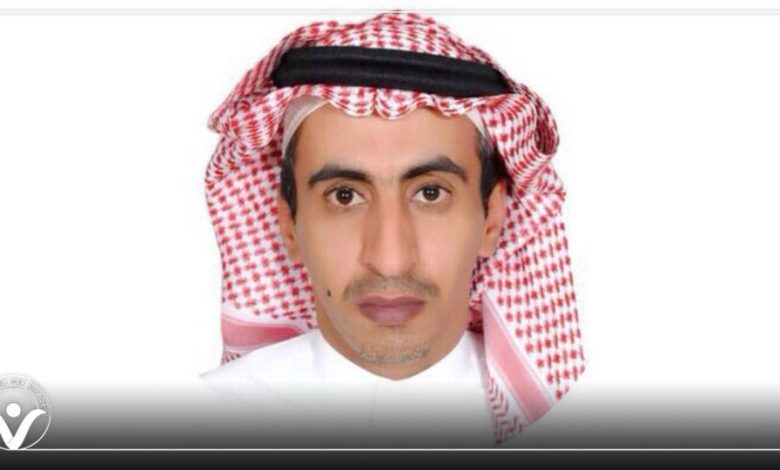
One year after the execution of Saudi journalist and blogger Turki Al-Jasser on 14 June 2025, Together for Justice renews its demand for accountability for those who killed him in the name of the law. His execution was not merely the end of a life; it was the culmination of a state-led process that transformed political retaliation into a judicial act and turned the machinery of law into an instrument of killing.
Al-Jasser was not the first Saudi journalist to be killed for his words. Before him, Jamal Khashoggi was abducted and brutally murdered inside the Saudi consulate in Istanbul in 2018, in a crime that exposed the violence of Saudi repression beyond the kingdom’s borders. But Turki Al-Jasser’s case carries a different and deeply dangerous meaning: Khashoggi was killed outside the law, while Al-Jasser was killed by it. One was assassinated in secret inside a diplomatic mission; the other was executed under the cover of a court ruling. In both cases, the message was the same: no journalist, writer, or critic is safe when they challenge the official narrative.
Turki Al-Jasser was arrested in March 2018 after Saudi authorities reportedly identified him as the person behind the anonymous Twitter account “Kashkool”, known for criticising the authorities and exposing corruption, repression, and internal power dynamics within the kingdom. From the moment of his arrest, he was stripped of basic legal protections. His family was denied meaningful information about his fate, he was deprived of effective legal representation, and his case was surrounded by secrecy for years.
After prolonged enforced disappearance, arbitrary detention, and allegations of torture and severe ill-treatment, the Saudi authorities announced his execution on vague and politically charged accusations, including “high treason” and “destabilising state security”. These labels did not turn journalism into a crime; they exposed how Saudi Arabia criminalises journalism when it challenges power.
Together for Justice considers the execution of Turki Al-Jasser a deliberate political killing carried out through state institutions. The authorities did not only punish him for his speech; they used the judiciary to grant formal legitimacy to his elimination. This makes the case one of the most dangerous precedents against press freedom in Saudi Arabia: a journalist among prisoners of conscience was not only detained, tortured, and silenced — he was executed by court order.
The case also exposes the digital dimension of repression in Saudi Arabia. Al-Jasser’s arrest was linked to the exposure of his online identity, following reports that former Twitter employees had accessed and shared private user data with Saudi officials. This raises grave questions about the responsibility of technology companies to protect users whose digital anonymity may be their only protection from arrest, torture, or death.
The killing of Turki Al-Jasser by judicial order also reveals the emptiness of official claims about reform and openness. Saudi Arabia continues to present itself internationally as a modernising state while imprisoning writers, threatening critics with execution, and using courts to eliminate independent voices. Cultural events, sports investments, and public relations campaigns cannot conceal the fact that a journalist was executed after years of secret detention and an unfair process.
One year later, the international response remains far below the gravity of the crime. Governments and international institutions that continue to deepen political, economic, and security cooperation with Saudi Arabia without demanding accountability are helping normalise impunity. Silence in the face of the execution of a journalist is not neutrality; it is a political choice that enables further crimes.
Together for Justice stresses that Turki Al-Jasser was not a terrorist, a traitor, or a threat to public safety. He was a journalist and commentator who used words to expose what the authorities wanted hidden. His execution was not punishment for a recognisable crime, but punishment for speech, criticism, and the refusal to surrender to fear.
Together for Justice calls for an independent international investigation into Turki Al-Jasser’s execution, including the circumstances of his arrest, enforced disappearance, trial, alleged torture, and the judicial process that led to his death. All officials involved in his arrest, prosecution, sentencing, and execution must be held accountable.
The organisation also urges the United Nations, including the Special Rapporteur on extrajudicial, summary or arbitrary executions and the Special Rapporteur on freedom of opinion and expression, to treat Al-Jasser’s execution as a grave attack on press freedom, not as an internal Saudi matter.
Together for Justice further calls on technology companies, including Twitter/X, to fully disclose any security failures, internal breaches, or cooperation that may have contributed to exposing dissidents, journalists, and anonymous critics to Saudi authorities. Digital platforms must not become silent partners in transnational repression.
A year after his killing, Turki Al-Jasser remains a symbol of a darker stage in Saudi repression: a stage in which the state no longer merely imprisons journalists, but executes them in the name of the law. His case will not be erased by money, investments, sportswashing, or public relations campaigns. It remains proof that a system willing to kill a journalist for words is not reforming — it is hiding its fear of truth behind the language of justice.