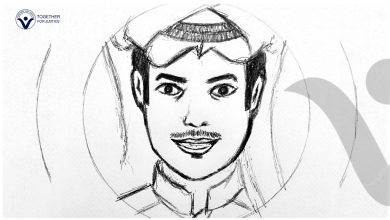
Abdullah Hajjaj al-Arini: Detained Over Old Tweets, Then Missing From Public View for Years
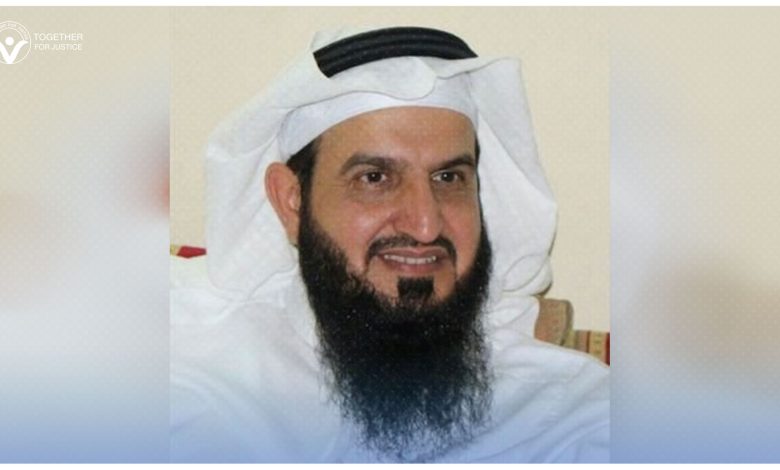
Since December 2018, the name of Saudi citizen Abdullah Hajjaj al-Arini has appeared on lists of detainees and victims of alleged enforced disappearance. Yet some of the most basic information that should exist about anyone held by a state remains absent from the public record.
Where is he? What is his current legal status? What offence is he accused of? Has he been tried? Has he been sentenced?
According to the Saudi rights organisation SANAD, al-Arini was detained on 1 December 2018 over old tweets in which he had expressed his opinions. The organisation currently lists him as forcibly disappeared. AOHR UK similarly reported in 2023 that his place and conditions of detention had not been disclosed and said that, according to the information available to it at the time, no case or arrest warrant against him had been made public.
Other rights organisations continued to raise his case during 2023 and 2024. Together for Justice repeatedly described his whereabouts as unknown, while SANAD said in September 2024 that his detention over old tweets was continuing.
Nearly eight years after his arrest, the central issue is therefore no longer only why al-Arini was detained.
It is why so little reliable information is publicly available about what happened to him afterwards.
From Old Tweets to Years of Silence
If the accounts documented by rights organisations are accurate, al-Arini's case began with something remarkably ordinary: expressing an opinion on social media.
But it did not end with his arrest.
Under a transparent legal system, detention should lead to a process that can be followed and scrutinised: a clearly defined allegation, access to legal representation, appearance before a judicial authority, a fair trial and, where there is a conviction, a judgment that can be challenged through established legal procedures.
Prolonged disappearance from public view presents a much more serious problem.
The sources reviewed for this report provide no reliable public details of a final judgment against al-Arini, a transparent trial or his current place of detention.
That absence of information is not a minor gap in the story. It is the story.
Enforced Disappearance Is More Than Not Knowing Where a Prisoner Is
“Enforced disappearance” is a serious legal and human-rights term and should not be used merely for rhetorical effect.
The classification in al-Arini's case comes from rights organisations including SANAD and Together for Justice.
The concern becomes particularly grave when detention is accompanied by a refusal to disclose sufficient information about a person's fate or whereabouts, placing the detainee beyond the ordinary protections that a legal system is supposed to provide.
For the family, the consequences extend beyond the loss of liberty itself.
Relatives can be left without reliable answers about where their family member is being held, whether he is safe, what legal proceedings he faces or when his detention might end.
When that uncertainty lasts not for days or months but for years, time itself becomes part of the alleged abuse.
Nearly Eight Years Later, Where Is the Case?
There is a straightforward legal question that should be answerable after so many years:
What is the case against Abdullah Hajjaj al-Arini?
If he committed a criminal offence, the charge should be stated, the evidence presented and his right to a fair judicial process respected.
If his detention is indeed based on old tweets expressing his opinions, as the organisations documenting his case maintain, his continued detention raises serious questions about freedom of expression and the use of criminal punishment against peaceful speech.
And if there is no current legal case capable of justifying his continued detention, the question becomes more fundamental: on what legal basis is he still being deprived of his liberty?
A detainee does not lose the right to legal safeguards simply because he disappears from public attention.
The less information available about a person in state custody, the greater the need for transparency.
Freedom of Expression Does Not End on Social Media
Al-Arini's case also belongs to a broader debate over the limits placed on online expression in Saudi Arabia.
A tweet may consist of only a few sentences. When those sentences allegedly become the basis for years of detention, however, the issue extends far beyond one social-media account.
How much space does a Saudi citizen have to discuss or criticise public affairs without fearing that something written years earlier could later be used as grounds for detention?
And what safeguards exist to prevent broadly framed laws or opaque procedures from being used against peaceful expression?
Freedom of expression does not place every form of speech beyond the reach of law. States can legitimately prosecute genuine threats, incitement to violence and other specifically defined criminal conduct.
But there is a fundamental difference between prosecuting an identifiable offence through a transparent judicial process and keeping a person out of public view for years without adequate clarity about the charges, proceedings or place of detention.
Silence Does Not Close the Case
After years in detention, a person's name can gradually disappear from the news.
New cases emerge. Media attention shifts. Campaigns become less frequent.
The detainee, however, remains.
That is why Abdullah al-Arini's case still requires attention.
Not because a large amount of new information has emerged, but because the continuing absence of information is itself the issue.
Where is Abdullah Hajjaj al-Arini? What is his condition? Where is he being held? Does he have regular access to his family and legal counsel? Has he been tried?
If a judgment has been issued against him, what is the sentence and on what legal basis was it imposed?
These are not extraordinary demands.
They are basic questions about a person whose liberty and whereabouts have been under the control of the Saudi state since 2018.
Nearly eight years later, al-Arini should not remain simply another name on a list of disappeared detainees.
If Saudi authorities have a lawful case against him, it should be disclosed and his due-process rights should be guaranteed.
If no lawful basis exists for his continued detention, he should be released.
What should no longer be acceptable is another year of silence around the simplest question of all:
Where is Abdullah Hajjaj al-Arini, and why has his fate remained unknown for so long?