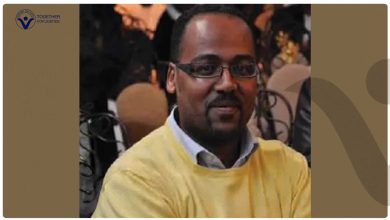
Six Years Since Abdelnasser al-Huwaiti Was Arrested for Opposing NEOM Evictions
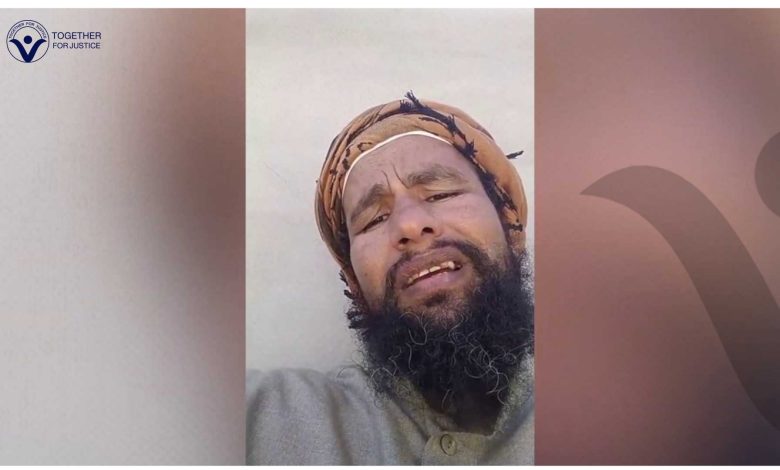
As 18 October approaches, six years have passed since Saudi authorities arrested Abdelnasser Ahmad Mahmoud Abu Taqiqa al-Huwaiti, who is serving a 27-year prison sentence for peacefully opposing the displacement of members of the Howeitat tribe to make way for the NEOM megaproject.
Since his arrest in 2020, al-Huwaiti has reportedly endured a series of grave violations, including arbitrary detention, prolonged solitary confinement, physical and psychological torture, and coercion into signing a confession. He was subsequently tried before the Specialised Criminal Court and handed an exceptionally harsh sentence for defending his land and his community’s rights to housing and property.
Who is Abdelnasser al-Huwaiti?
Abdelnasser al-Huwaiti is a Saudi citizen born in 1971 and a member of the Howeitat tribe, whose communities have lived for generations in north-western Saudi Arabia, including the villages of al-Khuraiba, Sharma and Gayal. These areas were incorporated into the territory designated for the construction of NEOM.
Al-Huwaiti became involved in his community’s opposition to the eviction process. According to an extensive investigation by ALQST for Human Rights, he hosted a meeting at his home on 9 January 2020 at which 174 Howeitat residents signed a petition opposing their removal.
Their demands did not amount to opposition to development itself. They concerned their right to genuine consultation, adequate compensation and protection from being forcibly uprooted from their homes and community.
NEOM was not built on empty land
Saudi authorities announced NEOM in 2017 as a flagship project of Vision 2030. The planned development covers approximately 26,500 square kilometres along the Red Sea coast in Tabuk Province.
Yet the official presentation of the area as largely empty obscured the existence of communities that had inhabited it for centuries. Human rights investigations have found that the area was home to around 20,000 people, predominantly members of the Howeitat tribe.
The project’s implementation has reportedly involved property seizures, home demolitions and the displacement of residents without genuine consultation and, in numerous cases, without adequate compensation or suitable alternative housing.
Rather than address residents’ objections through an open and lawful process, Saudi authorities launched a far-reaching security crackdown. ALQST documented the arrest of at least 47 members of the tribe for speaking out against, or peacefully resisting, the evictions. It also documented sentences ranging from lengthy prison terms to the death penalty.
The crackdown reached a deadly turning point in April 2020, when Abdul Rahim al-Huwaiti was killed during a security raid on his home in al-Khuraiba. Shortly before his death, he had published videos refusing to leave his home and criticising the eviction campaign. His killing prompted international concerns about the use of lethal force against residents defending their land.
Arrested on his way to hospital
On 18 October 2020, officers from the General Directorate of Investigations and the Special Emergency Forces arrested Abdelnasser al-Huwaiti while he was travelling to Duba Hospital.
He was initially transferred to the Mabahith prison in Tabuk, where he remained for approximately one month. He was then moved to Dhahban Prison in Jeddah, which is operated by the Presidency of State Security.
According to information received by United Nations experts and human rights organisations, al-Huwaiti was held in solitary confinement for four months and subjected to physical and psychological torture to force him to confess to the charges brought against him.
Those charges reportedly included “inciting public opinion against the Crown Prince” and committing a “terrorist offence”. UN experts, however, cited serious allegations that the terrorism accusations brought against al-Huwaiti and other members of his tribe were baseless and that the men were, in reality, being punished for voicing their opposition—including on social media—to the forced eviction of the Howeitat.
Using terrorism charges against residents demanding housing and property rights does not turn peaceful resistance into a security crime. It demonstrates how broadly worded counterterrorism legislation can be used to silence affected communities and prevent scrutiny of state-led development projects.
A delayed trial and a 27-year sentence
Al-Huwaiti was not brought before the Specialised Criminal Court until long after his arrest. According to a communication issued by UN experts, his initial hearing took place in July 2022 and was followed by four further hearings. The court then sentenced him to 27 years in prison.
The proceedings cannot be separated from the treatment he allegedly endured before trial, particularly the reports that he was tortured and forced to confess. International law requires the complete exclusion of statements obtained through torture and an independent and impartial investigation into every credible allegation of such abuse.
His prosecution before the Specialised Criminal Court raises further concerns. Although created to hear terrorism cases, the court has repeatedly been used to prosecute human rights defenders, activists and peaceful critics under vague accusations such as harming national unity, destabilising society or influencing public opinion.
A 27-year sentence is manifestly disproportionate to al-Huwaiti’s reported peaceful conduct. It amounts to a retaliatory punishment designed not only to imprison him, but also to deter other residents from defending their rights.
An entire family made to pay
The crackdown did not stop with Abdelnasser. Saudi authorities also arrested his son, Ahmed Abdelnasser al-Huwaiti, in October 2020, when he was a 19-year-old university student.
Ahmed faced charges relating to Twitter posts and expressions of sympathy for his uncle, Abdul Rahim al-Huwaiti, who had been killed by security forces. According to ALQST, Ahmed initially received a five-year prison term, which was increased on appeal to 21 years.
Other members of the family and the wider tribe have received similarly severe sentences. This demonstrates that the authorities were not pursuing a single individual, but conducting a wider campaign to punish a local community for refusing to surrender its land in silence.
UN experts raise the alarm
In 2023, several UN experts—including mandate holders working on adequate housing, arbitrary detention, torture, extrajudicial executions, freedom of expression and human rights while countering terrorism—sent communications to the Saudi government, NEOM Company and the Public Investment Fund.
They raised concerns about death sentences and lengthy prison terms imposed on members of the Howeitat tribe and sought explanations concerning the evictions, alleged torture, prosecutions and use of terrorism charges against opponents of the project.
The experts also noted allegations that NEOM was being implemented without genuine consultation, free, prior and informed consent, or access to effective remedies for affected Howeitat residents.
Development cannot be built on destroyed rights
Abdelnasser al-Huwaiti’s case exposes the other face of a project promoted internationally as a symbol of modernity, sustainability and the future. A project cannot credibly be presented as progress when homes are demolished to build it, residents are displaced, peaceful opponents are imprisoned for decades and others face execution.
Development does not give a government the right to uproot people without consultation, adequate compensation or suitable alternative housing. Nor does it justify redefining demands for housing, property and dignity as terrorism.
The case also raises serious questions about the responsibilities of companies, investors, consultants and international institutions connected to NEOM. Participation in the project without meaningful human rights due diligence risks contributing to a development whose implementation has been accompanied by displacement and repression.
Together for Justice calls on the Saudi authorities to release Abdelnasser al-Huwaiti immediately and unconditionally and overturn the unjust 27-year sentence imposed on him. His detention and prosecution are directly connected to his peaceful defence of his land and community.
We further call on the authorities to:
- Conduct an independent and transparent investigation into allegations of torture, solitary confinement and coerced confession, and hold all those responsible accountable.
- Exclude any confession or evidence obtained through torture and guarantee al-Huwaiti access to adequate healthcare, his family and legal counsel.
- Release all Howeitat detainees imprisoned for peacefully opposing displacement and quash the death sentences and other grossly disproportionate penalties imposed on them.
- End the use of counterterrorism legislation and the Specialised Criminal Court to punish defenders of land, housing and freedom of expression.
- Guarantee affected residents genuine consultation, access to judicial remedies, adequate compensation and suitable alternative housing, and restore their rights wherever possible.
- Require companies and investors connected to NEOM to conduct independent and comprehensive human rights due diligence and suspend activities that may contribute to continuing abuses.
Six years after his arrest, Abdelnasser al-Huwaiti continues to pay the price for asserting a fundamental right: that no person should be forcibly uprooted from their home and land.
His continued imprisonment is not justice. It is an extension of the collective punishment imposed on a community to clear the way for a megaproject.
The future cannot be built by imprisoning the people who lived on the land first. Addressing this injustice must begin with the release of Abdelnasser al-Huwaiti and everyone detained for peacefully resisting forced displacement.