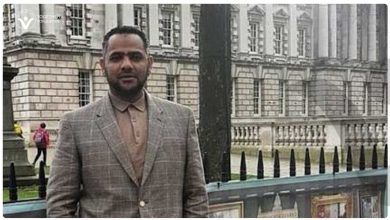
Fahad Al-Ruwis: Detained Over Boycott Calls as Saudi Authorities Face Questions About Business Influence and Judicial Independence

Together for Justice condemns the detention and prosecution of Saudi social media activist Fahad Al-Ruwis following his participation in public criticism and calls to boycott businesses associated with the family of a prominent Saudi businessman. The case raises serious concerns about the use of security and judicial authorities to protect influential commercial interests at the expense of freedom of expression and citizens’ fundamental rights.
The organization calls for all charges arising from peaceful expression to be dropped, full disclosure of Al-Ruwis’s current legal status, and his immediate release if he remains detained over his peaceful activities.
The case emerged in November 2025 amid growing public controversy surrounding reductions in social welfare benefits and statements by prominent businessmen defending the government’s policies. As criticism intensified, Al-Ruwis participated in public discussions and calls to boycott businesses associated with one businessman’s family.
These boycott calls represented a peaceful form of protest against the positions of influential business figures and an expression of solidarity with individuals affected by government economic decisions.
Rather than allowing the debate to remain within the boundaries of legitimate public discussion, Saudi authorities responded through security and criminal proceedings.
On 27 November 2025, the General Authority of Media Regulation announced that six individuals had been detained and referred to the Public Prosecution over allegations of publishing content intended to “incite public opinion”.
The authority invoked Article 6 of the Anti-Cybercrime Law, which allows penalties of up to five years in prison and a fine of three million Saudi riyals.
According to human rights documentation, Fahad Al-Ruwis was among those targeted, alongside lawyer Sultan Al-Atawi and social media personality Falah Al-Masradi.
However, the publicly available information does not establish that the boycott calls or criticism involved incitement to violence or any genuine threat to public security.
Al-Ruwis had also publicly described receiving a telephone call from the General Authority of Media Regulation instructing him to delete a video he had published.
He stated that he refused to remove the content without a judicial ruling identifying the alleged violation and explaining the legal grounds for the demand.
His account raises concerns about the use of regulatory powers to pressure individuals into removing critical content without transparent procedures or meaningful opportunities to challenge official decisions.
Separately, Al-Ruwis had previously announced that he had submitted a complaint to the relevant authorities concerning what he believed were safety violations at a private event connected to the same dispute.
Regardless of whether the complaint was ultimately substantiated, citizens must be able to report potential safety risks to the competent authorities without facing intimidation or retaliation.
Together for Justice stresses that the central concern in this case is not a personal disagreement between a social media activist and a businessman. It is the involvement of state security and prosecutorial institutions in a dispute arising from public criticism and peaceful consumer activism.
Calling for a commercial boycott, criticizing the public positions of businessmen, or expressing opposition to economic policies affecting vulnerable communities are legitimate forms of peaceful expression.
Such activities must not become criminal offences merely because they challenge the commercial interests or public reputation of influential individuals.
The case raises a fundamental question about the relationship between economic power and state authority in Saudi Arabia: are public institutions protecting citizens’ rights, or are their powers being used to shield influential businessmen from criticism?
Together for Justice warns that using broadly worded accusations such as “inciting public opinion” against peaceful boycott campaigns risks creating a system in which powerful commercial interests receive security protection unavailable to ordinary citizens exercising their fundamental rights.
The timing and nature of the proceedings raise legitimate concerns about possible institutional bias and unequal treatment under the law.
Although the available evidence does not establish that the businessman involved personally influenced the decision to pursue Al-Ruwis, the authorities’ intervention warrants independent scrutiny to determine whether public powers were improperly used to protect private commercial interests.
The organization emphasizes that criminal law must never become an instrument of political or economic favouritism.
Judicial independence cannot be measured simply by whether a case reaches the Public Prosecution or the courts. It requires meaningful safeguards against abuses of authority, equal treatment before the law, and protection against the criminalization of peaceful conduct.
The use of Saudi Arabia’s Anti-Cybercrime Law in cases involving public criticism and boycott campaigns also raises broader concerns about the restrictions imposed on freedom of expression.
When peaceful disagreement can lead to detention or prosecution under vaguely defined security-related accusations, citizens may be discouraged from criticizing economic policies, questioning the conduct of influential business figures, or participating in legitimate public debate.
Saudi Arabia’s judiciary has faced sustained criticism from international human rights organizations over the prosecution of peaceful expression, the broad application of security legislation, and inadequate safeguards against arbitrary detention.
Against this background, the Al-Ruwis case reinforces concerns about whether judicial and prosecutorial institutions can act independently of political and economic influence.
Together for Justice stresses that legitimate criticism must be distinguished from unlawful threats or conduct that genuinely infringes the rights of others.
If specific criminal wrongdoing is alleged, it must be established through transparent proceedings before an independent and impartial court, rather than through broad accusations that risk punishing people for expressing unpopular opinions.
Publicly available information remains insufficient to establish the final outcome of the investigation against Fahad Al-Ruwis or whether a definitive judgment has been issued concerning the allegation of inciting public opinion.
Although a human rights database continues to list him among detainees, the absence of sufficiently detailed and independently verified recent information makes it necessary for the Saudi authorities to clarify his current legal status and any restrictions imposed upon him.
Together for Justice calls on Saudi authorities to drop all charges based solely on peaceful expression or participation in boycott campaigns, disclose the legal status of Al-Ruwis and the other individuals targeted in the proceedings, and immediately and unconditionally release anyone who remains detained for exercising fundamental rights.
The organization also calls for a review of the use of the Anti-Cybercrime Law in freedom of expression cases, effective guarantees of judicial and prosecutorial independence, and an independent investigation into any misuse of regulatory or security powers to protect the commercial interests of influential individuals.
This case extends beyond Fahad Al-Ruwis. It concerns every citizen’s right to criticize economic policies, participate in peaceful commercial boycotts, and question powerful business figures without fear of detention or criminal prosecution.
Together for Justice emphasizes that the responsibility of the state is to protect citizens’ rights, not to protect businessmen from legitimate public criticism.
When criminal proceedings are used against peaceful expression in disputes involving influential commercial interests, public confidence in judicial independence and equality before the law is seriously undermined.
Calling for a boycott is not a crime, and economic influence must never place anyone beyond public criticism or legitimate accountability.