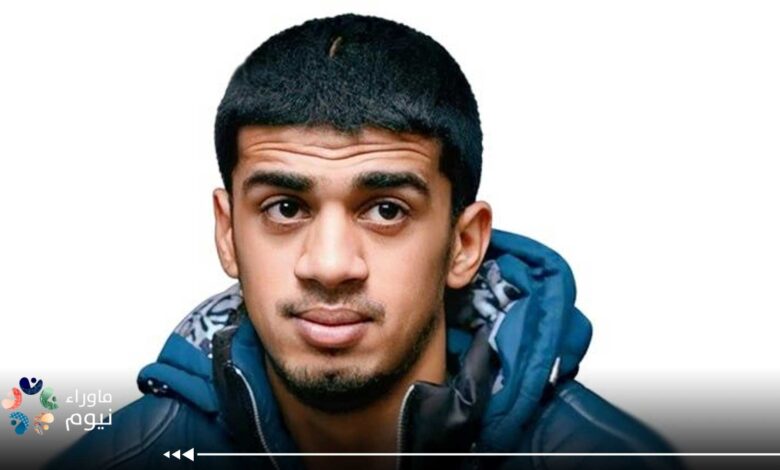
Together for Justice strongly condemns Saudi Arabia’s execution of Jawad Abdullah Qureiris on 14 November 2026 over charges that included alleged offences committed when he was under the age of 18. The execution represents a grave violation of international human rights law and exposes a fundamental contradiction between Saudi Arabia’s declared judicial reforms and its continued use of capital punishment against individuals accused of offences committed during childhood.
Saudi Arabia’s Ministry of Interior announced that Qureiris and fellow Saudi national Fadel Al-Safwani had been executed on terrorism-related charges following the Supreme Court’s approval and a royal order authorising the executions.
However, Qureiris’s case included allegations connected to his participation in protests when he was between 15 and 17 years old, alongside serious concerns about torture, coerced confessions, and violations of fair trial guarantees.
Arrested in December 2020, Qureiris was reportedly subjected to severe beatings and coercive interrogation to extract a confession. Court documents examined by human rights organizations revealed that he spent 270 days in solitary confinement. He denied the accusations against him, apart from participating in a protest as a child.
Despite these violations, the Specialized Criminal Court sentenced him to death, and Saudi authorities ultimately carried out the sentence.
The execution directly challenges the reform announced through Royal Order No. 46274 in March 2020, which suspended discretionary death sentences for offences committed before the age of 18. Saudi officials also stated that the protections extended to terrorism-related cases.
Saudi Arabia issued a royal order intended to prevent executions for childhood offences, yet another royal order authorised the discretionary execution of Jawad Qureiris despite charges involving acts attributed to him as a child.
Together for Justice stresses that international law protects individuals according to their age when the alleged offence occurred, not their age at sentencing or execution.
Article 37 of the Convention on the Rights of the Child strictly prohibits imposing the death penalty for offences committed before the age of 18, without exceptions for terrorism or national security accusations.
The execution is particularly alarming because the UN Working Group on Arbitrary Detention had already found Qureiris’s detention arbitrary. The allegations of torture and forced confessions further undermine the legitimacy of the judicial proceedings.
Together for Justice warns that the continued use of counterterrorism legislation against individuals involved in political protests, combined with unfair trials and the death penalty, raises serious concerns about the politicisation of Saudi Arabia’s judiciary.
The case also comes amid an alarming escalation in executions. Saudi Arabia carried out 356 executions in 2025, while executions continued at a high rate throughout 2026, including cases involving alleged childhood offences.
Together for Justice holds the Saudi authorities responsible for Qureiris’s execution and demands an independent international investigation into his arrest, torture allegations, trial, and execution.
The organization also calls for an immediate halt to all death sentences concerning offences committed before the age of 18, and urgent international intervention to protect others facing similar executions, particularly Youssef Al-Manasif.
Jawad Qureiris’s execution exposes the gap between Saudi Arabia’s promises of judicial reform and a system in which capital punishment continues to be used in politically sensitive cases despite fundamental human rights protections.
His life cannot be restored. But further unlawful executions can and must be prevented.