Author: Publisher2026

  • Saudi Authorities Continue to Conceal the Whereabouts of Political Prisoner Aya Al-Juhani After Her Sentence Ends

    Saudi Authorities Continue to Conceal the Whereabouts of Political Prisoner Aya Al-Juhani After Her Sentence Ends

    Saudi authorities persist in their refusal to reveal the fate of political detainee Aya Al-Juhani, who has been forcibly disappeared for nearly five years after her sentence ended and the authorities refused to release her.

    Aya Al-Juhani was arrested in April 2016 for peacefully expressing her views on social media, prompting the Saudi authorities to retaliate by imprisoning her and depriving her of her freedom for daring to exercise her right to free expression. After a trial before the Specialized Criminal Court, she was sentenced to three years in prison, and she was supposed to be released in April 2019.

    However, instead of releasing her, the Saudi authorities initiated a new, undisclosed case against her, and since August 2019, no one has known anything about Aya’s whereabouts or the reasons for her continued detention.

    Since her arrest, Aya Al-Juhani has been subjected to severe psychological and physical abuse, which has taken a significant toll on her health. Prolonged solitary confinement, coupled with repeated verbal insults and the denial of medical care, has left her in a deteriorating condition.

    Her prolonged detention under these harsh circumstances without access to adequate healthcare has raised serious concerns about her well-being, as her physical and mental health continue to decline with each passing day.

    The court also denied her the opportunity to appoint a lawyer to defend her, and she was held in solitary confinement for a year, a severe violation of her human rights.

    Eight years of humiliation, degradation, and enforced disappearance, which international law considers a war crime due to its severity, continue to illustrate the Saudi authorities’ persistence in treating human rights defenders with medieval cruelty.

    In rejecting and condemning the phenomenon of enforced disappearance, we call on governments and human rights organisations to work diligently to ensure the protection of human rights and to provide justice for the victims.

    Enforced disappearance is a grave violation of human rights and is recognized as a crime against humanity under international law. This cruel practice not only strips individuals of their freedom but also subjects them to inhumane conditions, including torture and mistreatment, while their families are left in a state of agonizing uncertainty.

    The use of enforced disappearance undermines the rule of law, erodes trust in state institutions, and perpetuates a cycle of fear and oppression. It is imperative that the international community takes a firm stand against this abhorrent practice and demands accountability from those who perpetrate such crimes.
  • 12 Years of Unjust Imprisonment for Saudi Activist Muhannad Al-Muhaimid

    12 Years of Unjust Imprisonment for Saudi Activist Muhannad Al-Muhaimid

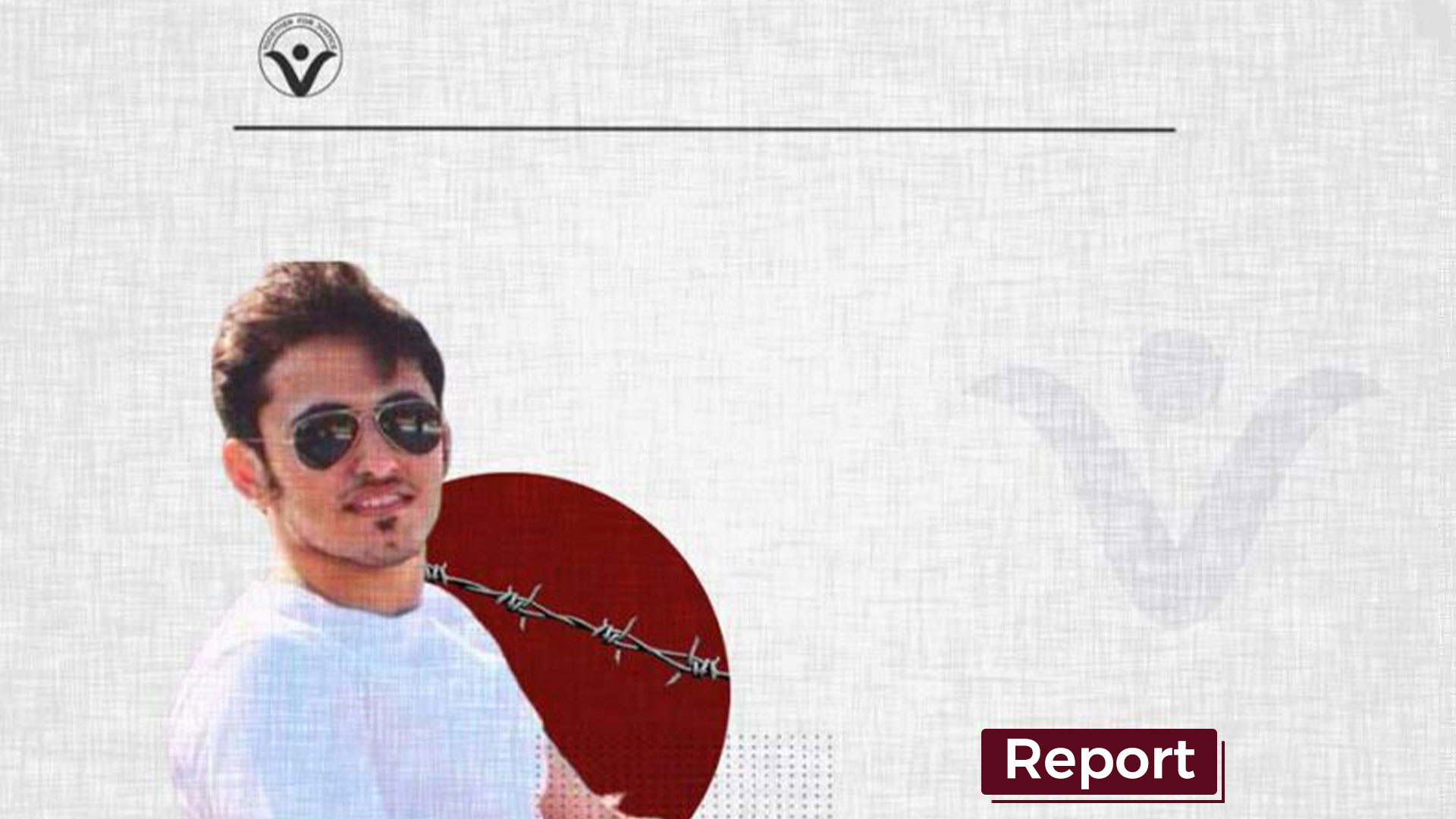
    In the shadow of Saudi Arabia’s claims of modernisation and reform lies a grim reality: a regime that ruthlessly suppresses dissent and silences those who dare to speak out. One such victim is Muhannad Al-Muhaimid, a Saudi activist whose 12-year imprisonment is a stark reminder of the Kingdom’s ongoing human rights abuses. His story, marked by arbitrary detention, torture, and a deeply flawed legal process, underscores the urgent need for justice and international intervention.

    The Arrest and Baseless Charges

    On November 19, 2012, at the age of 23, Muhannad Al-Muhaimid was arrested by Saudi authorities for tweets posted on his personal Twitter account. These tweets, which criticised the government and supported peaceful activism, were deemed by the regime as incitement against the state and mockery of the ruling authorities. For simply exercising his right to free speech, Muhannad was subjected to the full force of the Kingdom’s oppressive legal system.

    In February 2014, after more than a year of arbitrary detention, Muhannad was brought before the Specialised Criminal Court. The charges against him were shockingly disproportionate: participating in a peaceful protest, disrespecting Saudi authorities, and taking photos of the demonstration with the intent to incite unrest. These baseless accusations led to a draconian sentence on April 9, 2014: 10 years in prison, followed by a 10-year travel ban, a 100,000 Saudi Riyal fine, and the forced closure of all his social media accounts.

    Torture and Solitary Confinement

    Muhannad’s suffering did not end with his sentencing. Throughout his imprisonment, he has been subjected to severe human rights violations, including prolonged solitary confinement—a practice recognised internationally as a form of torture. Muhannad was denied contact with his family, leaving them in constant fear for his safety. Reports have also surfaced that Muhannad was tortured for refusing to accept a government-appointed lawyer, choosing instead to defend himself—an act of courage that only intensified his mistreatment.

    The cruelty extended beyond physical torture. Muhannad’s father revealed that prison doctors administered drugs classified as narcotics to his son, raising serious concerns about whether this was a deliberate attempt to further harm him. The idea that a young man, imprisoned for peaceful activism, could be subjected to such inhumane treatment underscores the depths of brutality within the Saudi penal system.

    Widespread Condemnation and Calls for Justice

    Together for Justice has been at the forefront of condemning the Saudi authorities for their inhumane treatment of Muhannad Al-Muhaimid. The organisation has decried the fact that a young man could be imprisoned and tortured for peaceful activism and has demanded that the Saudi government respect Muhannad’s basic human rights. His continued detention is not just a grave injustice but a blatant violation of international human rights law.

    12 Years of Darkness

    Despite completing his 10-year prison sentence, Muhannad Al-Muhaimid remains unjustly detained by the Saudi authorities. His continued imprisonment, beyond the term handed down by the court, highlights the unyielding repression and arbitrary nature of the Saudi regime. Muhannad’s case, marked by years of torture, solitary confinement, and denial of basic rights, is a stark example of the Kingdom’s ongoing campaign to silence dissent. The fact that he remains behind bars even after serving his full sentence only deepens the injustice and reinforces the urgent need for international pressure to secure his release.

    Muhannad Al-Muhaimid’s story is not just the story of one man—it is the story of a nation where expressing dissent can lead to over a decade of imprisonment and torture. It is a story that should compel all of us to act, to speak out against injustice, and to demand that Saudi Arabia end its brutal campaign against peaceful activists. Until justice is served for Muhannad and others like him, the true face of Saudi Arabia will remain that of an oppressive regime that crushes the rights of its people under the weight of authoritarian rule.

  • Seven Years of Injustice: The Unlawful Detention and Torture of Saudi Thinker Hassan Farhan Al-Maliki

    Seven Years of Injustice: The Unlawful Detention and Torture of Saudi Thinker Hassan Farhan Al-Maliki

    As Saudi Arabia projects an image of reform and modernisation under the leadership of Crown Prince Mohammed bin Salman, the grim reality of its human rights record tells a starkly different story. One such story is that of Hassan Farhan Al-Maliki, a prominent Saudi reformist thinker, who has been languishing in prison for nearly seven years without a fair trial. His prolonged detention and the inhumane treatment he has endured highlight the deep-seated repression that still pervades the Kingdom, despite its claims of progress.


    Arbitrary Arrest and Baseless Charges
    Al-Maliki was arrested in September 2017 as part of a sweeping crackdown on intellectuals, activists, and human rights defenders in Saudi Arabia. This wave of arrests was a calculated move by the Saudi authorities to silence any form of dissent or critical thought that threatened the regime’s narrative. Al-Maliki’s so-called crimes? Possessing “banned books” and advocating for political reform and democracy—actions that, in any free and just society, would be celebrated, not criminalised.
    For over a year, Al-Maliki was held in arbitrary detention, without being charged or given access to a fair trial. It was not until October 2018 that he was finally brought before the Specialised Criminal Court, a body notorious for its harsh sentences and lack of due process, where he was slapped with a series of charges under Saudi Arabia’s draconian anti-terrorism law. The charges, devoid of any legitimate legal basis, are a blatant act of retaliation against a man whose only “crime” was to think and express freely.
    A Mockery of Justice
    The treatment of Al-Maliki within the Saudi judicial system is nothing short of a mockery of justice. His trial has been postponed more than 16 times, a clear tactic to prolong his suffering and deny him any semblance of a fair hearing. Throughout his detention, Al-Maliki has been subjected to severe human rights abuses, including torture, solitary confinement, and the denial of basic rights such as access to legal representation and communication with his family. For long periods, even the case file was kept out of his reach, further stripping him of any opportunity to defend himself.
    In a move that defies both logic and justice, the Saudi Public Prosecution has called for the death penalty against Al-Maliki—not for acts of violence or endangering public safety, but simply for owning books that challenge the regime’s ideology and for advocating political reform. These charges are as absurd as they are unjust, serving only to highlight the Saudi regime’s deep-seated fear of intellectual freedom and dissent.
    The Hypocrisy of Reform
    The plight of Hassan Farhan Al-Maliki stands in stark contrast to the rhetoric of reform that Crown Prince Mohammed bin Salman has championed on the international stage. The Crown Prince has repeatedly claimed to be steering Saudi Arabia towards a more moderate form of Islam and away from the extremism that has long plagued the region. Yet, the reality is that his regime is imprisoning, torturing, and threatening to execute individuals like Al-Maliki—whose only offense is to call for the very reforms that the Crown Prince publicly espouses.
    This hypocrisy is not lost on the international community, which has grown increasingly wary of the Crown Prince’s claims. While the Saudi government touts its Vision 2030 plan as a roadmap to modernisation, the continued repression of free thought and expression paints a picture of a nation still mired in the darkness of authoritarianism.
    A Call for International Action
    The case of Hassan Farhan Al-Maliki is not an isolated one. Scores of other intellectuals, religious scholars, activists, and ordinary citizens have been swept up in the same wave of repression that began in 2017. Among them is the renowned Islamic scholar Salman al-Ouda, who, like Al-Maliki, faces the death penalty on similarly baseless charges related to his peaceful expression of views.
    The international community must not remain silent in the face of these egregious human rights violations. Governments, human rights organisations, and civil society groups must urgently call for the immediate release of Hassan Farhan Al-Maliki and all others who have been unjustly detained in Saudi Arabia. It is imperative that Saudi Arabia be held accountable for its actions and pressured to cease its relentless persecution of those who dare to think differently.
    True reform in Saudi Arabia will only come when the voices of thinkers, scholars, and activists are not only tolerated but encouraged. The global community must stand in solidarity with those like Hassan Farhan Al-Maliki, who risk their lives for the fundamental right to free expression. Until then, the promise of a “new” Saudi Arabia will remain nothing more than empty rhetoric, overshadowed by the stark reality of its ongoing repression.

  • Saudi Authorities Execute Abdullah Al-Qunibi for Social Media Posts

    Saudi Authorities Execute Abdullah Al-Qunibi for Social Media Posts

    In a shocking and deeply disturbing move, Saudi Arabian authorities executed Abdullah bin Mohammed bin Rashid Al-Qunibi on Saturday, solely for expressing his views and sympathies on social media. Al-Qunibi’s only “crime” was posting and sharing content that the Saudi government deemed supportive of groups they have labeled as terrorists. No material support, physical involvement, or substantial evidence was ever provided to justify such a draconian sentence—only the expression of thoughts online.

    Abdullah Al-Qunibi was arrested on February 4, 2021, after Saudi authorities hacked into his Twitter account and discovered posts they deemed supportive of groups labeled as terrorists. After enduring over three years of arbitrary detention, during which he was subjected to an unfair trial devoid of due process, Al-Qunibi was sentenced to death. On August 10, 2024, he was executed, marking a tragic and unjust end to his ordeal.

    Abdullah Al-Qunibi, a Saudi citizen, was executed for nothing more than engaging in online discussions and expressing his political opinions. The accusations against him stemmed from a few social media posts where he allegedly sympathized with individuals and groups, some of whom are political prisoners, that the Saudi regime considers adversarial. Despite the lack of any credible evidence of Al-Qunibi’s involvement in any criminal activities, and despite his actions being confined to social media, the Saudi government has demonstrated once again its brutal approach to silencing dissent.

    This execution not only exemplifies the lengths to which the Saudi regime will go to suppress freedom of speech but also exposes the depths of its intolerance towards any form of perceived dissent. The execution of Al-Qunibi is a clear violation of basic human rights, reflecting a government that is more concerned with maintaining its authoritarian grip than upholding justice or the rule of law.

    Together for Justice condemns this abhorrent act in the strongest terms possible. The killing of Abdullah Al-Qunibi for social media activity is an affront to humanity and a chilling reminder of the repressive environment in Saudi Arabia. It is unacceptable that in this day and age, expressing an opinion online can result in the ultimate punishment—death.

    The Saudi judicial system is notorious for its corruption and lack of due process. Trials are often held behind closed doors, with defendants denied proper legal representation, and confessions frequently obtained through torture. Abdullah Al-Qunibi’s case is no different—he was subjected to a sham trial, devoid of fairness, transparency, or justice, culminating in an execution that has shocked the conscience of the international community.

    Together for Justice calls upon the global community to not only condemn this execution but to take immediate action. We urge all human rights organizations, international bodies, and governments to apply maximum pressure on the Saudi regime to end its barbaric practices. We call for an immediate moratorium on all executions in Saudi Arabia and a comprehensive overhaul of its judicial system to ensure fairness, transparency, and respect for human rights.

    Furthermore, we call on the United Nations to launch an independent investigation into Saudi Arabia’s use of the death penalty, particularly in cases where the charges are based solely on freedom of expression. It is imperative that the international community speaks out against these grave injustices and takes concrete steps to prevent further violations.

  • Saudi Journalist Mohammed Al-Sadiq Detained Without Trial Since April 2019

    Saudi Journalist Mohammed Al-Sadiq Detained Without Trial Since April 2019

    Together for Justice strongly condemns the continued arbitrary detention of Saudi journalist Mohammed Al-Sadiq, who has been held without judicial authorisation since April 2019. Al-Sadiq was detained for his writings advocating for greater rights and freedoms for women in Saudi Arabia, as well as for expressing his firm opposition to normalising relations with the Israeli occupation and urging the Saudi regime not to pursue such a course.

    Since his arrest, Mohammed Al-Sadiq has been held incommunicado, with no access to legal representation or contact with his family, who remain in the dark about his whereabouts and the conditions of his detention. Saudi prisons are infamous for their brutal treatment of dissenters, where systematic abuse and human rights violations against political prisoners are the norm.

    The detention of journalist Mohammed Al-Sadiq, along with other prisoners of conscience in Saudi Arabia, is a blatant violation of human rights and freedom of expression. We call on the international community and human rights organisations to take action and pressure the Saudi regime to immediately release all prisoners of conscience and ensure the improvement of human rights conditions in the kingdom.

    Al-Sadiq’s continued detention is part of a broader crackdown by Saudi authorities on independent voices, intellectuals, and journalists who advocate for social and political reforms. This crackdown stands in stark contrast to Crown Prince Mohammed bin Salman’s promises to modernise Saudi society and improve the country’s human rights record.

    It is important to note that Al-Sadiq is not the only victim of this injustice; many journalists, activists, and human rights defenders remain imprisoned in Saudi Arabia for simply expressing their views. This situation poses a significant threat to freedom of the press and expression in the region and contributes to the growing atmosphere of repression and censorship.

    The international community must prioritise the issue of prisoners of conscience in Saudi Arabia and use all diplomatic and economic means to pressure Riyadh for their immediate release. Countries with strong ties to Saudi Arabia should play a more active role in emphasising the importance of respecting human rights and freedom of expression.

  • Arbitrary Detention Continues: Dr. Adel Banaa’ma Remains Imprisoned Despite Completed Sentence

    Arbitrary Detention Continues: Dr. Adel Banaa’ma Remains Imprisoned Despite Completed Sentence

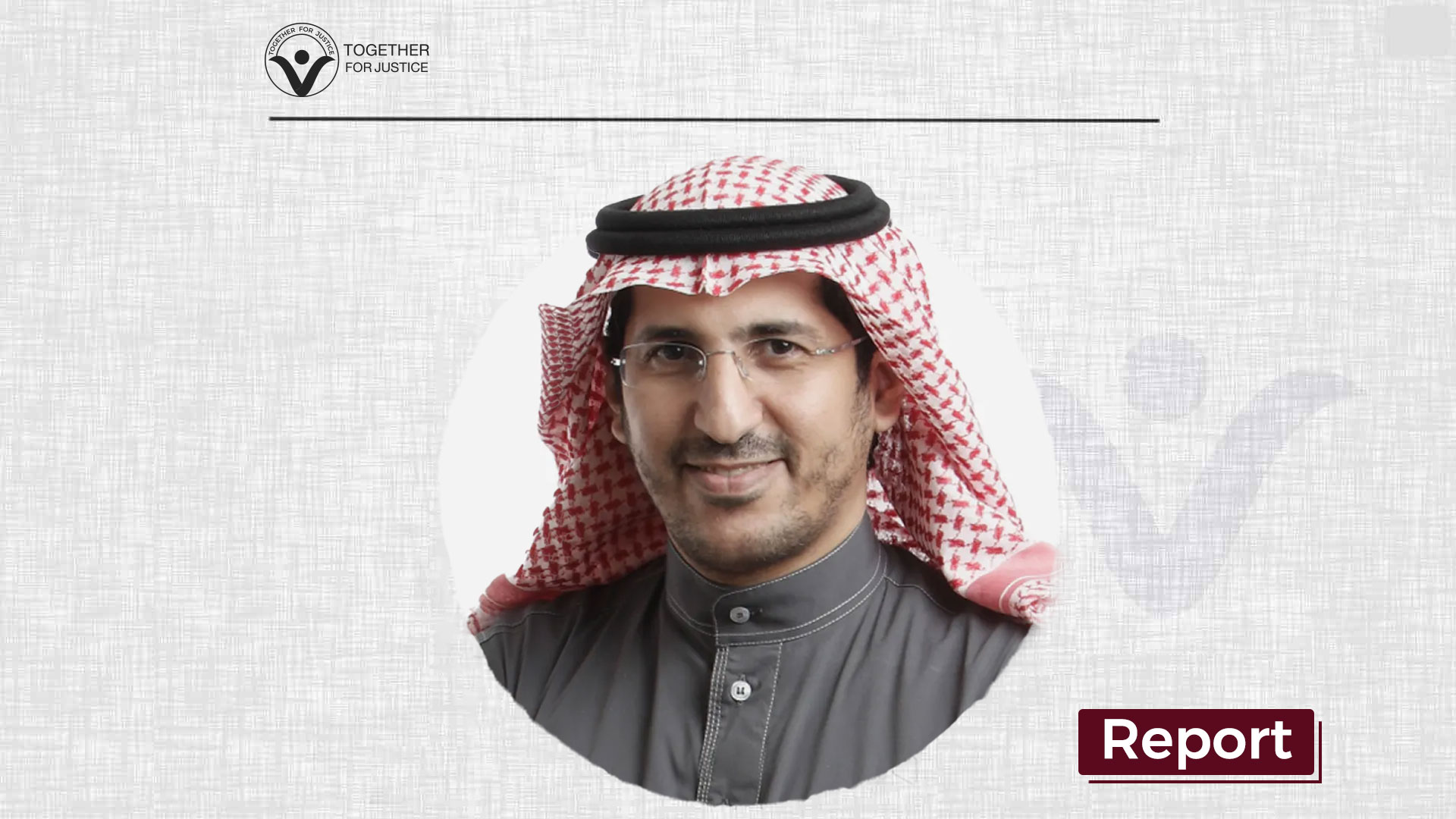
    After nearly seven years of unjust imprisonment, Dr. Adel Banaa’ma remains under arbitrary detention in Saudi Arabia, despite the completion of his six-year sentence in September 2023. Dr. Banaa’ma, a respected scholar, poet, and literary figure, has been subject to severe human rights violations throughout his detention, highlighting the ongoing tragic reality of Saudi Arabia’s human rights record.

    Dr. Banaa’ma was arrested from his home in Mecca on September 12, 2017, following a midnight raid in which his house was searched, and his electronic devices, books, and research were confiscated. This arrest occurred without clear legal justification, part of the infamous September 2017 crackdown that targeted intellectuals and academics under the guise of national security.

    Since his arrest, Dr. Banaa’ma has been subjected to inhumane treatment, including months of solitary confinement, denial of contact with his family, and the prohibition of legal representation. He has faced intimidation during his detention, including threats to his family, and was unjustly dismissed from his position at Umm Al-Qura University. His health has severely deteriorated due to medical neglect, particularly concerning his stomach and intestinal conditions, which have been exacerbated by the harsh conditions of his imprisonment.

    Originally sentenced to four years in prison and an additional four-year travel ban based on baseless charges by the Public Prosecution, Dr. Banaa’ma’s sentence was later unjustly extended to six years with a continued travel ban. Despite the completion of this extended sentence, the Saudi authorities continue to unlawfully detain him, demonstrating a blatant disregard for the rule of law and human rights.

    Dr. Banaa’ma’s only crime was exercising his right to freedom of expression—a right enshrined in international human rights law. His ongoing detention and the abusive treatment he has endured underscore the dire state of human rights in Saudi Arabia, where voices of reason and dissent are systematically silenced.

    We call upon the Saudi authorities to immediately release Dr. Adel Banaa’ma and end the egregious violations of his rights. The international community must hold Saudi Arabia accountable for its persistent human rights abuses and demand justice for all those wrongfully imprisoned for peacefully expressing their views.

  • Saudi Poet Samir Ali Al-Muslim Remains Under Enforced Disappearance for Nearly 5 Months

    Saudi Poet Samir Ali Al-Muslim Remains Under Enforced Disappearance for Nearly 5 Months

    Saudi poet Samir Ali Al-Muslim has been missing for almost five months following his arrest by Saudi authorities. Al-Muslim was taken from his home in Qatif in early Ramadan, and since then, his whereabouts and the reasons for his detention have remained unknown. His family has been denied any information or legal recourse to determine his fate, further deepening their anguish.

    Unlawful Detention and Lack of Due Process

    The circumstances surrounding Al-Muslim’s disappearance are deeply concerning. Despite repeated inquiries, Saudi authorities have refused to provide any details regarding his location or the charges against him. This lack of transparency violates both national and international laws concerning detainee rights and due process. Al-Muslim has not been granted a trial, nor has he had access to legal representation, compounding the illegality of his detention.

    Health Concerns and Human Rights Violations

    Al-Muslim’s family and human rights organisations are particularly worried about his health and well-being. Being blind, Al-Muslim requires specific medical care and living conditions that are unlikely to be available in Saudi detention centres, particularly those notorious for their harsh treatment of prisoners of conscience. “Together for Justice” has expressed fears that Al-Muslim may be forced to sign false confessions or could suffer physical harm.

    Calls for Immediate Action

    Human rights advocates are calling for immediate action from international bodies. “Together for Justice” has urged the Working Group on Arbitrary Detention to pressurise the Saudi regime for Al-Muslim’s unconditional release and the release of all prisoners of conscience held without clear charges. They are also appealing to various United Nations bodies to form emergency committees to visit Saudi Arabia and ensure that all detainees receive their rights.

    Moreover, the organisation stresses the importance of linking international cooperation with Saudi Arabia to significant improvements in the country’s human rights record. They call for the global community to hold the Saudi government accountable for its actions and to ensure that citizens can freely express their opinions and assemble without fear of arbitrary detention.

    A Plea for Justice

    The continued enforced disappearance of Samir Ali Al-Muslim underscores the broader issue of human rights violations in Saudi Arabia. His arbitrary arrest and prolonged detention without trial highlight the systemic abuses faced by many who dare to voice dissent in the Kingdom. The international community must rally to demand justice for Al-Muslim and to uphold the principles of human rights and due process.

    As Al-Muslim’s family continues to live in uncertainty and fear for his safety, their plea for information and justice grows ever more urgent. It is imperative that global human rights organisations, governments, and concerned citizens join forces to bring an end to this grievous violation of human rights and to secure Al-Muslim’s immediate release.

  • Dr. Salman Al-Sabawi Detained in Saudi Arabia for Commemorating Ismail Haniyeh During Umrah

    Dr. Salman Al-Sabawi Detained in Saudi Arabia for Commemorating Ismail Haniyeh During Umrah

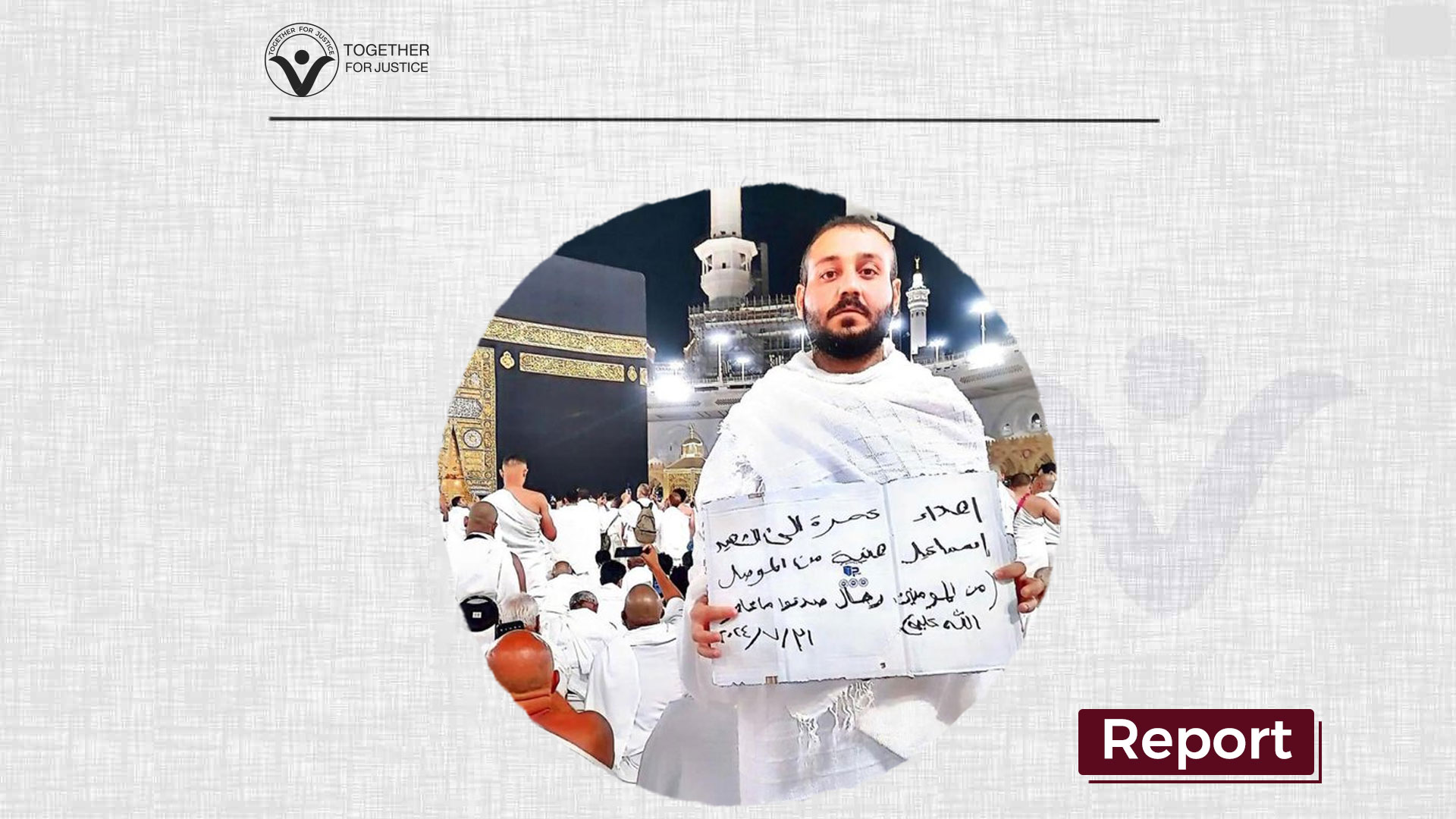
    Together for Justice vehemently condemns the recent arrest of Dr. Salman Dawood Al-Sabawi, a distinguished Iraqi academic, by Saudi authorities. Dr. Al-Sabawi was detained after holding a placard in front of the Kaaba, proclaiming that he had performed Umrah on behalf of Ismail Haniyeh, a prominent leader of Hamas who was assassinated in an Israeli airstrike on July 31, 2024.

    This arrest represents a gross violation of freedom of expression and the right to peaceful protest. Dr. Al-Sabawi’s act of devotion and solidarity should be respected and protected, not criminalized. The Saudi authorities’ actions are particularly alarming given the sacred location of the incident, the Kaaba, which should be a symbol of unity and peace for all Muslims.

    Together for Justice calls for the immediate and unconditional release of Dr. Salman Dawood Al-Sabawi. We urge the international community, human rights organizations, and all individuals committed to justice to join us in condemning this unjust arrest and to demand accountability from the Saudi government.

    This incident underscores the urgent need for greater respect for human rights and freedoms in Saudi Arabia. Together for Justice will continue to monitor the situation closely and advocate for the rights of Dr. Al-Sabawi and all individuals who face repression for exercising their fundamental freedoms.

  • Manasour Al-Raqeebah: A Victim of Saudi Arabia’s Crackdown on Free Speech

    Manasour Al-Raqeebah: A Victim of Saudi Arabia’s Crackdown on Free Speech

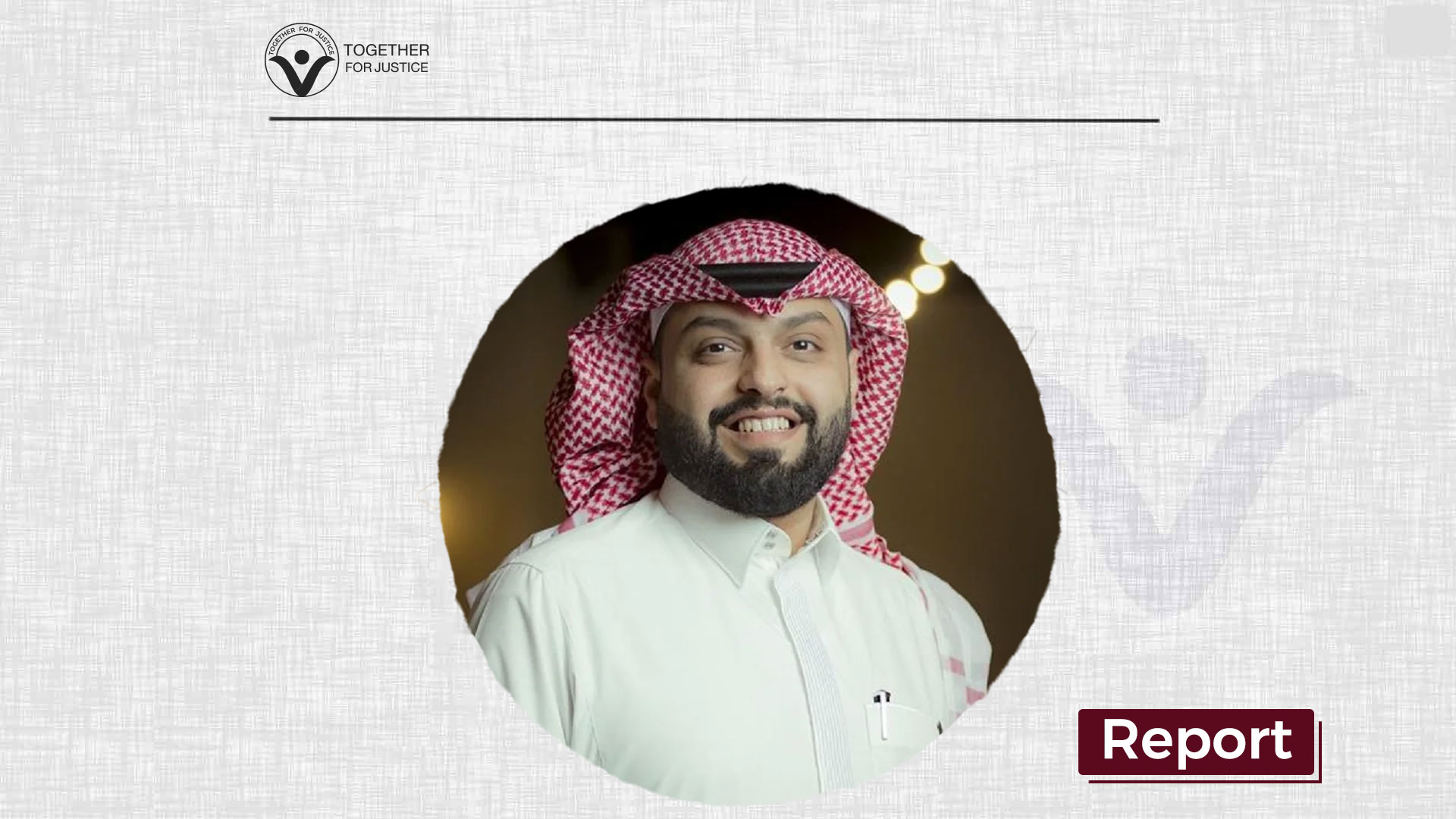
    In 2022, Saudi businessman and social media influencer Manasour Al-Raqeebah found himself entangled in a dire situation that highlights the severe repercussions faced by those who dare to speak out against the Saudi regime. Arrested on charges of spreading false news and criticizing Vision 2030 and Crown Prince Mohammed bin Salman, Al-Raqeebah was initially sentenced to 18 years in prison. However, following an appeal, this sentence was shockingly extended to 27 years, all stemming from comments made during a private conversation that were reported by an attendee.

    Al-Raqeebah’s case is emblematic of the broader crackdown on free speech and dissent in Saudi Arabia. His severe punishment underscores the lengths to which the Saudi government will go to silence critics and maintain a tight grip on power. This crackdown extends beyond mere imprisonment; it permeates the treatment of prisoners within the Saudi penal system.

    Since his imprisonment, Al-Raqeebah’s health has taken a dramatic turn for the worse. He suffers from severe kidney failure, diabetes, and frequent depressive episodes. Despite his critical health condition, prison authorities have grossly neglected his medical needs, exacerbating his ailments and highlighting the severe human rights violations within the Saudi prison system. The lack of adequate healthcare for political prisoners like Al-Raqeebah is a stark reminder of the grim realities faced by those who dare to dissent.

    The international community, including the United Nations and various human rights groups, is urged to pressure the Saudi government to release Manasour Al-Raqeebah and ensure he receives necessary medical treatment. His case demands increased scrutiny of Saudi Arabia’s human rights record and more robust international advocacy to protect the rights of activists and political prisoners.

    Manasour Al-Raqeebah’s continued imprisonment and deteriorating health conditions serve as stark reminders of ongoing human rights abuses in Saudi Arabia. His story underscores the urgent need for international intervention to prevent further injustice and protect fundamental human rights. The global community must act to ensure that individuals like Al-Raqeebah are not forgotten and that their rights are upheld. Only through persistent international pressure can the plight of political prisoners in Saudi Arabia be alleviated, and the broader fight for freedom of expression be advanced.

  • Dr. Ali Al-Omari: A Comprehensive Account of Detention and Human Rights Violations

    Dr. Ali Al-Omari: A Comprehensive Account of Detention and Human Rights Violations

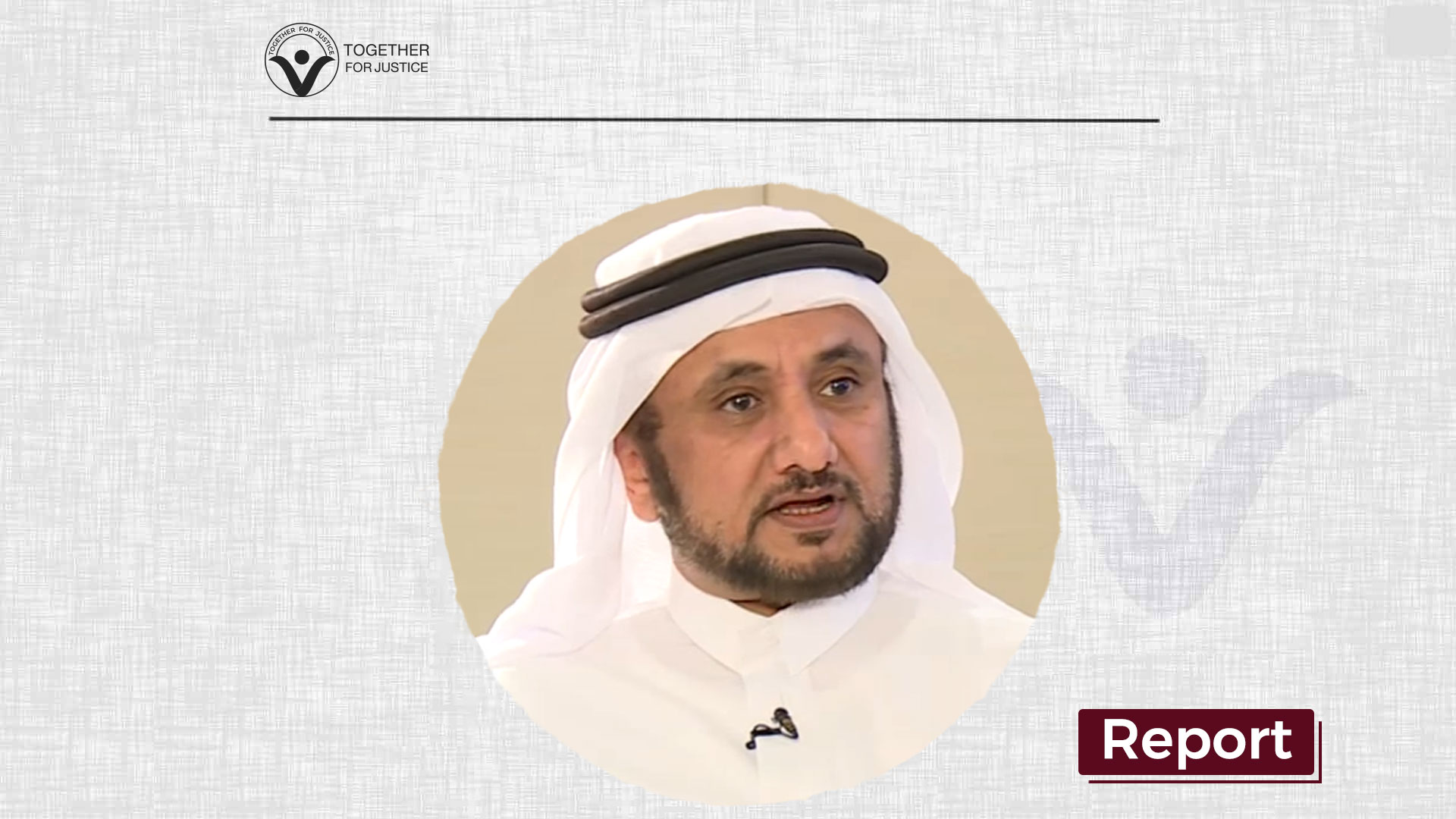
    Dr. Ali Al-Omari is a renowned Saudi Islamic scholar, TV personality, and chairman of the youth-oriented TV channel 4Shbab. He gained prominence for advocating moderate religious values, promoting women’s rights, and campaigning against violent extremism. His television programs and social media presence, particularly on Snapchat, garnered a substantial following among young Muslims across the Arab world. In addition to his media work, Dr. Al-Omari is also the chairman of Mecca Open University and a member of the International Union of Muslim Scholars.

    Arrest and Initial Detention:
    On September 9, 2017, Dr. Al-Omari was arrested by Saudi authorities during a sweeping crackdown targeting religious figures, journalists, activists, and academics. This wave of arrests was part of a broader effort by the Saudi government to suppress voices advocating for reform and moderate religious discourse. The Saudi government accused Dr. Al-Omari of forming a terrorist youth organization and charged him with over 30 offenses related to terrorism.

    Solitary Confinement and Torture:
    Following his arrest, Dr. Al-Omari was placed in solitary confinement for 15 months. During this period, he was subjected to severe torture, including beatings and electric shocks, resulting in severe burns and injuries all over his body. Reports indicate that he was completely prohibited from visits and contact with his family during this time, exacerbating his physical and mental suffering.

    Legal Proceedings and Charges:
    Dr. Al-Omari’s trial began in September 2018 and was conducted in secrecy by the Specialized Criminal Court in Riyadh. The public prosecutor sought the death penalty, a move that has been widely condemned by international human rights organizations. Throughout his detention, Dr. Al-Omari was denied access to legal counsel for the first year, further violating his rights to a fair trial. The charges against him included accusations of forming a terrorist youth organization and other terrorism-related offenses, which many believe are politically motivated to silence his moderate and reformist views.

    Health and Current Conditions:
    The prolonged solitary confinement and torture have severely impacted Dr. Al-Omari’s health. He suffers from severe psychological and physical trauma due to the abuse he has endured. Despite the international outcry and calls for his release, Dr. Al-Omari remains in detention under harsh conditions. His current health status raises serious concerns among human rights advocates, who fear for his well-being and the long-term effects of his treatment.

    International Response:
    The arrest and treatment of Dr. Al-Omari have drawn significant international attention and condemnation. Human rights organizations such as Human Rights Watch, Amnesty International, and the United Nations, as well as Together for Justice, have called for his immediate release and highlighted his case as an example of Saudi Arabia’s broader crackdown on dissent. The international community has been urged to put pressure on the Saudi government to uphold human rights and due process.

    Recent Developments:
    As of the latest updates, Dr. Al-Omari remains in detention, with the threat of execution still imminent. The secretive nature of his trial and the ongoing human rights violations against him continue to be a point of contention for international human rights advocates. Efforts by human rights organizations and activists to secure his release persist, but the Saudi government has shown little willingness to change its stance.

    Dr. Ali Al-Omari’s case is a stark reminder of the human rights challenges in Saudi Arabia. His detention, torture, and the threat of execution reflect the repressive measures employed by the Saudi government against those who advocate for moderate and reformist views. The international community must remain vigilant and vocal in its support for Dr. Al-Omari and others who face similar fates under authoritarian regimes. The global outcry and sustained pressure are crucial to ensuring that Dr. Al-Omari receives justice and that such human rights violations are brought to an end.