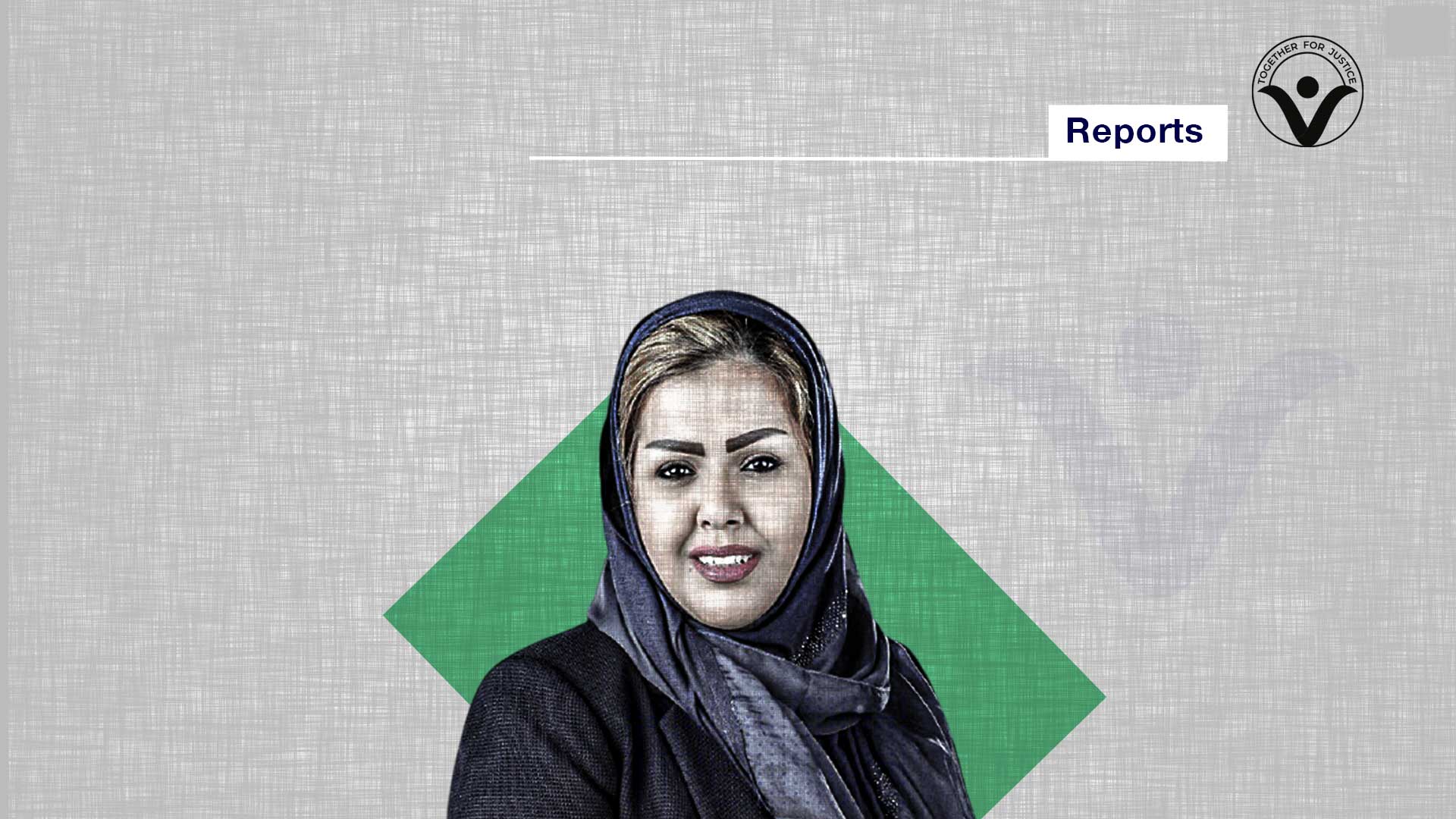
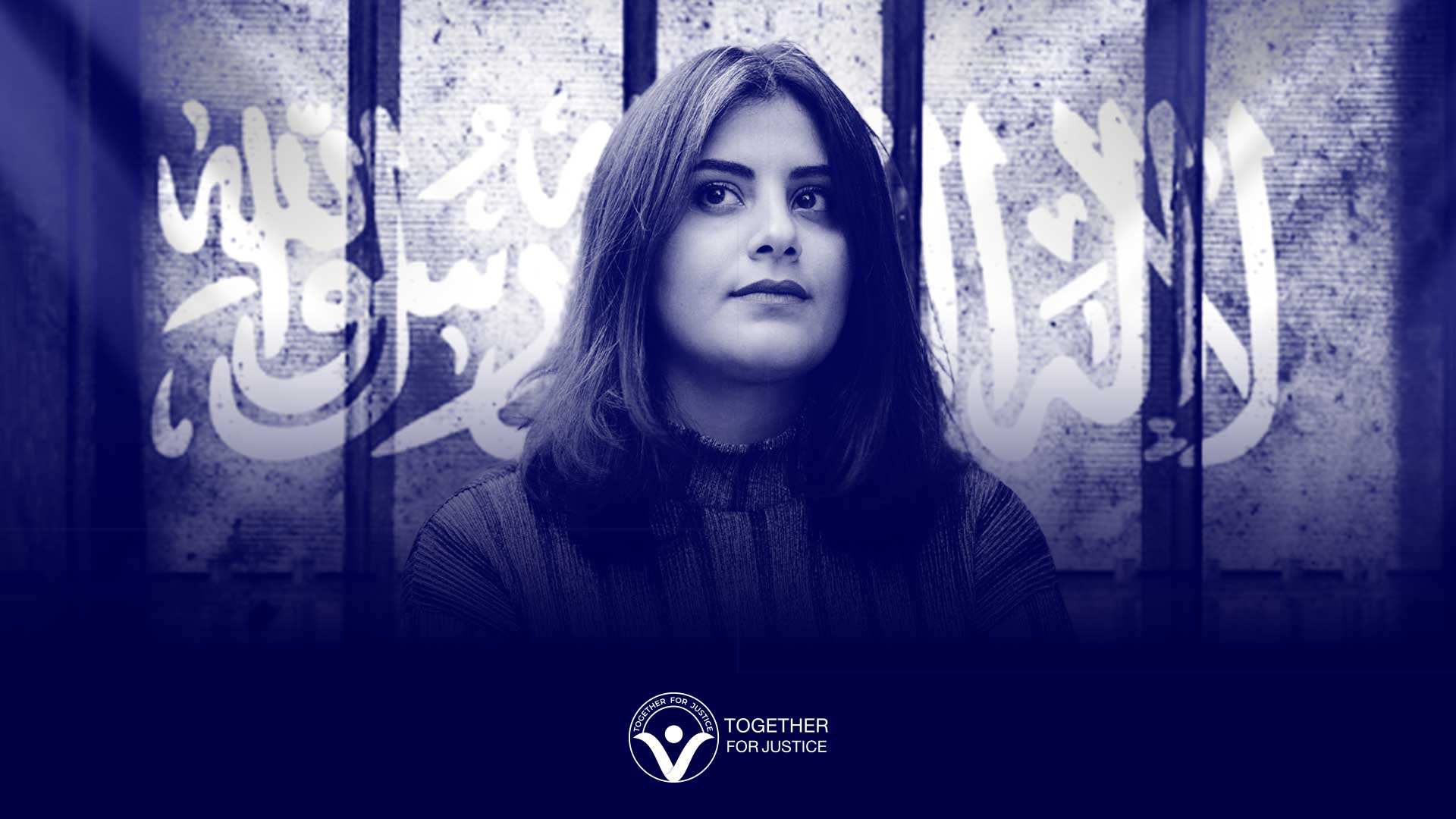
The Criminal Court in Riyadh issued a final ruling against the Saudi activist and blogger “Maya Al-Zahrani” with imprisonment for 5 years and 8 months, with halting the implementation of half the term).
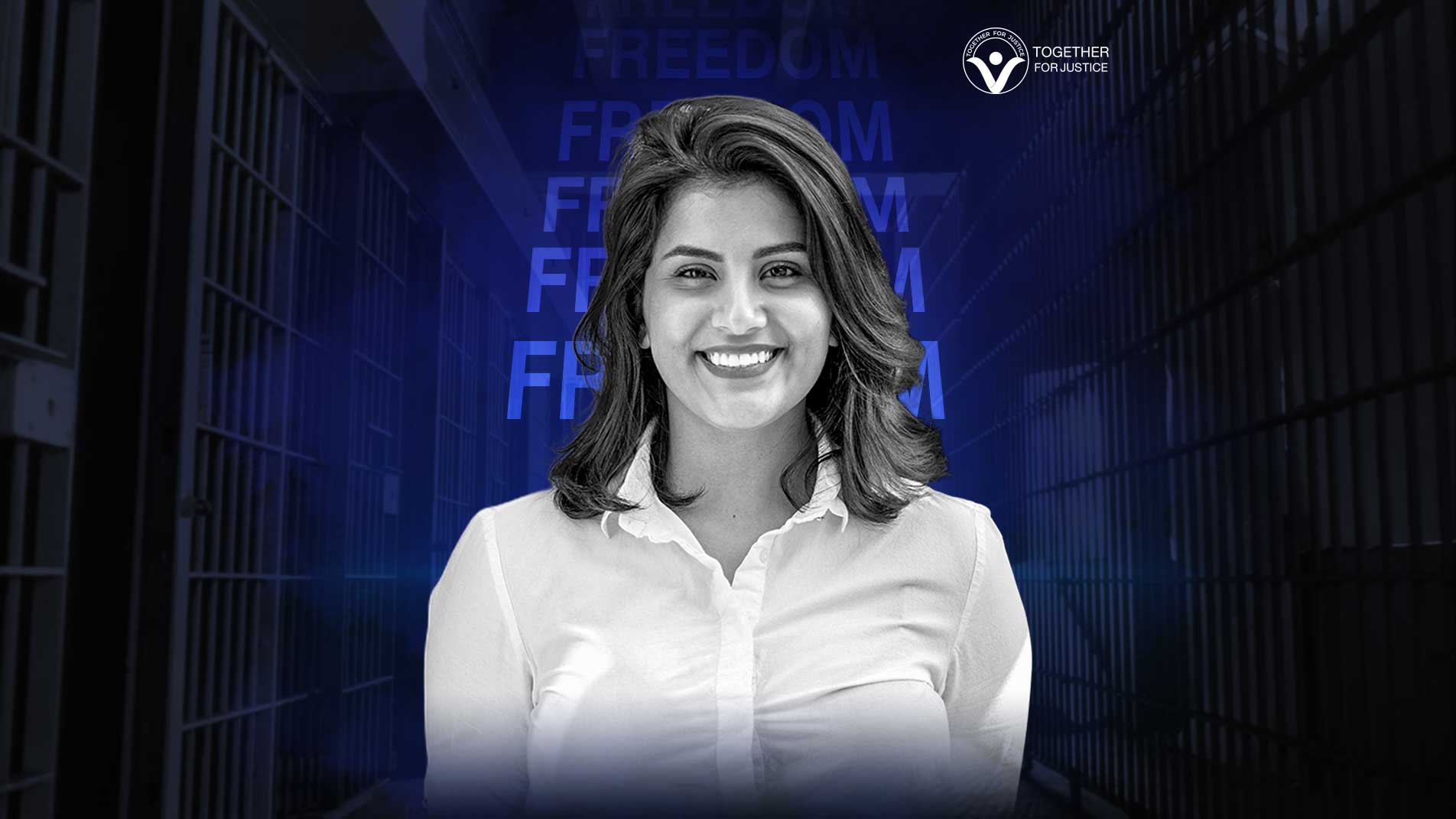
This ruling is similar to the one issued against the feminist activist “Loujain Al-Hathloul” whose family revealed that the court banned her from traveling outside the country for five years after her release. The Saudi authorities are supposed to release Al-Hathloul within two months
.
Arbitrary Detention and Enforced Disappearance
Together for Justice (TFJ) stressed that the Saudi authorities have arrested Maya Al-Zahrani in 2018 for her activities on social media and the Saudi regime authorities have not issued any statement explaining the reason for her arrest since them. However, TFJ confirmed that the real reason behind Al-Zahrani’s arrest is expressing her sympathy with the detainee Nouf Abdel Aziz.
Other human rights organizations also said that the Saudi authorities are keen to terrorize activists and those seeking to change the situation in the Kingdom of Saudi Arabia, in various social fields, and their desire to grant citizens some of their stolen freedom.
Other human rights organisations confirmed that the Saudi authorities is keen on terrorising activists and those who call for a change in the different social fields, and calling for rights and freedoms to be granted to citizens in KSA.
Wide International Criticism
Several European human rights ambassadors harshly criticized the authorities in Saudi Arabia for the continued detention of more than five women’s rights activists.
The ambassadors of (Britain, the Netherlands, Germany, Sweden, Estonia, Luxembourg and Finland) issued a joint statement in which they condemned the violations committed by the Saudi authorities against the detainees from all the different ideologies, especially feminist activists.
In their joint statement, European ambassadors emphasized that “peaceful activism and defending women’s rights is not a crime”, adding “Human rights defenders can be a strong partner for governments in addressing concerns within society.”
The ambassadors joined the High Commissioner for Human Rights in its criticism of the KSA, saying, “We join the United Nations High Commissioner for Human Rights, special rapporteurs and treaty bodies in reaffirming our call for the release of all political detainees, including women activists.”
Calls from the United Nations and other international organizations requesting the release of prisoners of conscience in the prisons of the Saudi regime have increased since the issuance of the prison sentence against the activist Loujain Al-Hathloul, as the United Nations Office for Human Rights called on the authorities of the Saudi regime to immediately release the activist Al-Hathloul and all prisoners of conscience, stressing that the arrests campaigns are deeply concerning, but we realize that releasing detainees is something that the regime can do, so we stress on the need to implement it quickly.”.
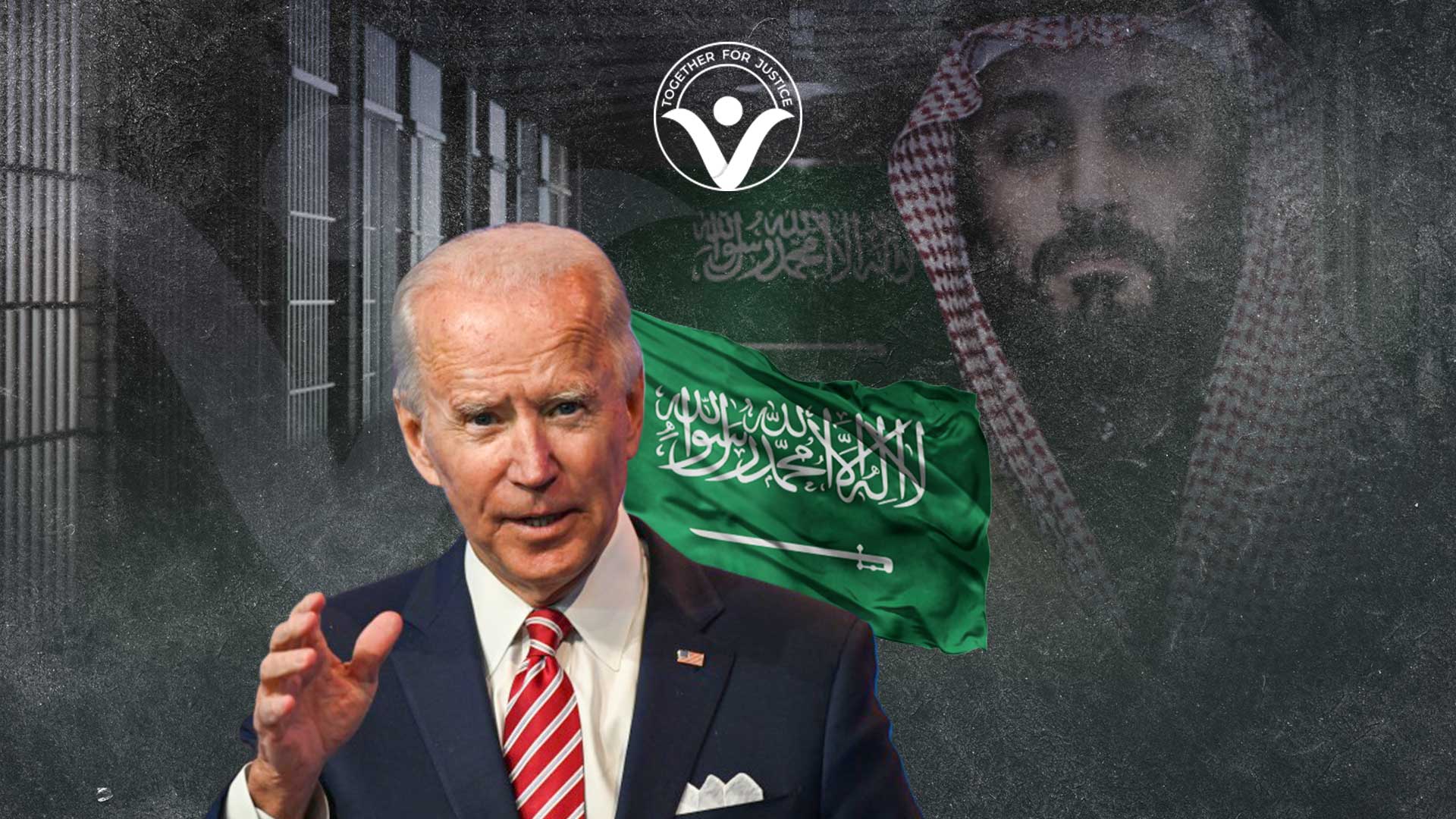
The White House is preparing to receive a new resident that is very different from the previous one. The Democrat Joe Biden, who defeated Republican Donald Trump during the election campaign, vowed to review the national and international “disastrous” policies of the US made under the Trump administration.
Currently, the Arab dictatorships led by Saudi Arabia, are quietly waiting to appease the new president.
The Saudi regime, which had the green light during the Trump era, is worried about the future relations between KSA and the Biden administration, especially after the latter promised in many forums to open dangerous files that incriminate the Saudi Crown Prince Mohamed bin Salman and his sons especially the files of human rights violations in the KSA, the killing of journalist Jamal Khashoggi and the Yemen war.
Biden may deal differently with the Saudi regime and open files of the crimes of Bin Salman whom Trump covered up for four years.
Biden has repeatedly vowed to punish the Saudi crown prince, stressing his involvement in the Khashoggi assassination, and stressing that his administration will stop the US support for the Saudi military intervention in Yemen. He also added that the US will not put its values into question in order to sell arms or buy oil, but would rather hold accountable those responsible for committing the most heinous crimes at home and abroad, and will be making Saudi Arabia an international pariah.
Perhaps Biden’s assuming power may be an opportunity for the Saudi opponents in their battle to deter repressive practices in KSA, defend human rights there, and end Bin Salman’s dictatorship which silences those calling for a change imprisons those calling for peace, restrains prisoners of conscience, and prevents patients from receiving medical treatment. Bin Salman’s administration harasses female detainees, electrocutes journalists and media professionals, and forcibly disappears human rights activists.
Biden’s victory caused a great shock to a number of authoritarian leaders around the world, headed by the Saudi crown prince, who will no longer be able to directly access the White House, relying on his distinguished personal relationships with Jared Kushner, Trump’s son-in-law, and diplomatic advisor.
Saudi Arabia is attempting to deal with its human rights file in anticipation of upcoming conflicts. Perhaps its acceleration of the trials of prisoners of conscience is the most prominent evidence of this, as a series of vengeful rulings in politicized were issued in the last days of 2020 before Biden’s assuming of power.
Prominent American newspapers revealed that the US President Trump’s administration is seeking to provide the Saudi crown prince with diplomatic immunity from the judicial trial in the US over the cases filed against him, the most important of which is the lawsuit filed by the former Saudi intelligence officer Saad Al-Jabri, in which Bin Salman is accused of sending a team to assassinate him in Canada.
Granting immunity to Bin Salman is tantamount to giving him a green card to kill and liquidate his opponents at home and abroad, and for crimes that may outweigh the brutality of the “saw crime.”
Today, it has become imperative to call on the international community to stop turning a blind eye to the heinous crimes committed by the Saudi regime and to stop overlooking its oppressive practices that not only target its opponents but expand to their families and relatives.
As we welcome a new year, it is important to shed light on the human rights file in Saudi Arabia, as years of repression, lack of international oversight and impunity may increasingly claim the lives of countless detainees.
An absolute monarchy in which political parties are banned from working, with no political unions or associations. An oppressive tyrannical regime, in which the king comes at the head of the hierarchy of power, where he is the king, the prime minister, the supreme commander of the armed forces, and has control over legislative, executive and judiciary power. On the other hand, the royal family dominates the government, and its members occupy the majority of key positions in the country, where one heads more than one ministry at the same time. Unparalleled political, administrative and judicial corruption, an oppressed and controlled civil society that is harassed, and threatened with enforced disappearance, imprisonment with fabricated charges. A kingdom with destructive foreign policies, a record of human rights violations and heinous crimes; most of which amount to war crimes, including systematic assassinations. A kingdom where electronic repression is supported by western parties, where mega project crush the indigenous population and forcibly displace them; This is how the Kingdom of Saudi Arabia defines itself and with these grave violations it is preparing to bid farewell to 2020. Another year passes leaving behind a severe global crisis deepened by the social and economic implications of the Covid-19 pandemic, this common enemy and a common threat to which the response of governments has been fragmented and chaotic. Another year passes and the kingdom is under the command of Saudi Crown Prince Mohammed bin Salman. The young man who devoted the money of his people, the state institutions, media, and hired killers to promote his person and his destructive vision, and to liquidate his opponents and silence voices that oppose his vision; the one who supports crushing the weaker countries, stands with the strongest, funds wars, supporting normalization with the Zionist entity .
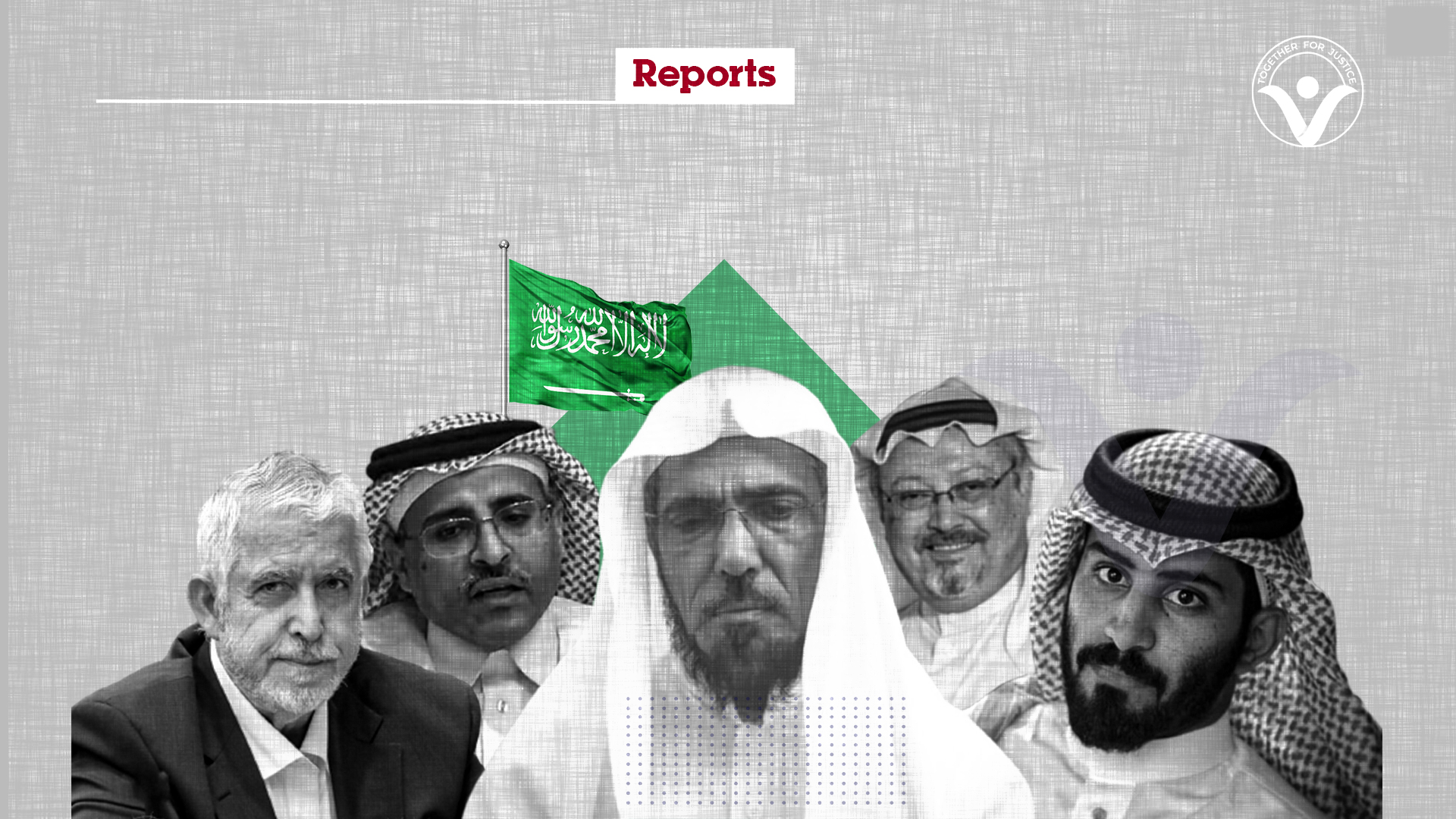
Appalling human rights record The prisons of Bin Salman’s kingdom are overcrowding with prisoners of conscience, human rights activists, politicians, media professionals, advocates for reform, and even foreigners residing in Saudi Arabia who support the Palestinian resistance, or refugees who entered the Kingdom in a desperate attempt to have a better life. Perhaps the month of December alone could shed light on the grave violations of Saudi Arabia, and the brutal reactions of its authorities against the voices calling for reforms. Sheikh Salman Al-Odah lost half his eyesight and hearing due to deliberate medical negligence, being imprisoned in solitary confinement for years, and receiving ill-treatment, whether in Dhahban prison or in al-Hair prison, to which he was transferred with handcuffs, blindfolded and thrown in the back of a car without seats. In December, the Specialized Criminal Court – which deals in terrorism cases – set a date for the trial of the April 2019 campaign detainees. The case includes sixteen people, including a writer, a journalist, human rights defenders, and prominent activists have criticized Crown Prince Mohammed bin Salman, since the killing of journalist Jamal Khashoggi, in the Saudi consulate in Istanbul in early October 2018. The authorities insist on secrecy about their detention conditions and deny them the right to communicate with their families. In December, prominent human rights activist, Mohamed Fahd Al-Qahtani, one of the founders of the Hasm Human Rights Association, and a detainee in Al-Hair prison, entered an open hunger strike to protest his ban on communicating with his family and the denial of medical treatment. Al-Qahtani’s battle of empty stomachs reveals the severe restrictions that prisoners of conscience are subjected to. In December, human rights organizations revealed the arrest of activist Fahd Al-Youssef more than a year ago for criticizing the opening of a discotheque in Jeddah. The authorities also closed his Twitter account. In December, the two media activists, Abdul Rahman Al-Mutairi, and Rakan Al-Messiri were arrested. In December, the Ministry of Islamic Affairs cancelled the registration of 100 preachers after they refused to attack the Muslim Brotherhood movement as called for by the Council of Senior Scholars in Saudi Arabia. In the same month, the Saudi authorities were intransigent in releasing more than 65 Palestinian and Jordanian detainees, including the prominent leader in Hamas, Dr. Mohamed Al-Khudari,81, who suffers from cancer, as well as arresting his son Dr. Hani. Both were arrest on fabricated charges under the anti-terrorism law without much evidence. In December, an Ethiopian migrant sent a message through a smuggler’s phone detailing the horrific prison conditions in Saudi prisons. He stated that he and 300 of his fellow citizens are being held in inhuman conditions, where they are beaten and electrocuted, while being handcuffed and forced to use the cell floor as toilets. He stressed that even pregnant women, infants and young children are being held in the same horrific conditions, according to a report published by The Independent, citing the Associated Press. Saudi prisons have female human rights defenders and feminist activists such as Nassima Al-Sada, Samar Badawi and Nouf Abdel Aziz, who suffer from ill- treatment, harassment, severe beatings, sexual assault, starvation and defamation. In December 28, 2020, the Saudi authorities issued a verdict against Loujain Al-Hathloul,with 5 years and 8 months imprisonment. An unfair ruling issued by the Specialized Criminal Court based on false accusations of “Al-Hathloul seeking to implement a foreign agenda and change the basic system of government.” Al-Hathloul suffered delays of trials and denial of her torture. This clearly reveals the deterioration of the Saudi judicial system and the urgent need to reform it and secure its independence from the political system. These are just some of the high profile cases that mostly attract global attention, while international human rights organizations document countless others. This is just one month of serious violations by authorities that continue to violate international law and create a climate of fear that goes beyond borders to other countries. Even Saudi human rights activists in exile fear for their safety and the safety of their families, especially their relatives who are still inside the country, after the hideous “saw crime” against Khashoggy.
Internationally pariah kingdom Perhaps Saudi Arabia’s failure to obtain a seat in the Human Rights Council is the best evidence of the kingdom’s transformation into an international pariah state, especially under bin Salman’s rule. A cruel defeat was the result of intense pressure by human rights organizations, which confirmed that the Council’s credibility would be at stake if Saudi Arabia was elected, given its appalling record of human rights violations at the hands of its authorities. This defeat proves that the international community does not place for the kingdom, despite Bin Salman spending millions of dollars to cover up its heinous crimes. Protests are escalating in countries allied with the Kingdom, namely the United States, the United Kingdom and France, as prominent human rights organizations, many media outlets and citizens seek to hold their governments accountable for arms sales to Saudi Arabia which are allegedly being used to target civilians in Yemen, which has been torn apart by conflict, siege and starvation. Therefore, it has become necessary to put pressure on the Saudi regime to release all arbitrarily detained persons, especially in light of the outbreak of the Covid-19 pandemic, and it is also important to impose the harshest penalties on Riyadh, and to hold all those responsible for the horrific crimes that occur at home and abroad to account. The international silence increases bin Salman’s recklessness, and impunity strengthens his influence.
Ignorance leads to fear, fear leads to hatred, and hatred leads to violence and this is the equation.
A court convicted Loujain Al-Hathloul and confirmed her participation in a number of “prohibited activities linked to combatting terrorism and funding it”. The court sentenced Al-Hathloul to eight years and five months imprisonment.
The ruling was issued by the Criminal Court in Saudi Arabia which was biased against Al-athloul from the first day of opening the case in March 2019. It initially refused to hear her statements, investigate allegations of torture that she was subjected to at the hands of the security services, or investigate her confession to the charges brought against her, which she repeatedly stated that it was extracted under torture.
The text of the ruling was in itself evidence of prejudice and lack of independence of the court, as the judge decided, without clear reasons, that Al-Hathloul’s confessions are sound and do not have any suspicion of coercion or pressure.
The judge decided that Al-Hathloul was lying in her allegations and relied only on the statements of the security services, saying that she voluntarily admitted committing the charges against her, and her confessions without coercion.
Conflicting positions were documented by the Criminal Court. Last November the court decided to transfer the case file without justification to the Specialized Criminal Court which deals with terrorism cases, and again without justification, the file was returned to the Criminal Court, which proves that the judiciary is a politicized tool in the hands of the regime.
With this ruling, the Saudi regime tried to close this farcy suffered by Al-Hathloul, during which she was deprived of all her legal rights, including the right to appoint a lawyer to defend her and be present during her interrogations, in addition to not having any evidence against her except her confession, to which she demanded opening a case against officials and members of security services for torturing her to extract confessions to the charges brought against her.
Together for Justice affirms that this ruling is another case of oppression and suppression of activists in Saudi Arabia, to which the international community and all relevant international institutions must pay attention, as it puts the lives of all dissidents in Saudi Arabia at risk.
The organisation stated that the solidarity campaigns by many human rights defenders around the world which supported Hathloul’s, contributed to limiting the negative impact Mohamed bin Salman was intending, but it also was not sufficient to end her suffering or obtain legal redress for her.
As international criticism to the human rights file in Saudi Arabia which targets human rights defenders; the Saudi authorities, under the leadership of Mohamed bin Salman, sought to limit these criticisms by bribing large media institutions.
On Thursday, September 10, 2020, Reed Hastings, CEO of Netflix, revealed in an interview with the CNN News that Saudi Arabia has allowed the screening of clips of homosexuality and pornography and sex education in Saudi Arabia in exchange for deleting an episode criticizing Crown Prince Mohamed Bin Salman for supervising the killing of Saudi journalist Jamal Khashoggi in his country’s consulate in Istanbul in October 2018.
With his money and influence in Hollywood, the Crown Prince Mohamed bin Salman attempted to stop the screening of the movie “The Defector”, directed by Brian Vogel, which was about the life of the murdered journalist Jamal Khashoggi.
Despite bin Salman’s desperate attempts and spending billions of dollars to stop the various criticisms, all his attempts failed, as the episode removed from Netflix, was available on YouTube with much wider audiences, and Director Brian Vogel has managed to find an independent distributor to view his movie in a number of US cinemas, after eight months of trying to find a one in Hollywood.
Vogel, whose film included details of Mohamed Bin Salman’s role in killing Khashoggy, said during an interview with a newspaper that International media companies no longer think of how the American public would react to the movie, they rather they ask themselves: What if the film was screened in Egypt, China, Pakistan, India? All these factors play a role and stop similar stories from taking place.
Despite Bin Salman’s attempts, the film was screened in 150-200 cinemas on Christmas Day, and will be available online on January 8th. It was scheduled to be screened in 800 cinemas in October but due to the spread of Coronavirus pandemic the number was reduced. The film will also be displayed through distributors of live broadcasting networks on the Internet in Britain, Turkey, Italy and the rest of European countries.
Vogel interacted with humanity and his movie carried a message of defending human rights despite all pressures. He met with Khashoggi’s fiancée Hatice Cengiz, who waited in front of the Saudi consulate in Istanbul where the journalist was killed and chopped off. He also met the CEO and publisher of the “Washington Post” Fred Ryan and a number of officials in the Turkish police, in addition to writing down the recording of the events that took place in the room in which Khashoggi was killed, and which was 37 pages long. He also met the Saudi dissident Omar Abdel Aziz, who had previously worked with Khashoggi.
The Saudi regime’s attack and attempt to undermine the movie has been in its favor, as it became widely celebrated. In an interview, Hillary Clinton encouraged viewers to attend the film, and the Hollywood Reporter magazine described it as “strong, deep and comprehensive.”. Virity magazine also described it as “an amazing documentary”.
Together for Justice affirms that the efforts of influential directors, activists and journalists in various countries of the world to stand against the crimes of the Saudi regime brings us hope, given the global companies, institutions and influential countries’ submission to Saudi money.
The organisation calls all activists, authors, media professionals, directors and influential actors to defend the rights of oppressed groups under tyrannical regimes.
On Monday, December 28, a court hearing will be held for the Saudi activist Loujain Al-Hathloul and it is likely that verdict will be announced then. Al-Hathloul has been tried for more than a year and a half in a trial that lacked transparency and standards of fair trials.
Loujain Al-Hathloul appearance
Al-Hathloul appeared before a judge for the first time in March 2019, a year after her arrest. She was arrested in May 2018 during an arrest campaign against dozens of activists and defenders of women’s rights with the orders of Crown Prince Mohamed bin Salman.
Those arrested were subjected to violations, including enforced disappearance, torture, and forced confessions, in addition to being denied the right to appoint a lawyer or communicate with their families for long periods.
Al-Hathloul is at the risk of receiving a harsh sentence up to twenty years in prison, given the Public Prosecution’s continuous demands to increase her punishment after accusing her of communicating with foreign bodies and working to destabilize the security and stability of the country.
This session comes less than a week after the Saudi Criminal Court rejected Al-Hathloul’s accusations that she was subjected to torture at the hands of the security services, claiming that there is no evidence on her torture be it medical reports or videos on surveillance cameras. This excuse cannot be accepted since the authorities in this case are the opponent and it would not convict itself.
The court’s rejection of Al-Hathloul’s lawsuit raises several concerns on the verdict that will be announced soon, given that her trial was full of legal and human rights violations. Al-Hathloul was not allowed to appoint a lawyer or choose her defense committee. Her interrogations took place without the presence of a lawyer, strict secrecy were imposed on the progress of the investigations, and a one-sided account by the regime was being published without any neutral party being able to investigate the matter and find out the truth.
According to Al-Hathloul’s family, the court showed Loujain and her father a “confidential report on her torture in which the Public Prosecution rejected the torture accusations brought by Loujain, claiming that prison cameras do not store pictures for more than 40 days”. The court should have rejected this excuse instead of rejecting the case and should have also demand the security services to logically refute Loujain’s accusation as she was tortured two years ago.
The charges against Al-Hathloul are vague charges usually used by authoritarian regimes to justify pursuing activists, dissidents and thinkers.
Loujain was charged with communicating with foreign journalists and applying for a job in the United Nations, all of which are not actions outside the law. The UN is officially recognized by the Saudi authorities, which applied for a seat at the Human Rights Council and was rejected for its record of human rights violations and including its repressive practices against Loujain.
Neither the Public Prosecution nor the security services provided single evidence of the damage Al-Hathloul inflicted on the country. On the contrary, Loujain was known for her activism and in the field of defending women’s rights and demanding the introduction of a number of reforms to the laws on women, especially on allowing women to drive and reducing male guardianship over women.
Ironically, bin Salman himself issued decisions to lift the ban on women driving cars, and granted women many freedoms which reduced men’s guardianship on women! The only explanation for such move is that the Saudi regime refuses to credit any reforms to anyone but it.
“Together for Justice” calls on the international community and the concerned bodies to take urgent action to save Al-Hathloul from receiving an unjust verdict issued by a politicized entity known for being unjust and for issuing retaliatory verdicts to please the regime.
The organisation also calls on the free people in the world and international bodies which believe in the innocence of Loujain to demand her release and all other prisoners of conscience in Saudi Arabia, and to pressure their governments to stop dealing with the Saudi regime until the human rights situation there improve.
Human rights activists shared news about violations and hunger strikes in Saudi prisons, including the most recent news of Mohamed Fahd Al-Qahtani who went on a hunger strike protesting the psychological and physical torture he is subject and medical negligence which could lead to his death, according to “prisoners of conscience in the Saudi Arabia” twitter account.
Al-Qahtani was the cellmate of the late detainee Abdullah Al-Hamid in Bin Salman’s prisons for years. The account warned that Al-Qahtani might face the same fate of his companion who died in prison.
“Prisoners of conscience” also published another tweet about violations against detainee Loujain Al-Hathloul by bin Salman’s man in the royal court, Saud Al-Qahtani, all of which were ordered by the Crown Price.
The ongoing violations against detainees in Saudi Arabia were internationally condemned, as the British lawyer Helena Kennedy published a report a month ago, in which the disastrous detention conditions inside Saudi prisons, and the violations detainees are subject to with direct orders with Bin Salman were described. Kennedy called for restricting cooperation with Saudi Arabia and imposing legal guardianship on the properties of bin Salman.
The report included testimonies of the families of detainees in Saudi prisons about the violations committed against their relatives and former detainees. According to the report, Saudi women activists who were detained in prisons were punched in the face or chest, and kicked hard. The perpetrators were brining close cellmates and severely beating one of them in front of the other, according to a testimony of a close friend of the detainee #Aida_Al-Ghamdi.
The report stated that prison authorities used to bring blindfold detained men in Al-Dhahban Prison and beat them severely in front of detained women. Questions were being directed at these detained young men while beating them nonstop, until interrogators like the answer, otherwise their torture would continue for hours. Furthermore, sometimes first degree relatives of these men were summoned and beaten in front of the detainee to confess to crimes he did not commit.
The report revealed that the female detainees were forced to stand for long hours in one place. One of the female detainees was hanged by the hands from the ceiling of the cell, while other detainees were sexually harassed.
In the testimonies of some former female detainees in Dhahban Prison: “The female detainees were taken to torture elsewhere, and following their return we could see signs of psychological and mental traumas and bruises on their bodies. They lost appetite and could not see properly. They showered too much”.
A former detainee who was forced to attend a torture session for a close friend of hers said: “Khaled bin Salman” came more than once to the place of torture outside Dhahban Prison and was threatening the detainees with rape and murder shouting “I am the Saudi ambassador to the UK, I can do whatever I want with you”.
The report also cited the testimony of a former detainee who confirmed that Saud Al-Qahtani’s was present during torture sessions for Loujain Al-Hathloul, other detainees, such as “Iman Al-Nafjan,”. He also threatening them detainees rape and murder.”.
Helena Kennedy stated in her report that “I find that Bin Salman’s unawareness of the torture of detained activists unreasonable, since the Crown Prince oversees details of everythig, and his brother Khalid and his advisor Saud Al-Qahtani witnessed the torture sessions and it is illogical that they did not inform him. Especially since the torture sessions require preparations that cannot be carried out without the direct orders of the Crown Prince.”.
Together for Justice calls on all human rights organizations to stand together and lift this injustice suffered by the detained women and men in Saudi prisons, to allow them to communicate with their lawyers and ensure that the minimum fair trial standards are met in their trials.
Amid international calls to cut off any cooperation with the Saudi regime for its bloody record of human rights, a partnership contract between Google and Saudi Aramco Development Co, a subsidiary of Aramco, has been officially announced to bring Google’s cloud services to Saudi Arabia, thus adding the Saudi Arabia to the global cloud platform network.
Google and Saudi Arabia
This alliance agreement between Google and Saudi Arabia can only be considered as a historical failure for the global company which risked its reputation at a time when everyone avoids investing in KSA due to its economic crisis, as well as the brutal crimes committed by its regime against opponents at home and abroad.
It is likely that the Google administration did not consider the consequences of this cooperation, as it was met with a wave of objection from the employees inside, who refused to cooperate with any institution whose products would harm the environment, or with regimes accused of human rights violations, like the Saudi regime.
Thomas Kurian – the chief executive officer of Google Cloud – justified the deal as “a useful move for the company, as it’s one of a handful of fields where Google is trying to chase Microsoft Corp. and Amazon.com Inc. in the cloud-computing market”, which means that the company puts its economic interests and financial gains over human rights and environmental stewardship.
On the technical level, this partnership means that the Saudi authorities – which have precedents in the world of espionage and hacking – will be granted full powers to access customer and user data, and access their personal information in an official and easy manner, and there will be no way then to protect users’ privacy, despite Google’s claims on banning artificial intelligence systems “whose purpose contradicts with the widely accepted principles of international law and human rights”, not its assertion of having “protection policies”.
We in “Together for Justice” express our deep concern over the use of Google’s cloud services by the Saudi authorities to monitor citizens and suppress freedom of opinion and expression, especially since KSA has countless precedents in the world of surveillance and penetration, which claimed the lives of opponents such as journalist Jamal Khashoggi , or resulted in the arrest of others like the activist Abdul Rahman Al-Sadhan, whose fate remains unknown until now.
We hold Google’s administration and those responsible for this partnership fully responsible for any damage or harm that may befall citizens inside Saudi Arabia, and we ward that any leakage of their personal information – protected by Google’s service policies- will expose the company to international legal liability.
Finally, we support Google’s employees and other honest people who are calling on the company to withdraw from the deal, lest its cooperation be a tool used by the regime to commit more crimes, and we remind the company not to gamble its reputation for a regime which may turn against any party for its own benefit.
On Tuesday, December 15, 2020, the Saudi Ministry of Islamic Affairs, Dawah and Guidance issued an arbitrary decision to dismiss around 100 imams and preachers in the regions of Makkah and Qassim and relieving them of their duties. This came as a punishment for them for not following the government orders of making a special preach on Friday to attack the Muslim Brotherhood and warn of its members.
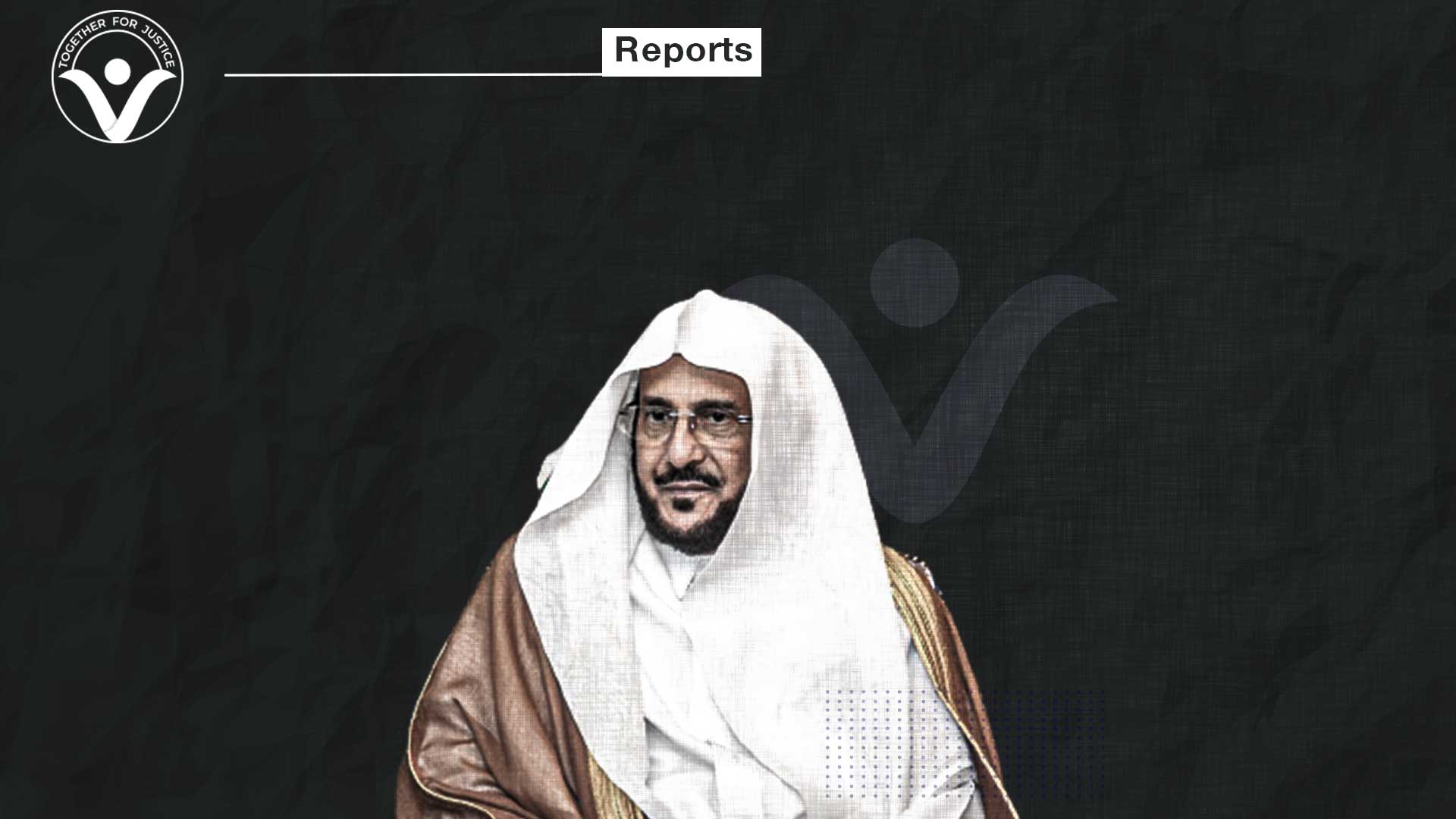
According to informed sources, the decision was issued by the Minister of Islamic Affairs Sheikh Dr. Abdul Latif Al Al-Sheikh, who previously issued decisions to all the preachers on “the necessity of stating the negative impact of the Muslim Brotherhood and warning against the sedition the Muslim Brotherhood is trying to provoke in the Saudi Kingdom”. Last month he stated the need to form a Friday preach derived from the statement of the Council of Senior Scholars, which classified the Muslim Brotherhood as a “terrorist organization.
The decision is purely political, and it reflects the repressive nature and politicization of any decision taken in any local field including the social, religious, and sports fields in the kingdom.
It should be noted that this decision is not the first of its kind. On November 11, 2020, the same ministry had issued decision No. 26/19 Q, to dismiss preachers and imams of mosques who did not abide by the ministerial directive to denounce the Muslim Brotherhood and those who were absent from performing this particular preach without an official excuse.
Together for Justice organization stands against this decision and stresses that this is a flagrant violation of freedom of opinion and expression, and a clear politicization of bodies, which are supposed to be neutral, such as the politicization of the Council of Senior Scholars religious, which should not be exploited in this way.
We, in the organization, express our denunciations of the Saudi religious institutions for being subdued to the regime’s illogical orientations, which diverge them from their primary goal of reforming society and calling for harmony between its various factions. We stress that “religion” is much greater than being used as a cheap tool in the hands of those who could turn against it if their interests were in conflict with the religion.
The organization calls on the Saudi civil society actors to stand against such decisions and join efforts to stop the implementation of these decisions. It also warns that the future will be much worse if the authorities continued to control all bodies in this absurd way.
The organization calls the religious Saudi institution of the Ministry of Islamic Affairs and its affiliated bodies to reconsider this decision and similar decisions of a political character and put pressure on the authorities to release numbered more than a hundred preacher and imam, who are detained for their political views.
Fact Finding Report into the detention of Saudi Arabian Royals:
Former crown prince Mohammed Bin Nayef
Prince Ahmed Bin Abdul-Aziz
Chair:
Crispin Blunt MP
Speakers:
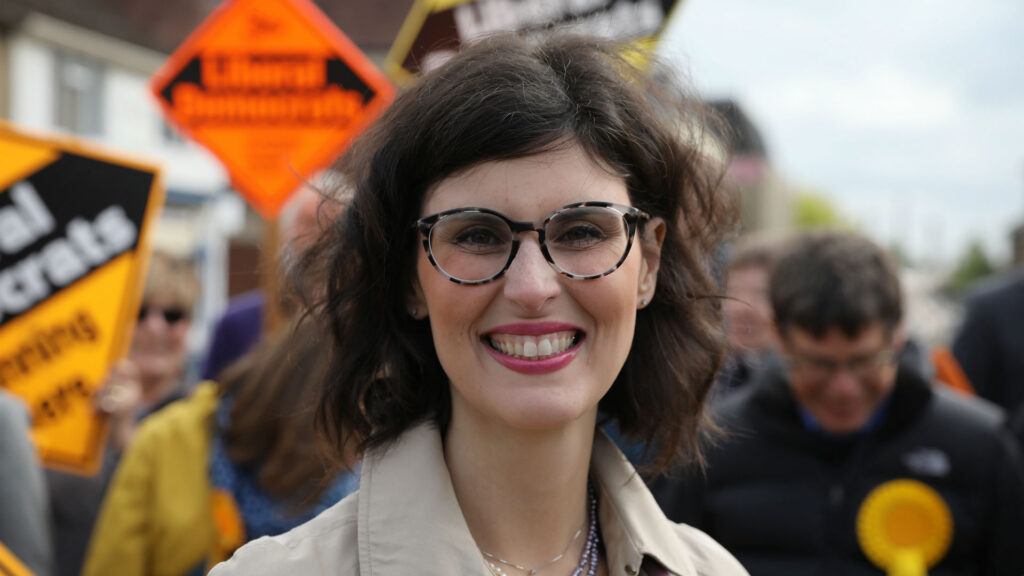
Layla Moran- MP
Imran Ahmad Khan- MP
Haydee Dijkstal- Lawyer
The aim of the Fact-Finding Panel (FFP) is to investigate and report the detention of detainees in Saudi Arabia, including health and conditions.
The FFP was commissioned by an NGO on behalf of Saudi citizens interested in the welfare of Saudi detainees. The FFP report was mandated to do the following:
i. Determine the location and nature of the Detainees’ detention including the conditions
ii. Determine if the Detainees have been allowed access to independent lawyers and family members
iii. Determine if the Detainees have been afforded adequate access to medical treatment whilst in detention
iv. Establish if the conditions in which the Detainees are being detained are compliant with provisions under Saudi Arabian and International Law and;
v. Prepare a report detailing their findings.
The FFP, in its fact-finding mission, reviewed the following material:
i. Evidence submitted directly to the FFP
ii. US State Department Country Report on Saudi Arabia – 2019
iii. Opinions from the United Nations (“UN”) Working Group on Arbitrary Detention
iv. UN expert joint statements
v. Reports from respected and credible human rights organisations
vi. News sources
vii. International and national legal instruments
Layla Moran- MP:
Both princes were arrested, in what seems to be a premeditated high jacking. Damage to both vehicles suggests that the princes were obstructed and taken forcefully from their car. They are currently being held in an undisclosed place. These places are not official holding cells, therefore there is little to no oversight. MBN as well as Prince Ahmad have been arrested without any grounds and have not been put in contact with any lawyers. This further proves that the disappearance of detainees is a systemic problem in the kingdom of Saudi Arabia, they’re using this arbitrary detention mechanism for all types of Saudi regardless of wealth and prestige. Reports online suggest MBN was attempting to block MBS’s rise to power. NGO groups as the FFP found no proof at all. Seems like MBS is trying to consolidate power.
Imran Ahmad Khan- MP:
MBN was held in solitary confinement for over 6 months in an undisclosed location. He was subjected to actions amounting to torture and cruel human conditions, in direct opposition to the Mandela rules and UN rules and regulations. After serving 6 months in solitary confinement, the 78-year-old was finally released from solitary confinement but is under the constant threat of going back into it if he does not release funds towards the Saudi kingdom specifically MBS.
There are a number of credible reports stemming from Saudi Arabia suggesting that political detainees are regularly tortured, amongst them being blindfolded, stripped naked, waterboarded, and sexually abused in draconian methods. These methods are said to have been practiced on both princes, as they continuously rejected our pleas to visit or contact both detainees.
In regard to the former crown prince, his health has drastically worsened since his arrest, he has gained a significant amount of weight, he has significant pain in his joints/knees and there appears to be evidence of damage to his feet. With him being diabetic, this could be fatal.
HaydeeDijkstal- Lawyer (she summarised the legal points):
In light of Saudi obligations in international laws, convention against torture, Arab league convention of human rights, and the Mandela Rules.
The rights affected include a guarantee for international standards for detentions ensuring the health and safety of inmates. The right to health care is the state’s responsibility and must be administrated at the same standard as it would to any citizen. Prisoners should also enjoy the right against all forms of torture, be it physical or mental.
The panel’s conclusion is to encourage Saudi Arabia to sign and uphold all basic human rights in the land. The FFP is going to take some concrete steps such as presenting the report to governments around the world, Encourage Saudi Arabia to accept the findings, and adopt the suggestions. The report will also be submitted to the UN general assembly and human rights council. Saudi Arabia has enjoyed a period of impunity. From the 20 Saudis involved with the death of Jamal Khashoggi to their numerous attempts at extrajudicial killings of activists around the world, including Canada, Norway, and Turkey.
The report found that the detention and treatment of both princes does not meet the required international standard. the conclusion one has to draw is that this is systematic and part of a pattern by the Saudi regime towards its citizenz. If two former Saudi princes can be treated with such little to no regard. degraded and beaten, it can only reflect the treatments an ordinary political prisoner would face. the conduct of the Saudi regime towards its citizens undermines its allies.
FFP Findings
On the basis of the evidence submitted to it the FFP makes the following findings on a balance of probabilities:
i. In violation of the KSA’s international legal obligations the Detainees are being held without charge. They have not been given the opportunity to challenge their detention and the necessity of their continued detention has not been reviewed by any court or tribunal. It is therefore highly likely that they are being arbitrarily detained. There is clear and concerning evidence that there is a systemic problem with arbitrary detention in the KSA which amounts to a serious violation of international law.
ii. The location(s) where the Detainees are currently being held remains unknown to their families and lawyers. It is likely that they are being detained in an unofficial location, rendering it almost impossible to establish whether the conditions in which they are being kept comply with national and international minimum standards.
iii. In violation of the KSA’s international legal obligations both Detainees have been detained incommunicado for periods of time during their detention. MBN was held in solitary confinement for at least six months following his arrest.
iv. In violation of the KSA’s international legal obligations the Detainees have not been allowed access to their lawyers whilst they have been detained.
v. In violation of the KSA’s international legal obligations and despite the fatal risks posed by the ongoing global covid-19 pandemic, there are real concerns that both Detainees have been denied access to appropriate and adequate medical care leading to a deterioration in their health. MBN has not been provided access to his personal doctor.
vi. In violation of international prohibitions against physical and psychological torture there are real concerns that through holding the Detainees in solitary confinement and in conditions very likely below the requisite minimum international standards, the Detainees have been subjected to cruel, inhuman, or degrading treatment.
vii. KSA has taken a minimalist approach in adopting and ratifying the normal international conventions underlying a nation state’s acknowledged obligations towards its own citizens. Those it has adopted bind it by reference to those it has not formally acceded to or ratified. However, the conclusion to be drawn by the lack of a comprehensive approach to the normal instruments of international human rights law in light of the evidence presented to this Panel is that this is deliberate. The KSA appears not to expect to observe obligations towards the rights of its citizens seen as standard elsewhere in countries with fully developed legal systems.
viii. The Saudi government does not welcome oversight of the Detainees’ conditions in detention.
FFP Recommendations
Following its review of the available evidence and Saudi Arabia’s legal obligations, the FFP makes the following recommendations:
The independent Panel – and any other international organisations mandated to assess the well-being and rights of political prisoners and other detainees – should be granted urgent and unfettered access to visit the political prisoners and detainees in Saudi Arabia.
Any criminal cases against the Detainees should be immediately reviewed by senior prosecutors. If a decision is made to proceed with any prosecutions, all steps should be taken to afford all fair trial and due process rights as required by Saudi Arabia’s international human rights obligations, and any reported violations of these rights must be fully and genuinely investigated and remedied before proceedings resume.
Any mistreatment of political prisoners or other detainees should be halted with immediate effect and in accordance with international legal standards and human rights, in particular under the Mandela Rules, for the treatment and management of individuals in detention.
All individuals in detention should be granted immediate access to medical care, including ongoing care or specialised care if required.
All individuals in detention should be granted immediate access to independent legal advice as well as regular access to, and communication with, their legal representative for the provision of confidential instructions and/or the preparation of a defence case.
All individuals in detention should be granted, with immediate effect, regular communication with and/or visits from family members and friends.
The international community and other Governments should take any steps available under international law and before international bodies such as the UN Security Council, the UN General Assembly, the UN Human Rights Council, to raise instances of human rights violations against political prisoners and other individuals detained in Saudi Arabia, in order for such allegations to be fully investigated and remedied, and to encourage the Government of Saudi Arabia to fully comply with its international human rights obligations. This should include imposing Magnitsky –style sanctions.
The international community and in particular the Governments of the G7 countries should require the KSA to address concerns over its commitment to uphold norms of international human rights law by ratifying the two most basic human rights instruments: The International Covenant on Civil and Political Rights and the International Covenant on Economic, Social and Cultural Rights.
That any attempt by KSA to use Interpol processes towards its own citizens should be examined with pre-emptive scepticism until it has ratified the basic legal instruments of international human rights and the pattern of oppressive behaviour towards its own citizens has ceased.
That the G7 nations and other members of the international community should suspend prisoner transfer agreements and extradition treaties with KSA and review all criminal justice agreements in light of the evidence being presented about the KSA’s unwillingness to meet its basic international legal obligations towards its own citizens.
That the G7 nations and other members of the international community should review their laws around the manipulation and exploitation of social media platforms by state actors against individuals to require these platforms to try to prevent, help identify and at least not facilitate campaigns of public intimidation by state actors or unaccountable other groups or individuals who appear to be coordinated by state actors.