Author: Publisher2026

  • Saudi Authorities for Al-Qatif Detainees: Pay for your detention

    Saudi Authorities for Al-Qatif Detainees: Pay for your detention

    Saudi Arabia

    In a precedent in the record of human rights violations in the whole world, the Saudi government invented a new crime, a pioneering one. The former detainees in Al-Qatif city, received calls from security services demanding them to pay money for the period they spent in prisons since the beginning of their arrest. The required amounts ranged between 10 thousand riyals to half a million Saudi riyals, depending on the length of period of their detention, and the charges that were directed at them at the time of their arrest, for which they were tried and served their sentence, and despite their rejection of all those charges, which they described as politicized.

    Saudi Arabia

    The news that media outlets and human rights organizations shared from a twitter account of an activist in Al-Qatif. The tweet said that the security services did not impose this money on the released detainees only, but also currently detained ones. the detainees who are still inside Saudi prisons. A large number of the families of the Qatif detainees who are still in detention with calls from the Saudi security services asking them to pay sums of money in exchange for their children staying in Saudi prisons, each according to his prison term and the charges against him.

    A large number of the families of Al-Qatif detainees who are still in detention received phone calls from the Saudi security services asking them to pay sums of money in exchange for their sons staying in Saudi prisons, each according to the length of his detention and the charges against him.

    The security services informed the families of the detainees, both those who were released and those who are still in detention, that the families who will refrain from paying these sums will have services to their homes cut off until they pay.

    Problems erupted between the Saudi authorities and the people of Al-Qatif years ago after its people organized peaceful marches demanding the opening of the political space for them, as the Saudi authorities have been excluding them politically, under the pretext of receiving funds from Iran and Syria to destroy the state of Saudi Arabia, the state of the Sunnis, as claimed by the authorities.

    The Saudi authorities used force then to disperse these marches, which resulted in the killing of a number of civilians and the arrest of dozens of protestors and their families, including men and women. In 2017, the Saudi authorities executed four of them, after charging them with terrorism, carrying arms against the government, joining armed groups, and working for an enemy state.

    “Together for Justice” organization and other human rights organizations condemn the actions of the Saudi authorities.

    “Together for Justice” calls on human rights activists, national and international human rights organizations and associations to advocate for the issues of detainees in Saudi prisons, and to call on governments to pressure the government of KSA to end the injustice practiced against them, in accordance with the law Saudi Arabia follows.

  • Bin Salman’s war in Yemen: “The storm of horrific misery”

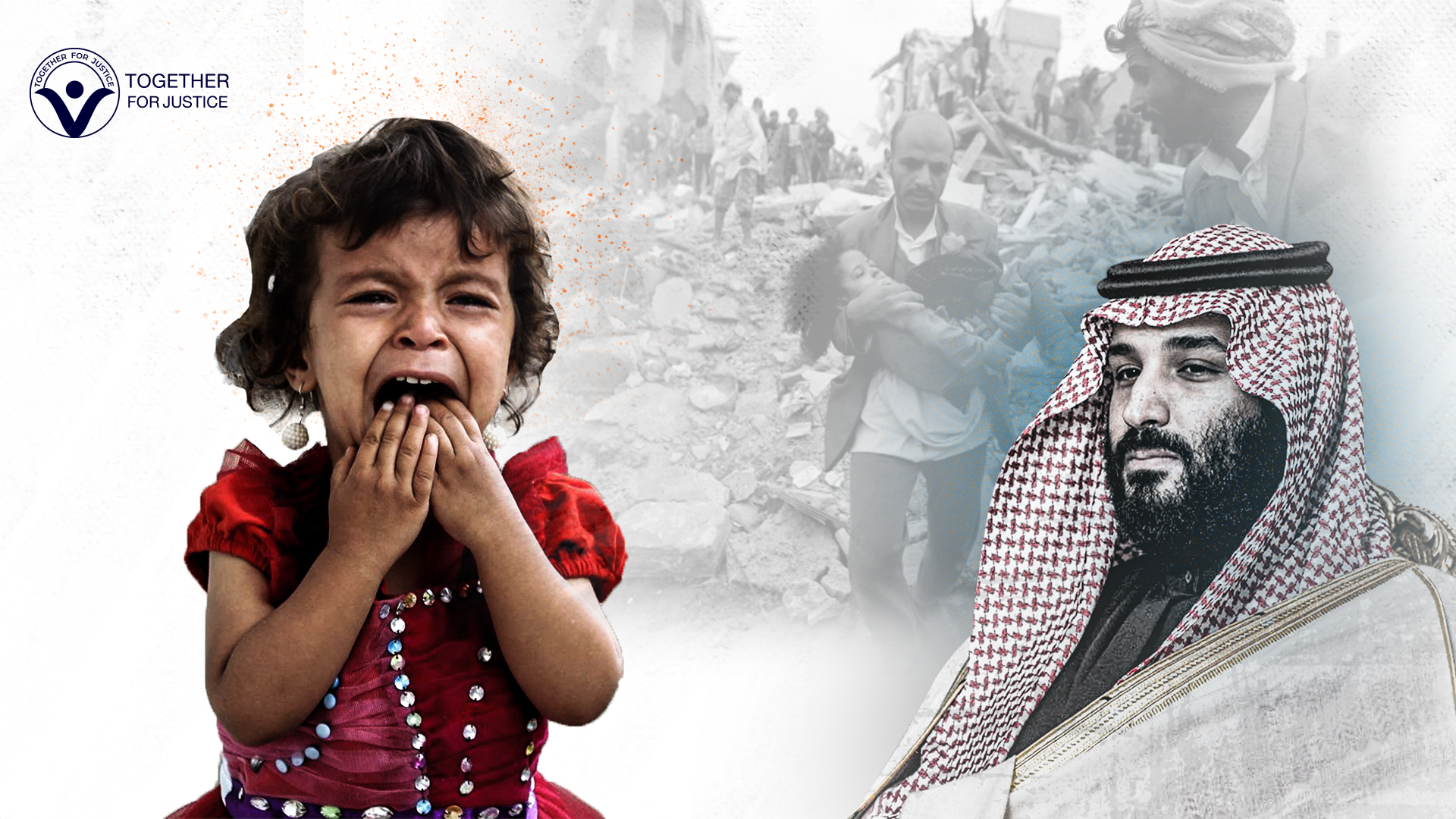
    Bin Salman’s war in Yemen: “The storm of horrific misery”

    War in Yemen

    Fierce war, devastating conflict, overwhelming chaos, starvation approaching, epidemics, extreme poverty, tragic devastation, and unparalleled misery in the twenty-first century; The roots of this crisis go back to March 2015, when the Saudi Crown Prince Mohamed bin Salman, who was then Minister of Defense, formed an alliance of Arab countries and entered the war with the massive air force, under the banner of “Decisive Storm”, expecting to force the Houthis to surrender. However, “Decisive Storm”, which should have settled the dispute and sent hope for the establishment of a state in Yemen that would guarantee the rights of the Yemeni people and provide them with a decent life, led to the outbreak of the largest humanitarian crisis the world is witnessing today.

    UN reports documented thousands of missing persons, hundreds of thousands of deaths, and thousands of thousands of displaced persons, while famine and epidemics threaten the millions. These human rights reports disclose flagrant violations of international law and the rights of Yemeni civilians. Other reports disclosed the presence of European weapons in Yemen amid the lack of international monitoring and control. The Saudi crown prince went on with his actions without being told off by the US administration, as relations between Washington and Riyadh had strengthened over the past four years during the Trump administration. The White House is preparing to receive a new president who opposes bin Salman’s policies. He pledged in his election campaign to open the Yemen file and solve the tragedy that has afflicted the poorest Arab country for nearly six years. Currently, the Saudis are looking for solutions to save themselves.

    War in Yemen

    Bin Salman has not killed civilians by direct attacks and intense bombing, but rather imposed a comprehensive land, sea, and air blockade, preventing the flow of urgent humanitarian and food aid to millions of families at a time when malnutrition reached record levels, putting the country on the brink of famine, with deadly epidemics such as cholera, Covid-19, and dengue fever spreading. The Saudi crown prince did not hesitate to pursue a policy of starvation as a means of aggression against Yemen amidst complete international silence and blatant Western and Arab complicity.

    Accordingly, we in “Together for Justice” organisation call for an end to the Saudi aggression in Yemen, which has caused food insecurity in a country whose more than eighty percent of its population depends on humanitarian aid and three-quarters of them stand on the threshold of famine.

    As we are sending alarms about the catastrophic humanitarian situation in Yemen, we demand the need for serious and rapid action to stop the escalating conflict, the economic decline, and the rescue of civilians from grave human rights violations, including what may amount to war crimes.

    We call on the international community to put pressure on the Saudi regime to end the suffering of Yemen and withdraw its forces from Yemeni territory. We also call for a reduction in arms sales to Saudi Arabia and the UAE.

  • Sheikh Salman Al-Ouda faces an unfair trial as well as detention in inhuman conditions

    Sheikh Salman Al-Ouda faces an unfair trial as well as detention in inhuman conditions

    Sheikh Salman Al-Ouda

    The Saudi authorities arrested Sheikh Salman bin Fahd Al-Ouda, one month after Saudi Arabia, UAE, Bahrain and Egypt announced a full blockage against Qatar.

    Al-Ouda wrote a tweet calling for unity of the people while remaining silent about all the policies of the Saudi regime during that period; however, the Saudi Crown Prince Bin Salman found this a good reason to arrest the Saudi preacher and thinker.

    Recently, the son of Sheikh Salman, Abdullah Al-Ouda, a professor of Islamic political thought at George Washington University in USA, announced the details of his father’s arrest who received a strange phone call informing him that he is being  monitored by the Saudi authorities, including details of Al-Ouda’s movements in where and what he eats, and where he prays.

    Dr. Abdullah added that his father asked the caller if he had any specific question or request to fulfill. The latter asked him to wait and hung up the phone as the security services arrived and knocked violently on the door of the Sheikh’s house.

    Salman Al-Ouda

    Security Forces

    As soon as Sheikh Al-Ouda opened the door, men belonging to the state security apparatus asked him to go with them for a few hours, after which he would return home. One of the men spoke to Abdullah Al-Ouda, asking him not to talk about his father’s arrest to anyone, as he will return soon.

    Following this, he disappeared for five consecutive months, during which he was detained in inhuman conditions. Al-Ouda, an elderly sheikh, was deprived of food and drink for days before food was thrown to him in bags while he was handcuffed.

    After a period of arrest, Abdullah came across a person who told him that he had met his father in the hospital without his family’s knowledge, and that his health was severely deteriorating. According to Abdullah, his father was placed in a very small cell, “one square meter” without a toilet. He also suffers deliberate medical negligence, which caused him severe high blood pressure.

    Abdullah salman Al-Ouda

    Investigations and Trial

    The investigation documents consisted of posts and tweets on social media for Al-Ouda, monitored by the Saudi cyber security services. They accused him of treason for not participating in the campaign against Qatar.

    Half of the trial judges that Al-Ouda had to appear before were arrested shortly before the trial.  The Public Prosecution demanded the execution of Al-Ouda after charging him with 37 charges including corruption, calling for a change in the Saudi government, joining international associations and organisations, inciting public opinion and sedition and ridicule of the achievements of the Saudi government.

    “Together for Justice” organisation calls on the international community and civil society organisations to stand against the practices of the Saudi regime and to pressure it to release Sheikh Salman Al-Ouda and all detainees of opinion, thinkers and activists, and to save them from the inhuman detention conditions in Saudi prisons which lacks monitoring and accountability.

  • Bin Salman Vision 2030 for Human Rights False allegations promises proven untrue by facts

    Bin Salman Vision 2030 for Human Rights False allegations promises proven untrue by facts

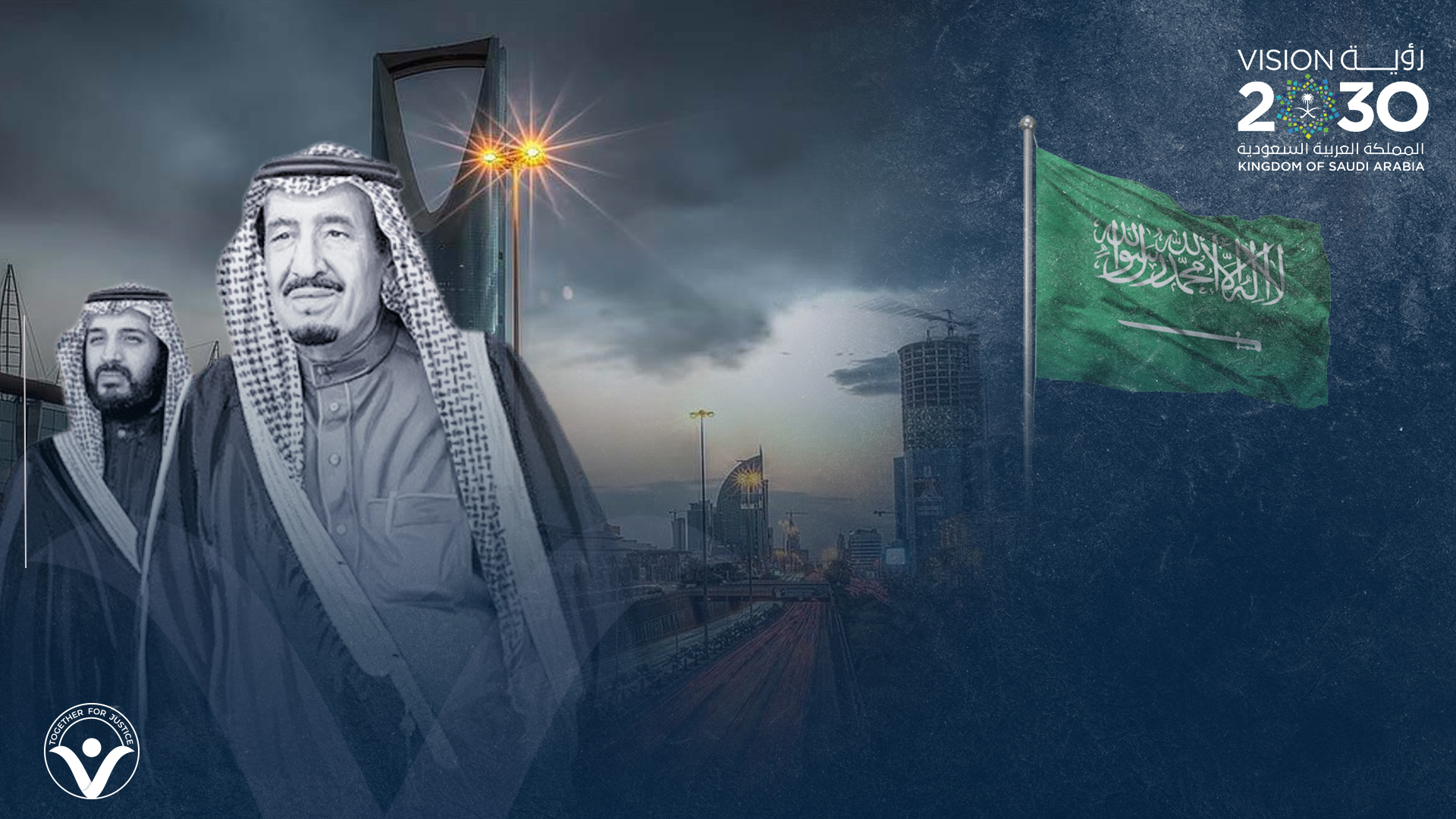
    Bin Salman Vision 2030

    An observer of the human rights situation in the Kingdom of Saudi Arabia can simply see the wide gap between the government’s attempt to paint a bright picture of it as the state of law and freedoms, development and openness, and the reality which is filled with shocking violations that still shake the world from time to time.

    Vision 2030

    Since the establishment of the Saudi system, the regime claimed the adoption of the interpretations of the ‘Hanbali’ school of thought with regard to the human rights situation. It claimed that the Saudi law is based on the principles of justice and equality for all; adding that the Kingdom of Saudi Arabia always reviews, improves and eliminate the old practices which may not be suitable for the current period.

    Saudi jurists affiliated with the regime stressed that the Saudi Crown Prince Mohammed bin Salman 2030 vision for human rights is based on the implementation of a plan stemmed from 100 human rights initiatives for all sectors of Saudi society, and guarantees the equal rights of everyone.

    According to them, this plan included all rights including the right to life, the right to security, the right to health, the right to education, the right to freedom of opinion and expression, the right to work, the right to form and protect a family, and the right to education in accordance with the values ​​of society, as well as the empowerment of women, opening the political participation, and enhancing participation in the formation of the political and public life of the country.

    They also announced that the new human rights initiatives guarantee freedom of opinion and expression, and association, including the press and publishing system, the associations and civil institutions system, where individuals or associations won’t be prevented from practicing legitimate and peaceful actions that aim to reform the country.

    Two years ago, in December 2018, the Acting United Nations Deputy Resident Representative, Firas Gharaibeh, praised the Kingdom’s efforts in protecting human rights and organizing the celebration of the 20th anniversary of the Universal Declaration of Human Rights. He considered this initiative to be an act of willingness by the Saudi Kingdom’s to support and promote universal human rights values; however, the proved the false hope the government promoted as it launched arrest campaigns and arrests for people of all ages and sectors within Saudi society. Freedoms were crushed, rights were denied, opponents were killed, and preventing their supporters from traveling for fear that they would become from the opposition abroad, therefore the authorities confiscated their travel documents and IDs.

    Since Prince bin Salman came to power as the de facto ruler of the country -since his father was being made significantly unaware of the kingdom’s affairs-, the Saudi regime attempted to spread a false image about promoting rights and protecting freedoms, however; heinous crimes and human rights violations continue to be committed, washing away its false image and tarnishing its image for years.

    As soon as Bin Salman announced his vision for a free and developed media, the cyber security apparatus, headed by Al-Qahtani, started monitoring all social media platforms and news websites.

    A Few days later, the whole world witnessed the tragedy of kidnapping, killing and dismembering Saudi journalist Jamal Khashoggi, despite the fact that he was not the strong opponent of the regime and he praised some of the crown prince’s reforms, yet once he shared his vision on the freedom of religion, the most senior scholars and preachers who are affiliated to the Sahwa movement got arrested in Saudi Arabia.

    Today these preachers are dying behind bars on charges of supporting militancy and terrorism, and the truth is that terrorism and militancy are the industry of the intellectual and political factories of the Saudi regime, as bin Salman stated that fighters in Afghanistan and elsewhere, as well as Islamic movements at some point were supported by Western governments which protect the throne of Al Saud.

    “Together for Justice” organisation calls on human rights activists, institutions, individuals and governments who support the right to freedom of opinion and expression, to denounce and stand against the crimes of the Saudi regime including threats and intimidation by torturing some to subjugate everyone.
    It calls them to condemn the violations of the basic human roghts principles and values ​​agreed by all religious, cultures and human rights agreements, and to pressure the Saudi regime to adhere to international human rights declarations and end its war against the Yemeni people.

  • Violations of the Saudi Regime Escalate and the Lives of Activists are at Risk amid International Hypocrisy 

    Violations of the Saudi Regime Escalate and the Lives of Activists are at Risk amid International Hypocrisy 

    Activists, bloggers, and journalists have been subject to oppression of the Saudi regime. Despite adopting the opinions of those it arbitrarily arrested later on; the Saudi regime continues to keep them detained in horrible conditions, putting their lives at serious risk. 
    Ironically, the arrests campaign not only targeted opponents of the regime, but also the silent ones who did not comply with the policies of the regime or praise it publicly.  
    For instance, as soon as the Saudi authorities started allowing Saudi women to drive cars, they launched a massive arrest campaign against dozens of female human rights activists and feminists, as well as men who supported them. 

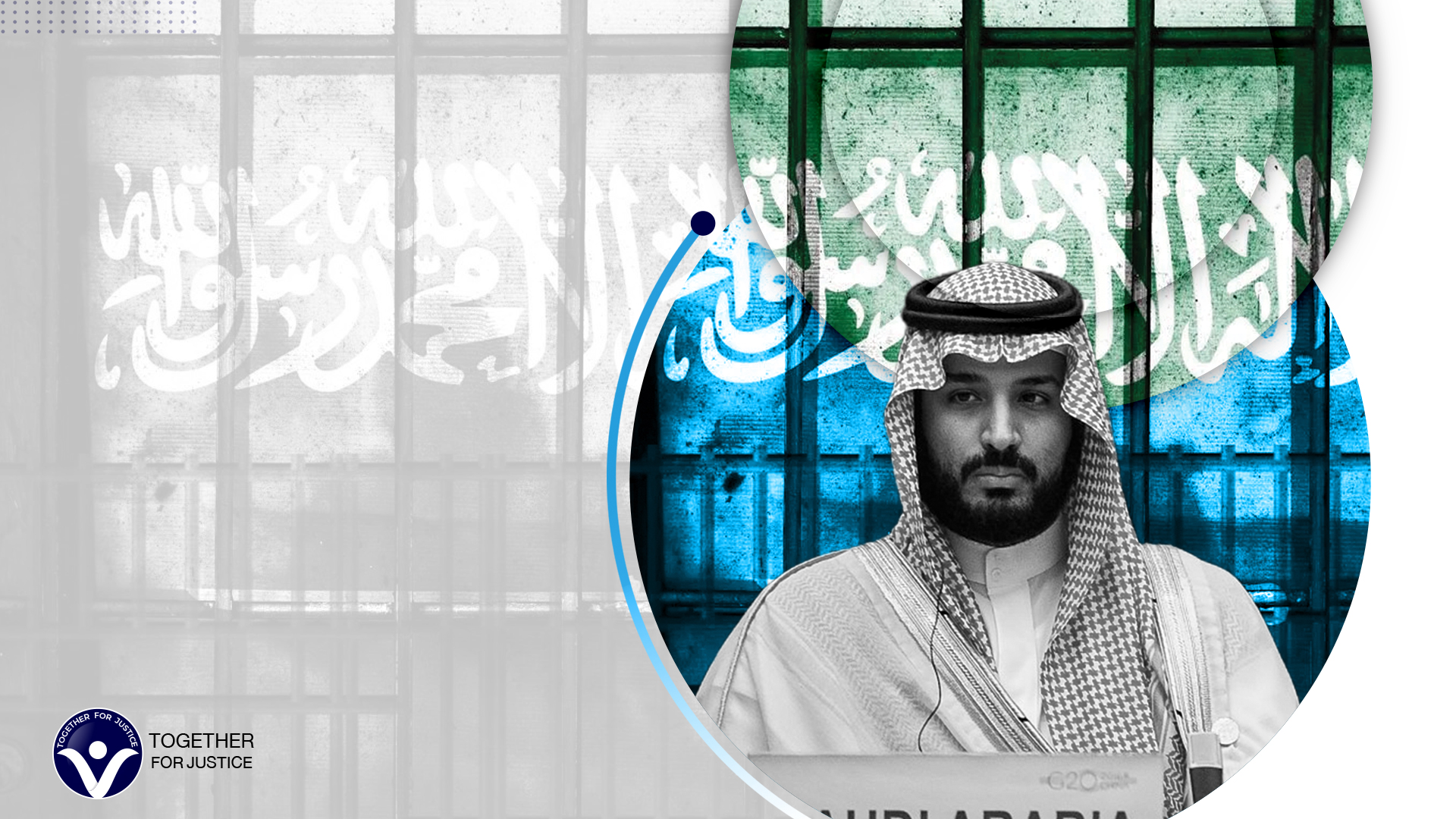
    Saudi Regime

    This campaign aimed at restricting the growing popularity of the activists, and to deliver a message that the government’s decision to allow women to drive was not in response to the activists’ demands, for this not to be considered as a victory for the activists over the authorities of the Saudi regime.

    Saudi Regime

    Among those detained are the famous feminist activist Loujain Al-Hathloul, the prominent academic Aziza Al-Youssef, the academic Iman Al-Nafjan, and former legal advisor to the Council of Ministers and the lawyer of the civil rights movement “HASM” Ibrahim Al-Modaimigh, activist Mohamed Al-Rabiah and activist Abdulaziz Al-Mishaal, who were arrested on charges of communicating with suspicious foreign parties. The Twitter account of Prisoners of Conscience announced Al-Modaimig’s release after “severe deterioration in his health”. 
    Furthermore, the Saudi authorities arrested another group of feminist activists, including Walaa Al Shubbar, Samar Badawi, and Nassima Al-Sada, as well as the activist against normalization, Noha Al-Balawi, who was released later. 
    The Saudi authorities arrested the activists arbitrarily, subjected them to enforced disappearance, and denied them from being presented before the trial or prosecution.  
    According to Reuters, the Saudi regime subjected them to physical and psychological torture, where some of them have been sexually abused and electrocuted at the hands of investigators from the Saudi Federation for Cyber Security and Programming (SAFCSP) headed by the former advisor to the royal court Saoud Al-Qahtani, who disappeared with royal orders after being accused of participating in the killing of the journalist Jamal Khashoggi. Reuters also confirmed that Al-Qahtani was interrogating one of the detainees and witnessed her torture. 
    These cases reflect hundreds of violations that are being practiced systematically by the Saudi regime against anyone who does not support its policies. 
    These grave violations pose a threat to the human rights situation in Saudi Arabia, which is already affected by the current regime. It is worth noting that the Saudi authorities spend billions of dollars to please the west in order to secure its stability and to whitewash its black record in human rights. 
     
    “Together for Justice” believes that the international community’s acceptance of the financial bribes provided by the Saudi regime to whitewash its record, and overlook its atrocities is a clear evidence of the hypocrisy of the international community and its preference of economic interests over the lives and freedoms of the Saudis and peoples of the region. 
     
    Together for Justice calls on the free people of the world, journalists, activists, and the media to stand together against the crimes and practices of the Saudi regime and to urge the Western countries to abide by their international obligations regarding security, military and economic cooperation with a regime which violates the rights of its people and the Yemeni people who are suffering the worst humanitarian crisis in the modern era. 

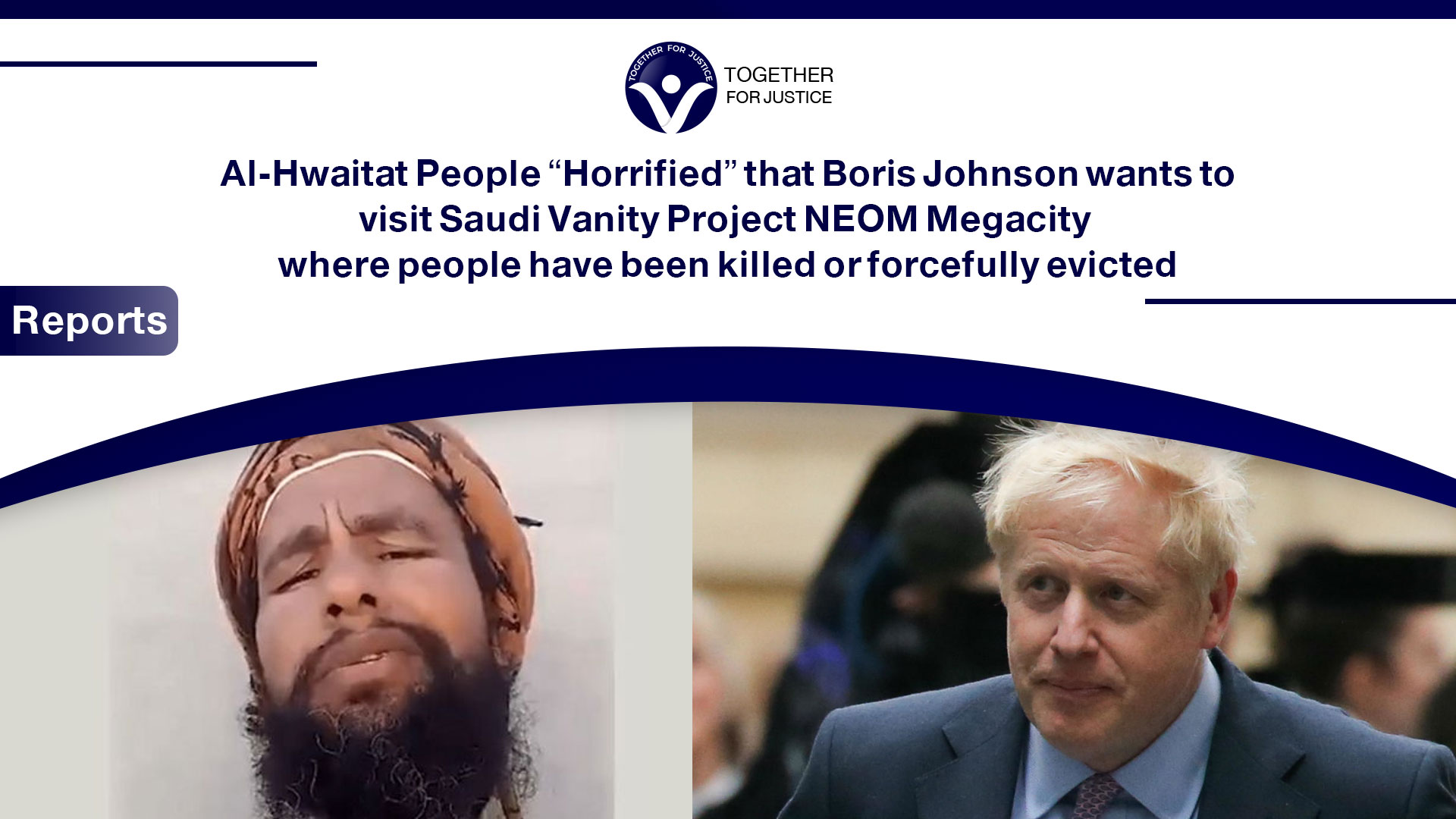
  • Al-Hwaitat People “Horrified” that Boris Johnson wants to visit Saudi Vanity Project NEOM Megacity where people have been killed or forcefully evicted

    Al-Hwaitat People “Horrified” that Boris Johnson wants to visit Saudi Vanity Project NEOM Megacity where people have been killed or forcefully evicted

    Boris Johnson wants to visit Saudi

    • Saudi Arabia is forcefully evicting Al-Hwaitat Tribe members from their ancestral land to build the NEOM Megacity Project.
    • One man has been killed for protesting his forced evictions and 22 others have been arrested or forcefully disappeared.
    • Lawyers representing Saudi activist living in London, Alya Al-Hwaiti sent letter to Dominic Raab asking him to Boycott the G20
    • The UN Commissioner for Human Rights, the Special Rapporteur on the Rights of Indigenous people and on the Human Rights of Internally Displaced Person have all been asked to investigate the allegations.

    21st November 2020

    LONDON – In a pre-recorded statement played at the G20 summit, hosted by Saudi Arabia, UK Prime Minister Boris Johnson expressed his excitement and support for the NEOM Megacity project being built in Saudi Arabia. This has caused an outcry amongst members of the Al-Hwaitat tribe who have been living on various tracts of the land being used for the project, for hundreds of years.

    The Huwaitat people are not against the building of the city, however they have a right and desire to be included in its construction and to benefit from the use of their ancestral lands. Unfortunately, despite many promises, this has not happened.

    In April 2020, Abdul Rahim Al-Hwaiti was killed by Saudi forces trying to evict him from his home. Since then, 22 other Al-Hwaitat people have been arrested or kidnapped in the middle of the night and never heard from again. Many of them were Abdula Rahim’s family members.

    A letter was sent to British Foreign Secretary Dominc Raab expressing concern about the project and asking him to either boycott or downgrade his attendance at the summit.

    British Prime Minister Boris Johnson

    British Prime Minister Boris Johnson

    Speaking from London Alya Al-Huwaiti said, “I am really horrified that British Prime Minister Boris Johnson has said he wished he could visit the NEOM project. People have been killed or arrested and completely disappeared by Saudi security forces to make way for this project which is being built on our blood and bones.

    The Saudi government has been offering very little money to our people and if they do not accept it, they are forced to move. Abdulrahim was one of the people who did not want to move from our ancestral land and he was murdered. I asked my lawyers to send Dominic Raab a letter asking him to Boycott the meeting because of the Human Rights abuses being done to my people. To hear the Prime Minister say he wishes he would visit is extremely offensive. His government clearly does not care about human rights.”

    Rodney Dixon QC who sent the letter to Raab said, “The Saudi authorities must be investigated and held accountable for the violations they are allegedly committing against the Huwaitat people. To forcefully evict people from their ancestral homes and in the process kill and abduct those who try to stop these unlawful evictions constitute very serious crimes and human rights abuses. We asked Dominic Raab to boycott or downgrade the UK Government’s attendance at the G20 summit but he has yet to reply, it is unacceptable that Prime Minister Johnson has expressed his support for the NEOM project.

    The UN special rapporteurs and the UN High Commissioner for Human Rights must urgently intervene in order to prevent any further deaths, disappearances and grave threats to life which are in clear breach of the Universal Declaration of Human Rights to which Saudi Arabia is a signatory.”For questions or to arrange interview please email Nikita Bernardi nikita@nb-consulting.co

    Read Also: Loujain Al-Hathloul at Risk of Receiving a Life Sentence

  • Campaign launch to defend Huwaitat tribe from Neom

    Campaign launch to defend Huwaitat tribe from Neom

    A campaign has been launched in defence of the Huwaitat tribe in north-west Saudi Arabia, following attempts by the kingdom to displace them in order to build the Neom megacity project.

    Some 20,000 Huwaitat have faced intimidation, detainment and even death after speaking out against the displacement.

    In response, the Justice for the Victims of Neom campaign group was launched in June by Alya Huawaity, the spokeswoman for the tribe who is now based in London.

    Huawaity has said that the tribe has encountered a persistent campaign of intimidation and threats from the Saudi authorities and security services.

    She added that the nightmare began in October 2017, after the tribes were told that a “great project” was coming to their land. This was the start of the threat to the Huwaitat’s 800 years on their land.

    Tensions increased after the assassination of a tribal leader. On 13 April 2020, Abdul Rahim al-Huwaiti made a video claiming that the regime was attempting to evict his community from their land.

    He vowed to resist the eviction order and predicted that the regime would plant weapons in his house to incriminate him, and that his life was in danger.

    Soon after posting the video, he was dead. Al-Huwaiti’s house was surrounded by security forces and he died in the shootout. The Saudi forces claimed that he had opened fire on them and that they had been forced to retaliate.

    Alhwaiti claims she has faced a barrage of harassment online and by telephone after raising the issue to an international audience, including circulating the video by Al-Huwaiti.

    To watch “Campaign Launch” Event click here

  • EU and US legislators call for Saudi-hosted G20 boycott

    EU and US legislators call for Saudi-hosted G20 boycott

    Politicians from the European Union and United States have called for a boycott of the Saudi-hosted G20 meeting citing human rights concerns. The G20 is set to be hosted remotely by Saudi Arabia’s de-facto ruler, crown prince Mohammed Bin Salman (MBS), in November.

    Some 65 MEPs signed a letter to European Commission president Ursula Von der Leyen and European Council president Charles Michel, which argues that “our participation in the upcoming G20 in Saudi Arabia would not only compromise our values, but also contradict the very resolutions passed in our parliament”.

    Among their concerns, MEPs noted the 2018 murder of Saudi journalist and dissident Jamal Khashoggi by Saudi security forces in 2018, and the country’s ongoing war in Yemen, which had cost tens of thousands of civilians’ lives.

    The MEPs write: “Despite the authorities still portraying the country as striving for reform, invoking its economic Vision 2030 and prestigious projects such as the Neom megacity scheme, the Saudi authorities continue to violate a variety of the most basic human rights, including the right to freedom of expression and peaceful assembly and the right to liberty and security of person, as well as the right to freedom from torture and other cruel, inhuman or degrading treatment and the right to life, not to mention Saudi Arabia’s ongoing involvement in the conflict in Yemen.”

    Following this, 45 members of the US Congress urged President Donald Trump to boycott the G20 unless Saudi Arabia took steps to address key human rights concerns.

    In a letter to Secretary of State Mike Pompeo, members of congress called on the Saudi regime to release jailed activists, withdraw from its war on Yemen and be accountable for its murder of Saudi dissident and journalist, Jamal Khashoggi, in 2018.

    “Should the Saudi government fail to take immediate steps to address this record, we should withdraw from the Saudi-led G20 summit and commit to making human rights reforms a condition of all future dealings with Saudi Arabia’s government,” said the letter.

    Jan Schakowsky and Ilhan Omar, Democratic members of the US House of Representatives, were among the 45 lawmakers who signed the letter, which was supported by advocacy group Freedom Forward.

  • How Saudi Arabia continues to torture its prisoners

    How Saudi Arabia continues to torture its prisoners

    Saudi Arabia maintains that it does not use torture on its prisoners – a claim that is eaily refuted by masses of witness testimonies and the fact that pratises such as flogging are regular punishments for even the most minor of crimes.

    However, according to a leaked medical report apparently prepared for King Salman, prisoners in Saudi jails have been found to have marks of abuse including burns, bruises and starvation.

    The issue of torture in Saudi prisons was apprently of such concern that the report advised pardons for many of those abused.

    Some 60 prisoners were thought to have been examined for the report in early 2019. They were thought to include the male detainees Adel Ahmad Banaemah, Mohammed Saud Al Bisher, Fahad Abdullaziz Al-Sunaidi, Zuhair Kutbi, Abdullaziz Fawzan al-Fawzan and Yasser Abdullah al-Ayyaf, and also women including Samar Mohammad Badawi, Hatoon Ajwad al-Fassi and Abeer Adbdullatif Al Namankany.

    The report demanded those with serious medical issues should be transferred from solitary confinement to medical wards.

    Comments on those studied include:

    “The patient suffers from severe weight loss with continuous bloody vomiting. There are also a number of wounds and bruises scattered in several areas of the body”

    “There are also a number of visible injuries in the chest and lower back”

    “The patient must be transferred from solitary confinement to the specialised clinic for immediate treatment and further medical examinations”

    “The patient has difficulty walking because of a number of bruises visible on the legs area. A number of injuries are also visible on the forearm and lower back area. Malnutrition and obvious dryness on the skin”

    “The patient suffers from a number of bruises visible on the body, especially in the areas of back, abdomen and thighs. It also appears to be malnourished due to lack of eating and facial pallor and general weakness in the body”

    “The patient cannot move at all due to wounds in both legs as well as severe weakness in the body due to malnutrition and lack of fluids”

    “The patient suffers from severe burns throughout the body. Old wounds were not completely healed because of medical negligence”

    “The patient suffers from difficulty in movement due to severe malnutrition and general lack of fluids. There are also a number of bruises, wounds and sores throughout the body”

    According to the Guardian newspaper, human rights organisations advised the newspaper not to attempt contact with the families of detainees, as it would put their lives at risk.

    One human rights activist said that the findings matched their own knowledge of detainees’ treatment in Saudi jails. They said female prisoners faced electrocution, being tied to chairs and beaten around their thighs, backs and buttocks with an agal.

    Saudi Arabia maintains that it does not torture prisoners, but will not allow human rights monitors into the country.

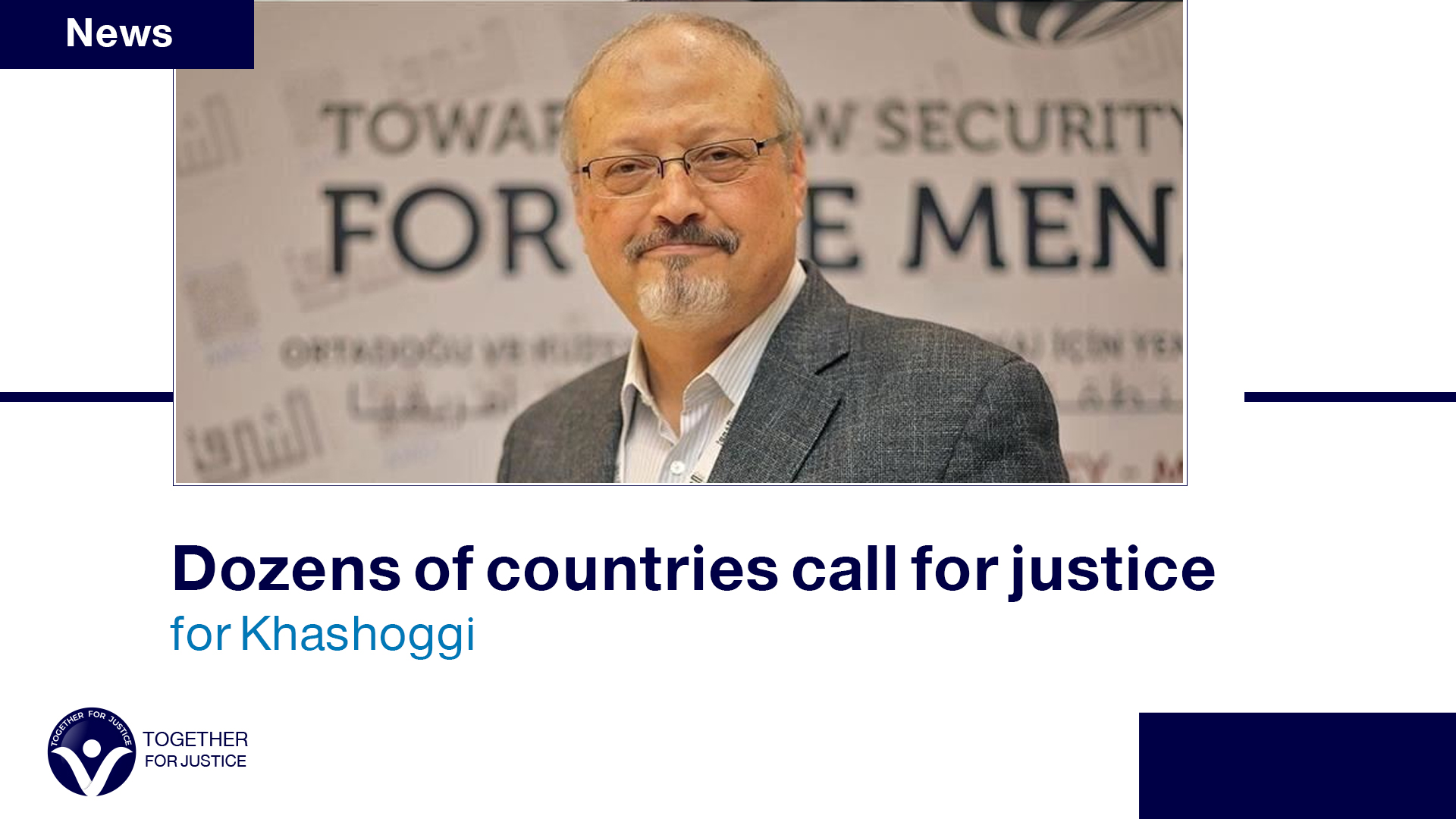
  • Dozens of countries call for justice for Khashoggi

    Dozens of countries call for justice for Khashoggi

    Dozens of countries including those of the European Union, Canada and Australia called on the UN Human Rights Council to push for transparency and a trial for those responsible for the murder of Washington Post journailst Jamal Khashoggi in the Saudi consulate in Istanbul in 2018.

    The German envoy to the UN , Ambassador Michael Freiherr von Ungern-Sternberg, told the 47 Council members on behalf of the EU on the second day of the 45th session of the UN Human Rights Council: “We stress the need for full accountability and transparent prosecution of those involved in the killing of Jamal Khashoggi.

    “The EU reiterates its concern about prolonged detentions of women human rights defenders, including Loujain Al Hathloul, in Saudi Arabia.”

    Denmark also read out a joint statement on behalf of 29 countries, including Australia, Canada and the UK.

    “Civil society, human rights defenders, journalists, and political opposition still face persecution, detention, and intimidation,” they said.

    “We deeply regret the continued detention of at least five women’s human rights defenders, arrested in 2018.

    “We reiterate our call for the release of all political detainees and are particularly concerned about the use of the counter-terrorism law and other security provisions against individuals peacefully exercising their rights.”

    The signatories noted that a year earlier UN special rapporteur on extrajudicial executions Agnes Callamard shared her conclusions on Khashoggi’s murder. “We reiterate our call for transparency and holding all those responsible accountable,” they said.

    The Saudi dissident and columnist was killed and dismembered by Saudi operatives after he entered the consulate in Istanbul on October 2, 2018.

    The Riyadh Criminal Court commuted death sentences and handed down prison terms of up to 20 years to the accused, pardoned by the journalist’s family. They had been sentenced to death last year. UN human rights investigator Callamard called the Saudi verdict on the murder a “parody of justice” which spared “high-level” plotters.