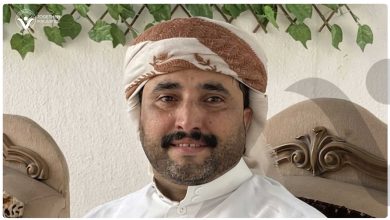
Five Years On: The Fate of Saudi Human Rights Lawyer Sultan Al-Ajmi Remains Unknown

Together for Justice renews its deep concern over the continued enforced disappearance of Saudi human rights lawyer Sultan Al-Ajmi, who has been missing for more than five years since his arbitrary arrest in 2020. His detention came as punishment for publicly mourning Dr. Abdullah Al-Hamid, the late reformist scholar and leading human rights advocate known as “the Sheikh of Reformists,” who died in prison in April 2020 due to deliberate medical neglect.
A Lawyer Silenced for a Eulogy
In April 2020, following the death of Dr. Abdullah Al-Hamid inside a Saudi hospital after suffering a brain stroke while detained in Al-Ha’ir Prison near Riyadh, many writers, activists, and academics shared messages of condolence and admiration for his legacy of peaceful reform and constitutional activism. Among them was Sultan Al-Ajmi, a respected lawyer who expressed his sorrow publicly on social media.
Within days, in early Ramadan 2020, Saudi authorities launched a broad campaign targeting all those who mourned Al-Hamid, viewing even sympathy as a threat to state security. Al-Ajmi was arrested alongside economist Dr. Abdulaziz Al-Dakhil, writer Aql Al-Bahili, and others. Since that time, he has not been presented before any court, has not faced formal charges, and has been denied all contact with his family and lawyer. His fate and whereabouts remain unknown to this day.
Five Years of Silence and Fear
Reports received by Together for Justice indicate that Al-Ajmi has suffered from serious health deterioration due to harsh detention conditions and medical negligence. Despite repeated appeals from human rights organizations, the Saudi authorities continue to refuse to disclose any information regarding his detention location or condition. This secrecy suggests that Al-Ajmi remains a victim of enforced disappearance, a crime under international law that Saudi Arabia is obligated to prevent.
The organization stresses that this prolonged incommunicado detention—without charge, trial, or access to legal counsel—constitutes a flagrant violation of the Universal Declaration of Human Rights, the Arab Charter on Human Rights, and the International Covenant on Civil and Political Rights, particularly Article 19, which guarantees the right to freedom of opinion and expression.
Criminalizing Sympathy and Silencing Reform
The arrest and disappearance of Sultan Al-Ajmi reflect the repressive environment that has intensified under Crown Prince Mohammed bin Salman, where words are treated as crimes and reformist thought is equated with terrorism. Mourning a peaceful reformer became, in Al-Ajmi’s case, an act punishable by disappearance.
This case underscores a disturbing pattern in Saudi Arabia: the systematic use of arbitrary detention, torture, and secret imprisonment to suppress dissent and erase critical voices. By transforming public mourning into a crime, the Saudi regime reaffirms its hostility toward every form of peaceful expression and civic engagement.
Together for Justice’s Demands
Together for Justice calls on the Saudi authorities to:
- Immediately disclose the fate and whereabouts of Sultan Al-Ajmi.
- Ensure his unconditional release and provide urgent medical care and full legal access.
- Conduct an independent and transparent investigation into his enforced disappearance and hold those responsible accountable.
- End the ongoing campaign of repression against reformists, lawyers, academics, and activists who merely exercise their right to free expression.
More than five years after his disappearance, Sultan Al-Ajmi’s case remains a symbol of the Saudi regime’s fear of truth and reform. His silence, imposed by force, echoes the voices of countless others silenced by the same machinery of repression.Together for Justice stresses that the international community’s indifference toward such cases has emboldened Saudi authorities to act with total impunity. The organization urges the United Nations, the European Union, and all human rights bodies to pressure Riyadh to reveal Al-Ajmi’s fate and to end its pattern of enforced disappearances and persecution of peaceful reformers.