From Pardons to Prison: Kuwait Escalates Its Crackdown and Turns Free Expression into a Crime

Recent rulings by Kuwait’s Court of Cassation against former members of parliament and political activists have brought the country’s accelerating human rights decline back into focus. They have also exposed the limits of earlier pardons that were presented as a path towards political reconciliation.
Rather than ending the persecution of government critics, the pardons provided some opposition figures with only a temporary reprieve before they were sent back to prison in new cases arising from tweets, public statements and political opinions.
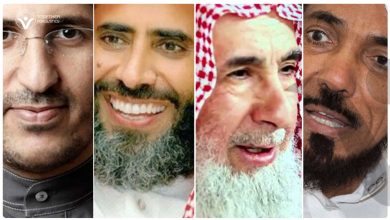
The Court of Cassation overturned acquittals issued in favour of former lawmakers and citizens in several cases. It sentenced Musallam al-Barrak and Salem al-Namlan to three years’ imprisonment with hard labour and immediate enforcement. Former MP Mohannad al-Sayer received a three-year sentence, Saleh al-Mulla was sentenced to two years, and Bader al-Dahoum received a one-year prison term with hard labour.
The rulings also affected a wider group of former lawmakers, activists and social media users, including Adel al-Damkhi, Mohammed Musaed al-Dosari, Mohammed Jawhar Hayat, Khaled al-Mounes, Hamad al-Medlej, Osama al-Zaid, Mohammed Haif and Saud al-Asfour.
The charges included spreading false or malicious news, harming the country’s interests, challenging the rights and powers of Kuwait’s Emir, and insulting the judiciary.
These judgments cannot credibly be treated as a collection of isolated legal disputes. They come within a political environment that has taken shape since the dissolution of the National Assembly in May 2024, the suspension of parts of the Constitution for up to four years, and the transfer of legislative powers to the Emir and the government.
Since then, the authorities have increasingly prosecuted former lawmakers, candidates, writers and social media users for criticising official decisions or defending parliamentary life.
What is unfolding is not simply the neutral enforcement of the law. Kuwait’s public sphere is being restructured so that the authorities are placed beyond meaningful scrutiny, political disagreement is treated as a security matter, and a tweet can return a previously pardoned opposition figure to prison.
The biometric fingerprint case
The most prominent of the recent rulings relate to what became known as the “biometric fingerprint case”. The dispute began after former MPs and activists circulated claims that former lawmaker Shuaib al-Muwaizri had been prevented from entering Kuwait because he refused to undergo biometric fingerprint procedures.
The court ruled that the posts contained false and malicious information about the Interior Ministry, including allegations that it had violated the Constitution and prevented a citizen from returning to his country.
It found that the statements had exceeded the limits of permissible criticism and could undermine the authority of the state, destabilise public order, obstruct security procedures and damage national interests.
The court consequently overturned the defendants’ acquittals. Musallam al-Barrak and Salem al-Namlan were sentenced to three years in prison with hard labour and immediate enforcement. Their previous criminal convictions were used to treat them as repeat offenders and impose custodial sentences.
The court refrained from imposing punishment on the remaining defendants in the case, but required them to provide financial guarantees and pledge to maintain good conduct for two years.
The danger of the case extends beyond the penalties themselves. The rulings send a clear message that discussing a security procedure, challenging its implementation or defending a citizen’s right to return to his country can be transformed into an offence against the state.
Even if some of the information circulated was inaccurate, international freedom of expression standards do not permit imprisonment merely for an error in reporting a matter of public interest, particularly in the absence of direct incitement to violence or proof of specific and serious harm.
The authorities could have issued a public clarification, disclosed the relevant facts or pursued proportionate civil remedies. Resorting to imprisonment was neither necessary nor proportionate.
Musallam al-Barrak and Salem al-Namlan: A pardon followed by renewed punishment
The convictions of Musallam al-Barrak and Salem al-Namlan carry particular political significance. Both were among those covered by the 2021 Amiri pardon relating to the 2011 entry into the National Assembly building.
The pardon enabled several prominent opposition figures to return from exile and was publicly welcomed as a step towards ending a prolonged political crisis and opening a new chapter between the authorities and their critics.
Al-Barrak returned to Kuwait after spending more than three years in Türkiye. His return was met with a large public reception and widespread hopes that the pardon would mark the beginning of genuine reconciliation.
The new sentences reveal how fragile that reconciliation was. Instead of broadening political space and ensuring that opposition figures would not be punished again for peaceful expression, the defendants’ previous convictions were used to increase their sentences and classify them as repeat offenders.
A pardon for a previous sentence does not provide immunity from responsibility for a genuine subsequent crime. The central problem, however, is that the new “offence” again arises from political expression and social media posts about a public controversy.
The result is an appearance that the state invited opposition figures home in the name of reconciliation while retaining their criminal records as instruments for imposing harsher punishment if they resumed criticism.
The pardon therefore failed to become a guarantee of political pluralism. It instead became a short pause in a longer campaign of persecution.
The warning to other government critics is unmistakable: returning home does not guarantee safety, a pardon does not restore the full right to speak, and a previous conviction can remain a weapon ready to be used when the individual next disagrees with the authorities.
Other rulings expand the boundaries of prohibited speech
In a separate case, the Court of Cassation cancelled the suspension of Mohannad al-Sayer’s sentence and ordered him imprisoned for three years with hard labour and immediate enforcement over a recording published on X.
The charges included challenging the Emir’s rights and powers, interfering in his constitutional authority, misusing a telephone and spreading news deemed malicious and harmful to Kuwait’s internal interests.
The court also cancelled the suspension of Saleh al-Mulla’s sentence and ordered him imprisoned for two years for challenging the Emir’s rights and powers. His conviction was classified as involving dishonour and breach of trust.
Bader al-Dahoum was sentenced to one year with hard labour over comments deemed insulting to Constitutional Court judges during an election seminar.
These cases confirm that criminalisation is not restricted to factual allegations whose accuracy might be disputed. It extends to political opinions concerning the ruler’s powers, the nature of government, the performance of the judiciary and the limits of executive authority.
Laws prohibiting criticism of the Emir or challenges to his rights and powers raise a fundamental human rights concern. They give the head of state greater protection from scrutiny than ordinary citizens, even though international standards require public officials to tolerate a wider degree of criticism because of the authority they exercise.
Human rights reporting treated as a threat to Kuwait’s reputation
One of the most alarming aspects of the court’s reasoning was its assertion that the impact of the defendants’ publications had extended beyond Kuwait and damaged the country’s reputation and international standing.
The court argued that such statements could provide material for foreign reports and international organisations to portray Kuwait, contrary to what it considered the truth, as a state that acts tyrannically towards its citizens. It said this could invite external criticism and intervention affecting political and social stability.
This reasoning reveals a troubling attitude towards international human rights scrutiny. Rather than regarding independent reporting as a mechanism for identifying violations and improving institutions, it presents such reporting as a threat and holds citizens responsible for the international criticism Kuwait receives.
A country’s reputation is not protected by imprisoning critics. It is protected by respecting the law and fundamental rights.
International organisations do not need former MPs’ social media posts to raise concerns about Kuwait. Published court judgments, the dissolution of parliament, the suspension of constitutional provisions, the mass revocation of citizenship and prosecutions for peaceful expression are official facts that independently warrant scrutiny.
Punishing citizens because their words might be used by a human rights organisation does not protect the state’s reputation. It reinforces the very concerns about repression that the authorities seek to suppress.
Describing international criticism as foreign interference also does not remove Kuwait’s human rights obligations or give it the right to criminalise citizens to prevent evidence of abuses from reaching international audiences.
An escalating crackdown since the suspension of parliament
Kuwait has historically distinguished itself from many neighbouring Gulf states through an elected National Assembly with comparatively meaningful powers and a wider space for political debate, journalism and public accountability.
Despite longstanding restrictions and previous violations, parliament remained a forum in which lawmakers could question ministers, scrutinise government policies and communicate citizens’ demands.
That space suffered a severe blow on 10 May 2024, when the Emir dissolved the National Assembly and suspended several constitutional provisions for a period of up to four years. The powers of parliament were transferred to the Emir and the cabinet.
A wave of prosecutions subsequently targeted politicians and candidates who criticised the dissolution, the political system or the ruling family’s management of state affairs. Human rights organisations documented cases involving electoral speeches and social media posts that contained no incitement to violence, but defended the elected parliament or called for the restoration of democratic norms.
The suspension of parliament therefore became more than a temporary institutional measure. It created an environment in which the executive could expand its authority without genuine legislative oversight, while courts and broadly worded laws restricted those who challenged it.
The latest judgments represent a further stage in this trajectory. Prosecutions are no longer confined to anonymous accounts or marginal voices. They now reach established political figures who participated for years in Kuwait’s formal parliamentary life.
Mass citizenship revocations: Collective punishment without judicial safeguards
Alongside its prosecution of former lawmakers and activists, Kuwait has conducted an unprecedented campaign since 2024 to revoke the citizenship of tens of thousands of people.
The government has justified the campaign as a review of naturalisation files intended to combat fraud, dual nationality and the unlawful acquisition of Kuwaiti citizenship.
The state has a legitimate right to investigate individual cases of fraud and prosecute anyone proven before an independent court to have submitted forged documents. What has occurred in Kuwait, however, has gone far beyond individual investigations based on fair-trial guarantees.
The campaign has taken on a sweeping and collective character, with inadequate transparency and no effective route to independent judicial appeal.
According to UN estimates published in June 2026, more than 70,000 people had been affected by the new citizenship measures, with women and children suffering particularly severe consequences.
In many cases, the impact was not limited to the individual whose file was reviewed. It extended to spouses, children and others who had acquired citizenship through family relationships.
Those affected did not merely lose a passport. They became vulnerable to losing employment, housing, bank accounts, property rights, education, healthcare and social benefits. Some were left at risk of statelessness after living for decades as Kuwaiti citizens.
The policy is particularly alarming in a country already facing a longstanding crisis involving the Bidun, tens of thousands of whom remain deprived of nationality and the rights attached to it. Rather than addressing statelessness, the authorities have placed additional groups in a condition of legal and social insecurity.
Citizenship is not a temporary favour that a government may use to reward obedience or punish dissent. It is a fundamental legal bond on which identity, family life and access to rights depend.
Revoking it on a mass scale through administrative decisions, without individual trials and a genuine right of appeal, creates extensive opportunities for arbitrariness, political retaliation and social engineering.
Handing Egyptian dissidents to an abusive government
Kuwait’s violations have not been limited to its own citizens. In July 2019, Kuwaiti authorities handed eight Egyptian dissidents to the government of President Abdel Fattah el-Sisi despite warnings that they faced a serious risk of torture, enforced disappearance, persecution and unfair trials upon their return.
Kuwait’s Interior Ministry said the men were wanted in Egypt in connection with criminal offences and court judgments. It presented their return as part of security cooperation and the implementation of international warrants.
Describing someone as “wanted”, however, does not relieve the detaining state of its obligation to assess the risk the individual will face after being transferred.
The Kuwaiti authorities knew, or should have known, that Egyptian security agencies had been widely accused of systematic torture and enforced disappearances, and that Egyptian courts had issued mass and severe sentences against political opponents following proceedings that failed to meet basic standards of justice.
Human Rights Watch described the transfer of the eight men as unlawful and contrary to Kuwait’s international obligations, particularly the principle of non-refoulement. This principle prohibits states from transferring anyone to a country where there are substantial grounds to believe they will face torture or persecution.
The incident was not isolated. Further reports later emerged that Kuwait had handed additional Egyptian opposition figures to Cairo, including three men accused of using social media to call for protests against el-Sisi’s government.
Kuwait thereby became a participant in transnational repression, helping an authoritarian government reach its critics instead of protecting their right to fair legal procedures and their physical safety.
From a state with parliamentary life to an authority that rejects scrutiny
Kuwait still possesses legal institutions and a political history that distinguish it from the region’s most closed systems of government. That legacy, however, is rapidly being eroded.
The dissolution of parliament, the suspension of constitutional provisions, the imprisonment of former lawmakers for their opinions, the criminalisation of criticism directed at the Emir and the judiciary, mass citizenship revocations, and the transfer of dissidents to governments that practise torture are not separate files.
They are parts of a single movement towards restricting public life and subjecting society to an executive authority that faces no effective political scrutiny.
It is especially troubling that institutions expected to protect rights increasingly use the language of “state authority”, “international reputation” and “national interests” to justify restricting them.
A strong state is not one that imprisons its critics. It is one that can answer them with evidence, respect judicial independence and protect citizens’ right to monitor and hold those in power accountable.
An authority may issue pardons, but it does not achieve reconciliation while retaining laws that can return peaceful critics to prison. It may claim to combat nationality fraud, but it does not uphold the rule of law when it deprives tens of thousands of people of their rights without meaningful judicial review. It may invoke security cooperation, but it becomes complicit in abuse when it hands individuals to a government likely to torture or persecute them.
The latest judgments are not simply sending several opposition figures back to prison. They declare that the space for political life in Kuwait is narrowing dangerously, and that the pardon which brought some opposition figures home was not followed by genuine reconciliation, but by a harsher system for monitoring speech and punishing those who challenge authority.
Kuwait must quash convictions based on peaceful expression, release everyone detained solely for exercising their rights, fully restore constitutional and parliamentary life, halt mass citizenship revocations, guarantee affected individuals access to an independent court, and permanently end the transfer of people to countries where they face torture, persecution or grossly unfair trials. Kuwait’s reputation is not threatened by those who expose abuses. It is threatened by the abuses themselves.