Omar Al-Muqbil: Saudi Sharia Professor Still Detained After Completing His Sentence Over Peaceful Criticism of Entertainment Policies
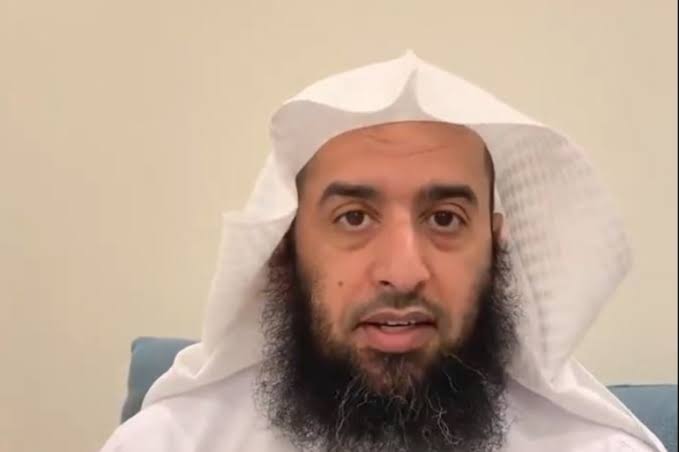
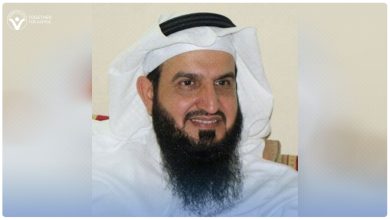
Together for Justice condemns the continued detention of Dr. Omar bin Abdulaziz Al-Muqbil, a Sharia professor at Qassim University, despite the reported completion of his prison sentence. His case exposes how Saudi authorities use the judiciary and security apparatus to punish peaceful opinion, even after the sentence imposed on a detainee has expired.
Dr. Al-Muqbil was arrested in September 2019 after expressing his views on Saudi entertainment policies and criticizing what he saw as an assault on society’s identity and values. At the time, rights and media reports linked his arrest to his criticism of the General Entertainment Authority and its activities, amid a broader crackdown on scholars, academics, and independent voices in the kingdom.
Al-Muqbil’s remarks did not call for violence, incitement, or any criminal act. They reflected a conservative social and religious opinion on public policy. Whether one agrees or disagrees with his position, peaceful commentary on social and moral issues must not be treated as a crime, nor should it lead to detention, trial, or prolonged deprivation of liberty.
According to rights information, Al-Muqbil was initially sentenced to six months in prison before the sentence was later increased to four years. SANAD reported that his sentence ended in March 2024, yet Saudi authorities continued to detain him; in September 2025, the organization said he had entered his seventh year in Saudi prisons despite completing his sentence. The U.S. Commission on International Religious Freedom also lists his current status as “Not Released.”
Holding a person after the completion of a prison sentence is a grave legal violation. Even under the logic of the unjust sentence itself, there is no lawful basis for keeping him behind bars once the term has ended. His continued detention therefore raises a deeper concern: in political and religious cases in Saudi Arabia, liberty does not appear to depend on a court ruling, but on an open-ended security decision.
The contradiction becomes even clearer in light of Saudi Arabia’s official narrative of “openness” and social transformation. In recent years, the kingdom has expanded entertainment projects and new lifestyle policies. In December 2025, reports stated that Saudi Arabia had quietly expanded access to alcohol purchases for selected high-income non-Muslim foreign residents, after previously limiting sales through a Riyadh store to diplomats and a narrow group of eligible non-Muslims. Reuters also reported in May 2026 that the store opened in 2024 for non-Muslim diplomats and later expanded to wealthy non-Muslim foreign residents.
This is not a religious debate over those policies. It is a human rights question: how can a state expand socially sensitive policies while imprisoning those who peacefully comment on or criticize them? How can official discourse speak of openness while a university professor remains deprived of liberty because he expressed a conservative view on a public issue?
Freedom of expression cannot mean freedom only for voices that support the authorities or align with their social agenda. Real openness means that citizens — whether liberal, conservative, reformist, religious, or critical — can express their views without fear of arrest. Allowing one direction to expand while punishing another with silence and imprisonment is not openness; it is selective control of public life.
Together for Justice stresses that the continued detention of Dr. Omar Al-Muqbil after the reported completion of his sentence amounts to arbitrary detention and violates his right to liberty and security of person, his right to a fair trial, and his right to freedom of opinion and expression. It also undermines any claim of judicial independence, since the execution and expiry of a sentence should be a legal matter, not a political or security decision.
The organization holds the Saudi authorities fully responsible for Dr. Al-Muqbil’s physical and psychological safety. It calls on them to immediately disclose his current legal status, explain the basis for his continued detention, allow regular contact with his family and lawyer, and guarantee access to any medical care he may need.
Together for Justice further calls for his immediate and unconditional release, compensation for the period he has been held after completing his sentence, and an end to the use of courts and security agencies to punish peaceful opinions, whether they relate to politics, religion, identity, or social change.
Omar Al-Muqbil’s case exposes the core of the problem: he was not only imprisoned for expressing an opinion; he remains detained after the sentence imposed on him was completed. When prison doors remain closed after a sentence has expired, the matter is no longer law enforcement. It is political retaliation. His return to his family and students is not only a human rights demand; it is a legal entitlement that is long overdue.